
The Megir chronograph watch combines classic design with functional precision, offering wearers the ability to measure elapsed time with accuracy. While its sleek appearance draws attention, mastering its chronograph function unlocks its true utility. Many owners overlook or misuse this feature due to confusion over the pushers and subdials. Understanding how to set and operate the chronograph correctly ensures you get the most from your timepiece—whether timing a workout, a commute, or an important event.
This guide walks you through every stage of using your Megir chronograph with confidence. From initial setup to advanced usage, you’ll learn best practices, avoid common errors, and gain insight into maintaining your watch’s performance.
Understanding the Chronograph Function
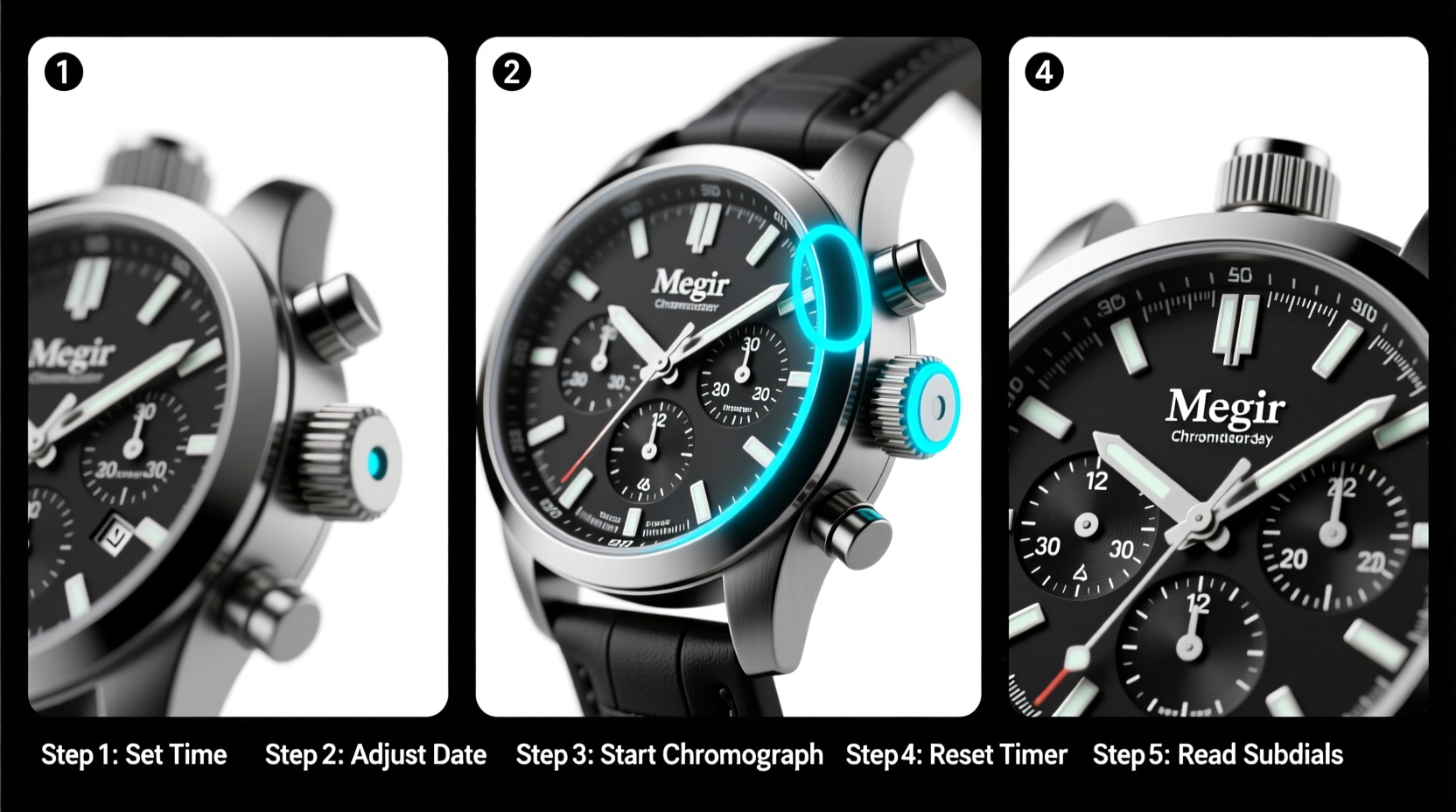
A chronograph is essentially a stopwatch built into your watch. On a Megir model, it typically includes three subdials: one for seconds (running), one for minutes, and sometimes one for hours. The main hands display regular time, while the chronograph hands activate independently when needed.
The operation centers around two pushers on the side of the case:
- Top pusher (Button A): Starts and stops the chronograph.
- Bottom pusher (Button B): Resets the chronograph hand to zero.
It’s crucial to note that these functions follow a strict sequence: start → stop → reset. Attempting to reset while the chronograph is running can damage the internal mechanism over time.
“Precision instruments like chronographs require disciplined use. Skipping steps may not break them immediately, but repeated misuse leads to premature wear.” — Daniel Reyes, Watch Mechanic & Horology Instructor
Step-by-Step Guide to Setting and Using the Chronograph
Follow this timeline-based process to ensure accurate and safe operation of your Megir chronograph.
- Pull the crown to the time-setting position. Gently pull the crown out to the second notch (not the full extension used for date adjustment). Rotate it to set the hour and minute hands to the correct local time. Once aligned, push the crown back in completely.
- Verify subdial alignment. Before first use, confirm that all chronograph subdials are at zero. If they aren’t, proceed to the reset process outlined below.
- Start the chronograph. Press the top pusher (Button A) once. The central chronograph hand will begin moving, and the minute counter (usually at 3 o’clock) will increment as time passes.
- Stop the measurement. When the desired interval ends, press Button A again. The chronograph hand stops, allowing you to read elapsed time precisely.
- Reset to zero. Only after stopping, press the bottom pusher (Button B). This returns the central hand and subdials to zero. Never press Button B while the chronograph is running.
Common Mistakes and How to Avoid Them
Even experienced users occasionally make errors that compromise their watch’s longevity. Below is a comparison of proper vs. improper behavior.
| Do’s | Don’ts |
|---|---|
| Always stop the chronograph before resetting | Never reset while the timer is running |
| Use light, firm presses on pushers | Avoid hammering or holding buttons too long |
| Check alignment monthly | Ignore misaligned subdials |
| Keep the crown fully pushed in during chronograph use | Operate functions with crown pulled out |
One frequent issue arises when users press both pushers simultaneously, thinking it will restart the timer. This does not work reliably and may cause mechanical strain. Stick to the standard sequence: start → stop → reset.
Maintaining Accuracy: Calibration and Resetting Misaligned Hands
Over time, minor shocks or battery changes (in quartz models) can cause the chronograph hand to fall out of alignment. Here’s how to recalibrate:
- Activate the chronograph by pressing Button A.
- Let it run for exactly 15 seconds, then stop it.
- If the hand doesn’t land precisely on the 15-second mark, it needs adjustment.
- To correct: Restart the chronograph, let it run briefly, then stop and reset. Repeat until the hand aligns correctly upon stopping.
Note: Mechanical drift in cheaper movements is normal. Small discrepancies under half a second per minute are acceptable for entry-level chronographs like Megir.
Real-World Example: Timing a Morning Run
Carlos, a fitness enthusiast, recently bought a Megir chronograph to track his runs. He sets off at 6:45 AM and wants to time his 5K loop.
He starts by ensuring the crown is fully seated. At the starting line, he presses the top pusher—his chronograph hand begins sweeping smoothly. After completing the route, he stops the timer at 7:22 AM. The chronograph shows 37 minutes and 12 seconds. He then presses the bottom pusher to reset the hand to zero, ready for next use.
By following the correct sequence, Carlos avoids damaging his watch and records consistent data across workouts. Over three months, he notices improved pacing thanks to reliable feedback from his Megir.
Essential Checklist for Chronograph Users
Keep this checklist handy until operating your Megir becomes second nature:
- ✅ Crown is fully pushed in before using chronograph
- ✅ Top pusher starts and stops the timer
- ✅ Bottom pusher is only used after stopping
- ✅ Subdials return to zero after reset
- ✅ No visible lag or jump in hand movement
- ✅ Watch face and pushers are clean and dry
Frequently Asked Questions
Can I use the chronograph continuously for long periods?
Yes, but not indefinitely. Quartz-powered Megir chronographs can run the stopwatch function for several hours without issue. However, prolonged continuous use increases battery drain and heat buildup. Limit sessions to under two hours for optimal longevity.
Why won’t my chronograph hand reset to zero?
This usually indicates a misalignment or weak battery. Try cycling the start-stop-reset sequence a few times. If the hand still doesn’t return to zero, the movement may need servicing. Avoid forcing the reset.
Is water resistance affected when using the chronograph?
Yes. Pushers are potential entry points for moisture. Even if your Megir is rated 5ATM or higher, avoid operating the chronograph underwater or with wet hands. Water exposure during button press can compromise seals over time.
Final Thoughts and Action Steps
Your Megir chronograph is more than just a stylish accessory—it’s a tool designed for precision and reliability. By understanding its mechanics and treating it with care, you preserve both function and value. Whether you're tracking personal goals, managing daily intervals, or simply appreciating horological craftsmanship, proper use makes all the difference.
Take a moment today to test your watch’s chronograph function using the steps outlined here. Calibrate if needed, review the do’s and don’ts, and commit to disciplined operation. These small habits extend your watch’s life and enhance your experience with every press of the pusher.




 浙公网安备
33010002000092号
浙公网安备
33010002000092号 浙B2-20120091-4
Comments
No comments yet. Why don't you start the discussion?