
Maintaining proper tire pressure is one of the most overlooked yet critical aspects of vehicle care. Underinflated tires reduce fuel efficiency, compromise handling, increase wear, and raise the risk of blowouts. Overinflated tires can lead to a harsh ride and uneven tread wear. Knowing how to pump air into a tire correctly and safely ensures your vehicle performs optimally and safely on the road. This guide walks you through each step with precision, offering expert-backed advice, real-world examples, and practical checklists.
Why Proper Tire Pressure Matters
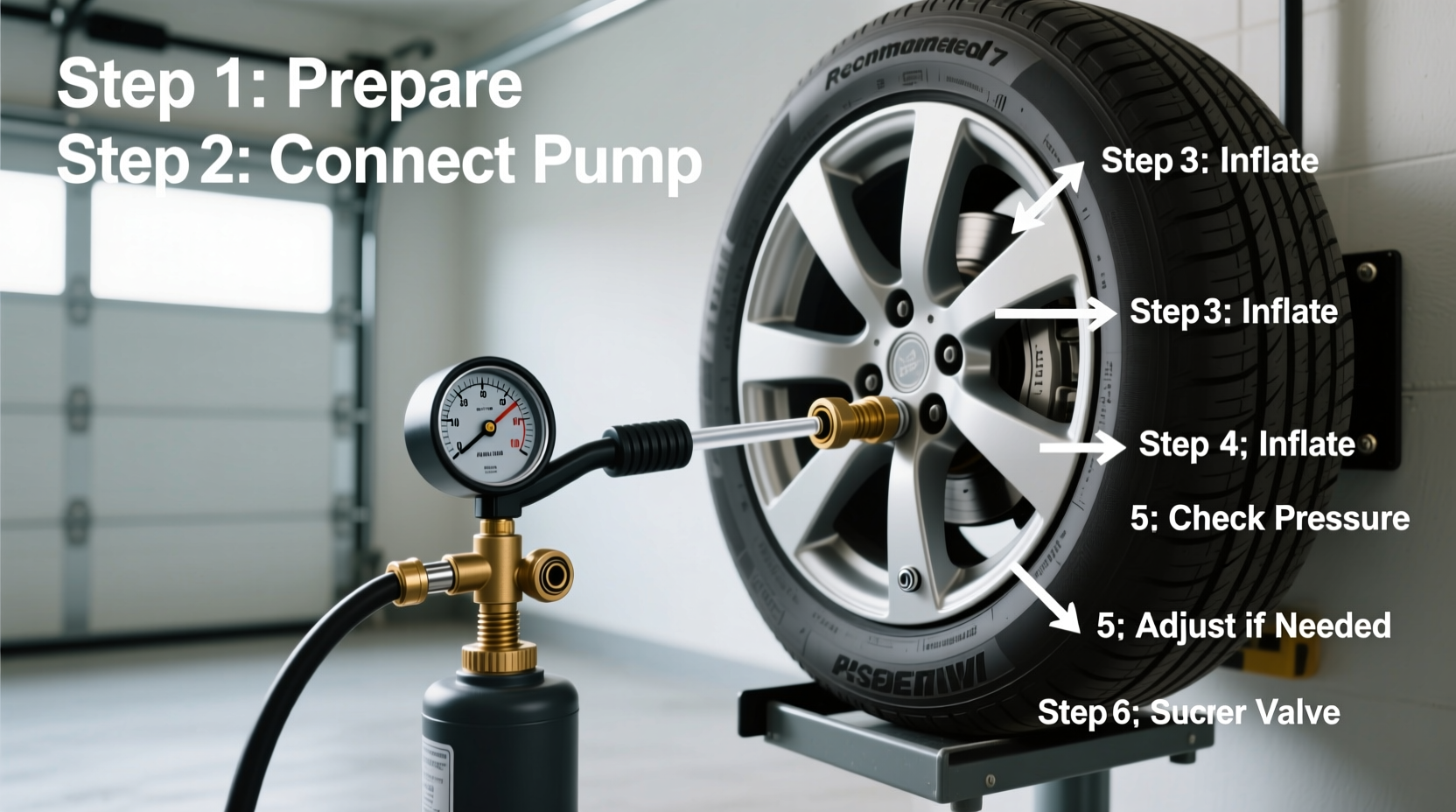
Tire pressure directly affects how your car handles, brakes, and consumes fuel. The U.S. Department of Energy estimates that underinflated tires can lower gas mileage by 0.2% for every 1 psi drop in pressure across all four tires. Most vehicles perform best when tires are inflated to the manufacturer’s recommended level—typically between 32 and 35 psi (pounds per square inch), though this varies by make and model.
Regularly checking and adjusting tire pressure isn’t just about performance—it's a safety issue. According to the National Highway Traffic Safety Administration (NHTSA), underinflated tires contribute to over 700 fatalities and 78,000 crashes annually in the United States.
Tools You’ll Need
Before pumping air, gather the right tools. Using improper or outdated equipment can lead to inaccurate inflation or valve damage.
- Air compressor – Portable models are affordable and ideal for home use; gas station compressors work too.
- Tire pressure gauge – Digital gauges are more precise than analog ones, but both are effective if used correctly.
- Valve cap wrench or small towel – Helps remove stubborn valve caps without damaging them.
- Pen and paper or smartphone – To record current and target pressures.
“Consistently maintaining correct tire pressure extends tire life by up to 30% and improves braking distance.” — David Liu, Automotive Safety Engineer, NHTSA
Step-by-Step Guide to Pumping Air Into a Tire
Follow these steps carefully to ensure accuracy and safety. Skipping even one step can result in overinflation, underinflation, or valve stem damage.
- Find the Recommended PSI
Locate the recommended tire pressure on the driver’s side door jamb, inside the fuel filler flap, or in the owner’s manual. Do not rely on the number printed on the tire sidewall—that’s the maximum pressure, not the ideal operating pressure. - Check Current Pressure
Remove the valve cap from the tire. Press the tire gauge firmly onto the valve stem until you hear a brief hiss. Hold it steady for 2–3 seconds. Read the pressure value. Repeat for all four tires, including the spare if applicable. - Determine How Much Air to Add
Subtract the current pressure from the recommended PSI. For example, if your tire reads 30 psi and the recommendation is 34 psi, you need to add 4 psi. - Attach the Air Hose
If using a gas station air pump, insert coins or tap your payment method, then select “Air.” Firmly press the hose nozzle onto the valve stem. Ensure a tight seal to prevent air leakage during inflation. - Inflate Gradually
Pump air in short bursts (3–5 seconds), then recheck pressure with your gauge. This prevents overshooting the target. It’s easier to add more air than to release excess. - Recheck and Adjust
After each burst, disconnect the hose and re-measure with your own gauge. Continue until the pressure matches the recommended level. - Replace the Valve Cap
Screw the valve cap back on tightly. While small, it keeps dirt and moisture out of the valve core and prevents slow leaks. - Repeat for All Tires
Don’t assume all tires lose pressure at the same rate. Always check and adjust each one individually.
Do’s and Don’ts When Inflating Tires
| Do’s | Don’ts |
|---|---|
| Check pressure when tires are cold | Don’t use the gauge built into some air compressors—they’re often inaccurate |
| Use your own reliable pressure gauge | Don’t inflate to the max PSI listed on the tire sidewall |
| Inflate in short bursts and recheck frequently | Don’t leave the air hose unattended while inflating |
| Inspect valve stems for cracks or leaks | Don’t ignore a tire that consistently loses pressure—it may have a leak |
| Keep valve caps secured | Don’t overtighten valve caps—they’re meant to be hand-tight only |
Real Example: A Preventable Flat Tire
Mark, a delivery driver in Colorado, noticed his van pulling slightly to the right. He ignored it for weeks, assuming it was alignment. During a winter trip, the outside temperature dropped sharply overnight. Cold air reduced the pressure in his already low front tire. Midway through his route, the tire failed catastrophically on the highway—a preventable blowout.
After the incident, Mark learned that his tire had been running at 26 psi instead of the recommended 33 psi. The underinflation caused excessive flexing, generating heat and weakening the sidewall. Had he checked the pressure monthly, especially as temperatures changed, he could have avoided costly downtime and danger.
This case illustrates how seasonal changes affect tire pressure—tire pressure drops about 1 psi for every 10°F decrease in ambient temperature.
Frequently Asked Questions
How often should I check my tire pressure?
At minimum, check once a month. More frequently in seasons with large temperature swings (fall and winter). Always check before long road trips or carrying heavy loads.
Can I rely on my car’s TPMS (Tire Pressure Monitoring System)?
TPMS is helpful but not foolproof. Most systems only alert you when pressure drops 25% below the recommended level—already dangerously low. Use it as a backup, not a replacement for manual checks.
Is it safe to inflate tires at a gas station air pump?
Yes, as long as you monitor the pressure closely. Many public pumps lack automatic shut-offs. Bring your own gauge and inflate in short intervals to avoid overinflation.
Final Checklist Before You Go
Use this quick checklist after inflating your tires to ensure everything is in order:
- ✅ All tires inflated to manufacturer-recommended PSI
- ✅ Valve caps securely replaced
- ✅ No visible damage or punctures on tire sidewalls
- ✅ Valve stems intact and not leaking
- ✅ Spare tire also checked (if accessible)
- ✅ Tools stored and vehicle ready for safe driving
Conclusion: Make Tire Care a Habit
Pumping air into a tire might seem like a minor task, but done correctly, it contributes significantly to your safety, fuel economy, and tire longevity. With just five minutes a month, you can prevent expensive repairs, improve handling, and reduce environmental impact through better fuel efficiency. Equip yourself with a quality gauge and portable compressor, follow the steps outlined here, and turn tire maintenance into a seamless part of your routine.




 浙公网安备
33010002000092号
浙公网安备
33010002000092号 浙B2-20120091-4
Comments
No comments yet. Why don't you start the discussion?