
Maintaining proper tire pressure is one of the most overlooked yet critical aspects of vehicle maintenance. Underinflated tires reduce fuel efficiency, shorten tire life, and increase the risk of blowouts. Overinflation compromises ride comfort and traction. Fortunately, most gas stations offer free air pumps—accessible, convenient, and effective when used correctly. This guide walks you through the entire process, from locating your ideal PSI to safely inflating your tires without damaging the valve or equipment.
Why Proper Tire Pressure Matters
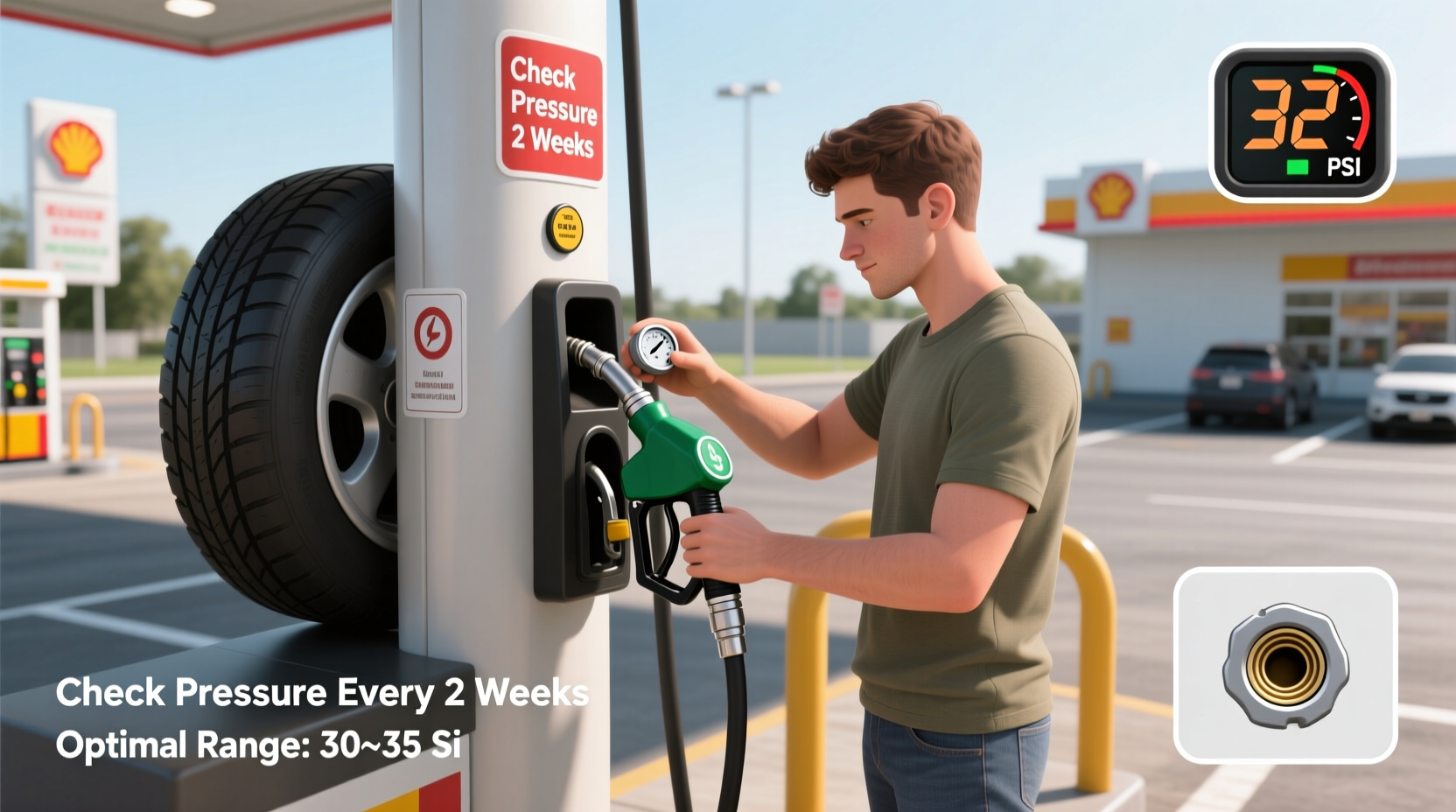
Tire pressure directly affects how your vehicle handles, brakes, and consumes fuel. The U.S. Department of Energy estimates that underinflated tires can lower gas mileage by up to 3%—a small number that adds up over time. Beyond efficiency, incorrect pressure impacts safety. According to the National Highway Traffic Safety Administration (NHTSA), underinflated tires contribute to more than 700 fatalities annually due to loss of control or tire failure.
The key is consistency. Tires naturally lose about 1 psi (pound per square inch) per month, and temperature fluctuations accelerate this loss. A drop of just 10°F can reduce pressure by 1–2 psi. That’s why checking your tires monthly—and especially before long trips—is essential.
“Properly inflated tires improve safety, save fuel, and extend tread life. It's one of the easiest maintenance tasks with the highest return.” — Mark Reynolds, ASE-Certified Automotive Technician
Step-by-Step Guide: Using a Gas Station Air Pump Safely
Using a public air pump doesn’t require mechanical expertise, but it does require attention to detail. Follow these steps to ensure accurate inflation and prevent damage.
- Check Your Vehicle’s Recommended PSI
Open the driver’s side door and locate the tire information label on the door jamb. This lists the correct cold tire pressure for front and rear tires. Do not use the PSI printed on the tire sidewall—that’s the maximum pressure, not the recommended level. - Park Close to the Air Compressor
Pull up so your tires are within easy reach of the hose. If you're filling rear tires, angle your vehicle accordingly. Turn off the engine and engage the parking brake. - Remove Valve Caps and Check Current Pressure
Unscrew the valve cap from the first tire. Use a handheld tire pressure gauge to measure the current PSI. Press it firmly onto the valve stem until the hissing stops. Read the value and record it. - Attach the Air Hose Nozzle
Turn on the compressor if required (some are automatic). Firmly press the nozzle onto the valve stem at a straight angle. Hold it in place—do not walk away. You’ll hear air flowing. Most pumps shut off automatically when resistance increases, but they aren’t precision instruments. - Inflate in Short Bursts
Add air in 2–3 second bursts, then recheck with your gauge. This prevents overinflation. Repeat until you reach the target PSI. Remember: it’s easier to add air than to release it. - Release Air If Overinflated
If you exceed the recommended pressure, press the small pin in the center of the valve stem with the tip of your gauge or a key. Let out small amounts and recheck frequently. - Replace Valve Cap and Repeat
Once properly inflated, screw the valve cap back on tightly. Move to the next tire and repeat the process. Don’t forget the spare if your vehicle has one.
Do’s and Don’ts at Public Air Pumps
Many drivers unknowingly misuse gas station compressors, risking damage to their tires or the equipment. The following table outlines best practices.
| Do | Don’t |
|---|---|
| Use your own calibrated tire pressure gauge | Rely solely on the pump’s built-in gauge |
| Inflate tires when they are “cold” (before driving) | Add air immediately after highway driving |
| Hold the nozzle firmly in place | Leave the hose unattended during inflation |
| Recheck pressure after each burst of air | Blast air continuously for 10+ seconds |
| Keep the area around the pump clear | Block access for other drivers while parked |
Real Example: Avoiding a Blowout on I-75
James, a delivery driver from Atlanta, skipped checking his tire pressure for months. One summer afternoon, he was cruising at 70 mph on I-75 when his rear passenger-side tire blew out. The van swerved, and although he regained control, the incident damaged the wheel and cost $650 in repairs.
Afterward, a mechanic checked the remaining tires. All were running between 22 and 25 psi—well below the recommended 32 psi. The low pressure caused excessive flexing, generating heat buildup that led to the blowout. Since then, James checks his tires every Friday morning at the same gas station. He keeps a log in his glovebox and uses a digital gauge. His tires now last 25% longer, and his fuel costs have dropped noticeably.
Essential Checklist Before You Inflate
- ✅ Locate your vehicle’s recommended PSI (driver’s door jamb)
- ✅ Bring your own tire pressure gauge
- ✅ Park within reach of the air hose
- ✅ Turn off the engine and apply the parking brake
- ✅ Remove valve caps and check current pressure
- ✅ Inflate in short bursts, rechecking each time
- ✅ Replace valve caps securely
- ✅ Clean up and allow others to use the pump
Frequently Asked Questions
How often should I check my tire pressure?
At minimum, once a month and before any long trip. Seasonal changes—especially when temperatures drop in fall or spike in summer—are critical times to verify pressure.
Can I use the air pump if my TPMS light is on?
Yes, but first determine why the light came on. Use your gauge to check all tires. If one is significantly low, inspect for punctures. After inflation, the light may take a few miles to reset. If it stays on, visit a service center.
Is it safe to use coin-operated air pumps?
Coin-operated pumps work like free ones but may offer better maintenance. Inserting coins often activates a timer (e.g., 60 seconds of air). Even with payment, follow the same careful inflation process—don’t assume accuracy.
Conclusion: Make Tire Care a Habit
Checking and adjusting tire pressure at a gas station takes less than ten minutes but delivers lasting benefits. You’ll improve fuel economy, enhance handling, and reduce the risk of dangerous failures. More importantly, you gain peace of mind knowing your vehicle is operating as intended.
Don’t wait for a warning light or uneven wear to act. Integrate tire checks into your routine—pair it with refueling or weekly grocery runs. With the right tools and awareness, maintaining optimal tire pressure becomes effortless.




 浙公网安备
33010002000092号
浙公网安备
33010002000092号 浙B2-20120091-4
Comments
No comments yet. Why don't you start the discussion?