
Megir watches are known for their sleek design, affordability, and practical features—one of which is the luminous dial function. This feature allows wearers to read the time clearly in low-light or dark environments, making it ideal for nighttime activities, early morning workouts, or travel. However, many users fail to get the most out of this function simply because they don’t understand how it works or how to activate it properly. This guide walks you through everything you need to know—from activation techniques to maintenance tips—so you can fully leverage the glow-in-the-dark capability of your Megir timepiece.
Understanding Luminous Technology in Megir Watches
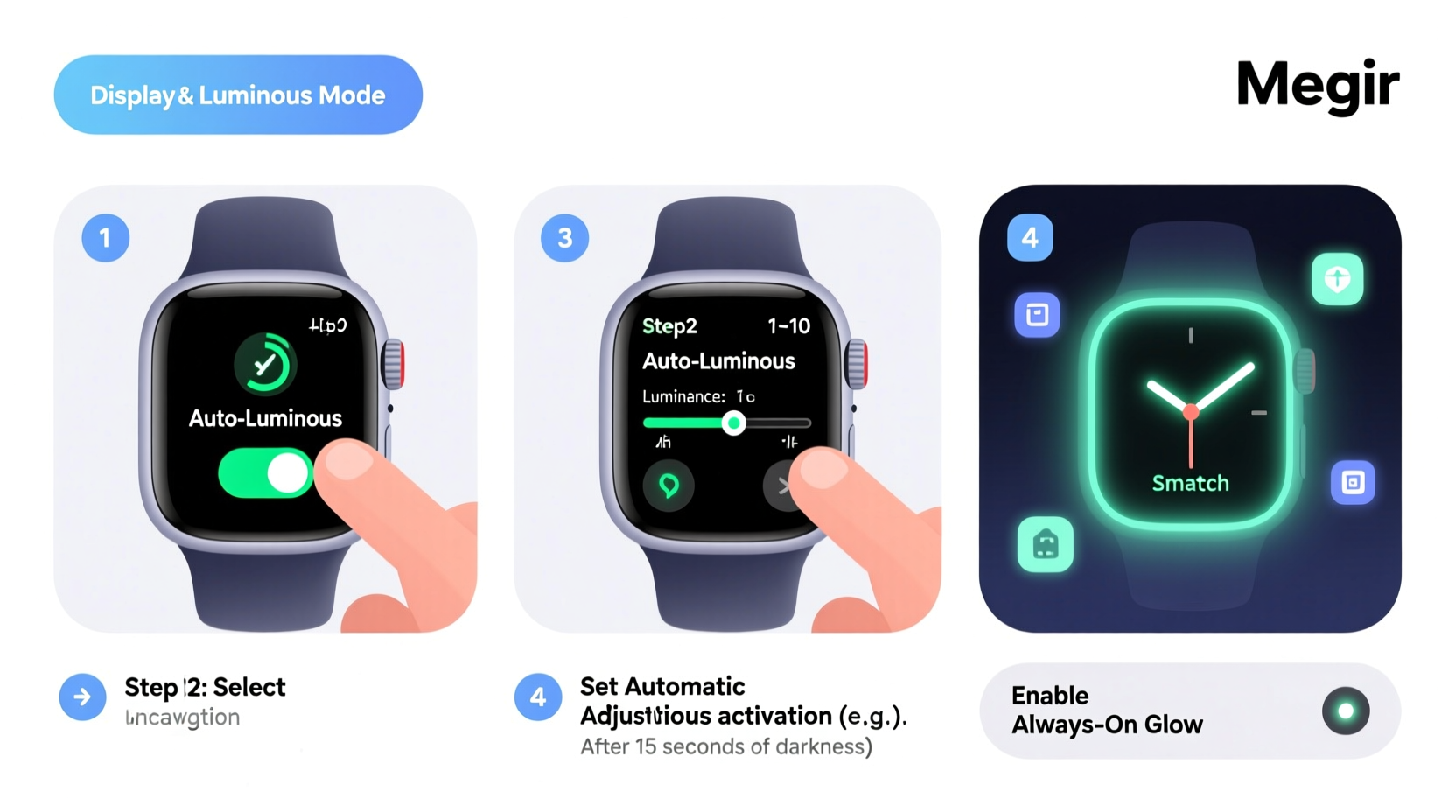
Megir watches typically use photoluminescent materials such as strontium aluminate or zinc sulfide on the hands, hour markers, and sometimes bezels. These materials absorb ambient light (natural or artificial) and re-emit it slowly in the dark. Unlike tritium-based systems found in high-end dive watches, Megir’s lume is non-radioactive and safe for daily wear, but it requires regular \"charging\" via exposure to light sources.
The brightness and duration of the glow depend on several factors: the intensity and duration of prior light exposure, the age of the lume coating, and environmental conditions like humidity and temperature. Newer Megir models often use advanced pigments that offer longer afterglow times—up to 3–5 hours under optimal conditions.
“Photoluminescence isn't magic—it's physics. The more photons absorbed during charging, the brighter and longer the emission.” — Dr. Alan Zhou, Materials Scientist specializing in luminescent compounds
How to Activate the Luminous Function: A Step-by-Step Process
Activating the luminous function on your Megir watch doesn’t require buttons or settings. Instead, it relies on proper light exposure. Follow this timeline-based method to ensure maximum performance:
- Step 1: Expose your watch to bright light (Daylight preferred)
Place your Megir watch directly under sunlight or a strong artificial light source (e.g., LED lamp, flashlight) for 2–5 minutes. Direct contact with UV-rich daylight yields the best results. - Step 2: Rotate the watch periodically
Turn the watch every 30 seconds to ensure all luminescent areas receive equal exposure. Pay attention to the underside if possible, though most charging occurs from the front face. - Step 3: Enter a dark environment
After charging, move into a dimly lit or completely dark room. Within seconds, you should see the hands and markers begin to emit a soft greenish-blue glow—the most common color used in Megir models. - Step 4: Observe glow duration
Note how long the brightness lasts. High-quality lume will remain visible for over an hour, gradually fading rather than disappearing abruptly. - Step 5: Recharge as needed
If you plan to be in darkness again later, top up the charge before entering low-light conditions.
Maximizing Luminosity: Best Practices and Pro Tips
To get consistent, reliable performance from your Megir watch’s luminous elements, adopt these expert-backed strategies:
- Use natural sunlight whenever possible – Sunlight contains full-spectrum light including UV, which excites lume particles more efficiently than indoor bulbs.
- Avoid covering the dial unnecessarily – Don’t leave your watch face-down on surfaces when not wearing it. Keep it upright on a nightstand near a window overnight so it passively charges at dawn.
- Clean the crystal regularly – Dust, oils, or smudges on the sapphire or mineral glass can reduce light absorption. Wipe gently with a microfiber cloth weekly.
- Limit water exposure around seals – Although some Megir watches are water-resistant, moisture ingress can degrade lume material over time, especially near gaskets.
Luminous Performance Checklist
- ✅ Charge under direct sunlight for 3+ minutes daily
- ✅ Store watch face-up when not in use
- ✅ Clean the crystal weekly with lint-free cloth
- ✅ Test glow strength monthly in total darkness
- ✅ Avoid prolonged submersion unless rated for diving
Common Issues and Real-World Example
Some users report weak or short-lived glow despite following basic steps. Often, this stems from misunderstanding the technology or poor habits.
Mini Case Study: Mark’s Night Hike Problem
Mark purchased a Megir M7000 series watch for outdoor adventures. During a weekend camping trip, he struggled to read the time at night, assuming the lume was defective. Upon returning home, he reviewed his routine and realized he had stored the watch inside a closed pouch during daylight hikes, preventing any meaningful light exposure.
After switching to a mesh watch roll placed on his tent’s sun-facing side during the day, he noticed dramatic improvement. The next evening, after just four minutes of midday sun, the watch glowed brightly enough to check the time clearly throughout the night.
This case illustrates how user behavior—not product quality—is often the root cause of underperformance.
Do’s and Don’ts of Lume Maintenance
| Do’s | Don’ts |
|---|---|
| Expose to natural sunlight regularly | Leave the watch in complete darkness for days |
| Wipe the surface clean before charging | Use abrasive cleaners or alcohol wipes |
| Store face-up near light sources | Wrap in cloth or place under pillows |
| Recharge before nighttime events | Expect constant glow without reactivation |
| Inspect for flaking or discoloration annually | Submerge in water beyond stated rating |
Frequently Asked Questions
Why doesn’t my Megir watch glow anymore?
If your watch no longer glows, it may be due to aged lume material (common after 3–5 years), lack of consistent charging, or physical damage such as scratches blocking light absorption. Try extended exposure to bright light first. If there's still no response, the phosphor compound may have degraded.
Can I make the lume brighter with a UV light?
Yes, ultraviolet (UV) lights can enhance lume activation because they provide higher-energy photons that excite the phosphors more effectively. However, standard UV flashlights work best; avoid industrial-strength UV lamps that could potentially harm the crystal or adhesives over time.
Is the luminous material safe?
Absolutely. Modern Megir watches use non-toxic, non-radioactive photoluminescent compounds. Strontium aluminate, commonly used since the 2000s, is inert, stable, and safe for skin contact. Earlier zinc sulfide formulations were also safe but less efficient.
Conclusion: Make Darkness Work for You
Your Megir watch’s luminous function is a small but powerful feature that enhances usability across countless real-life situations—from checking the time during a midnight flight to reading the dial during an evening run. By understanding how photoluminescence works and adopting simple, consistent habits, you can keep your watch glowing brightly for years.
Start today: Place your watch in direct sunlight for five minutes, then test it in a dark room. Notice the difference. Repeat this practice regularly, and you’ll never wonder why your lume seems weak again.




 浙公网安备
33010002000092号
浙公网安备
33010002000092号 浙B2-20120091-4
Comments
No comments yet. Why don't you start the discussion?