
Group texts are essential for coordinating plans, staying in touch with family, or managing team projects. But what happens when you need to add someone new? The process varies significantly depending on your device, messaging app, and carrier settings. Whether you're using an iPhone, Android phone, or a third-party app like WhatsApp or Telegram, knowing the correct steps ensures seamless communication without leaving anyone out.
This comprehensive guide walks you through exactly how to add participants to a group message on every major platform, highlights common pitfalls, and provides troubleshooting tips for when things don’t go as planned.
Understanding Group Messaging: SMS vs. Internet-Based Apps
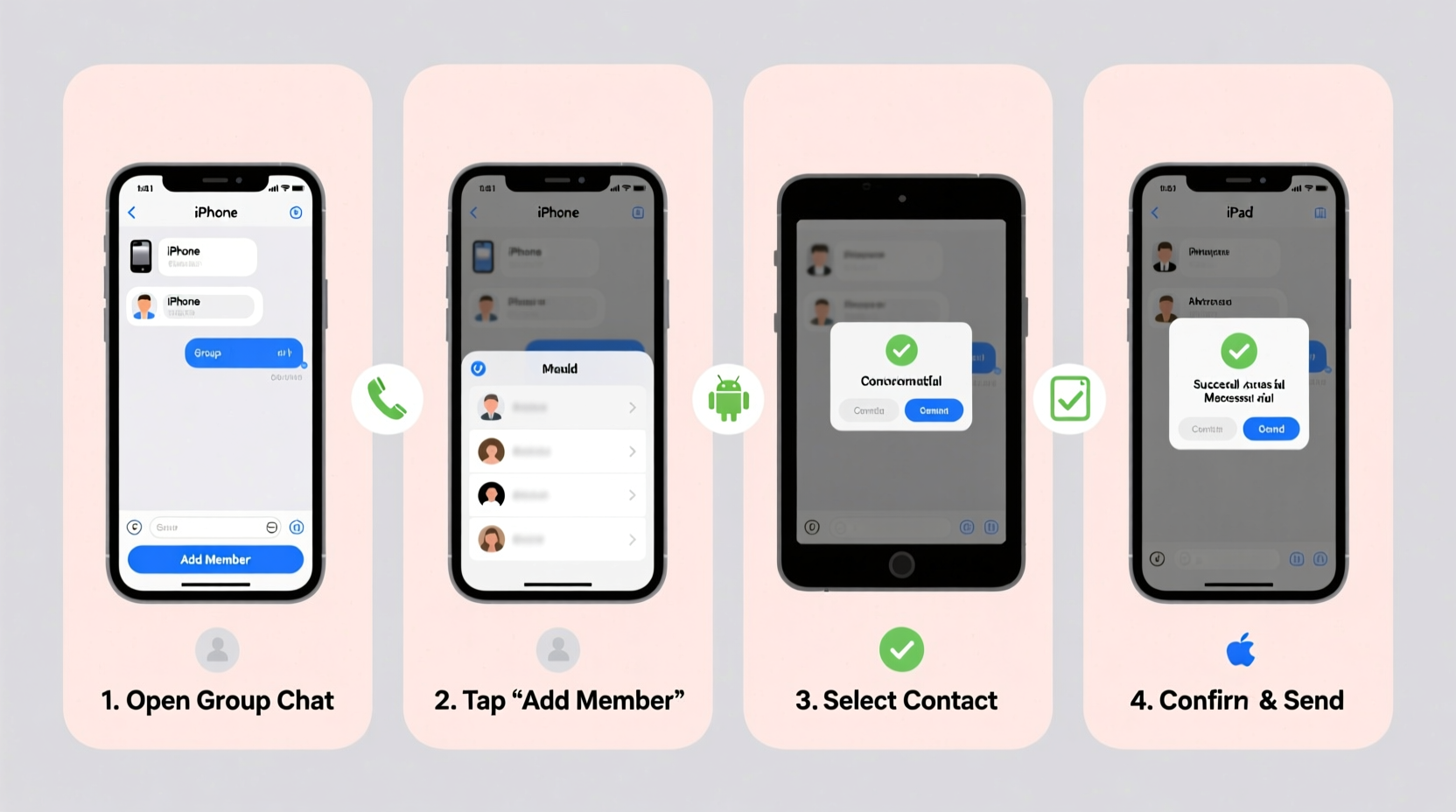
Before diving into the mechanics of adding contacts, it's crucial to understand the two primary types of group messaging:
- SMS/MMS (Short Message Service/Multimedia Messaging Service): These are traditional text messages sent over your cellular network. They don’t require internet access but may incur charges and lack advanced features.
- Internet-based messaging (iMessage, WhatsApp, Signal, etc.): Messages sent via data or Wi-Fi. These support richer media, read receipts, typing indicators, and more reliable group management.
The ability to add someone to a group depends heavily on which system you're using. For example, iMessage allows dynamic group changes only if all users are on Apple devices, while SMS groups often treat each addition as a new conversation thread.
How to Add Someone to a Group Text on iPhone (iOS)
Apple’s iMessage makes group management relatively straightforward—provided everyone uses iOS and has iMessage enabled. Here’s how to do it:
- Open the Messages app and select the group conversation you want to edit.
- Tap the group icons or names at the top of the chat window.
- Select “Info” (represented by an “i” icon).
- Scroll down and tap Add Contact.
- Enter the name, phone number, or email address of the person you’d like to add.
- Tap Done to save changes.
The new participant will receive a notification that they’ve been added, and all prior messages will be visible to them unless the group exceeds 25 members—after which older messages may not load fully.
“We recommend keeping iMessage groups under 25 people for optimal performance and message history retention.” — Apple Support Documentation
Limitations on iPhone
- If any member in the group uses SMS (non-iPhone), the entire thread reverts to MMS, disabling editing features.
- You cannot remove someone from a group unless all participants are using iMessage.
- Adding contacts via email only works if they’re registered with iMessage using that email.
Adding Participants on Android Devices
Android does not have a unified messaging experience like iMessage. Most devices use either Google Messages or a manufacturer-specific app (e.g., Samsung Messages). The process varies slightly but generally follows this pattern:
- Open the Messages app (Google or Samsung).
- Navigate to the group conversation.
- Tap the group profile icon or three-dot menu in the top-right corner.
- Select Add participants or People.
- Choose a contact or enter a phone number manually.
- Confirm the addition.
Unlike iMessage, many Android messaging apps allow additions even in MMS threads, though functionality remains limited. Some carriers restrict group size (often capping at 10–20 recipients), and message history may not sync properly for new members.
Carrier and App Variability
Because Android relies on carrier networks for SMS/MMS, inconsistencies arise:
- Verizon, AT&T, and T-Mobile handle MMS group messages differently.
- Some carriers convert large groups into distribution lists rather than true chats.
- Third-party apps like Textra or Pinger offer more control over group dynamics than default apps.
Using Third-Party Messaging Apps
For full control over group composition, internet-based apps are superior. Below is a comparison of popular platforms:
| App | Max Group Size | Add Participants? | Admin Controls |
|---|---|---|---|
| 1,024 | Yes (by any member or via invite link) | Group admins can restrict additions | |
| Telegram | 200,000 (supergroups) | Yes (via link or manual add) | Full admin hierarchy available |
| Signal | 1,000 | Yes (members or admin-approved) | Admins can lock membership |
| Facebook Messenger | Unlimited (practically) | Yes (by any participant) | Moderation tools available |
These apps bypass carrier limitations entirely, relying instead on internet connectivity. They also preserve message history and support multimedia sharing far beyond standard SMS capabilities.
Mini Case Study: Coordinating a Family Reunion
Sarah was organizing her family’s annual reunion and initially created an iPhone group chat with five siblings. When she tried to add two cousins who used Android phones, the group converted to MMS, and editing options disappeared. Frustrated, she recreated the conversation in WhatsApp, where she could easily add all 15 relatives, share event details, and even create a poll for dinner preferences. The switch eliminated confusion and ensured everyone stayed informed.
This real-world scenario illustrates why choosing the right platform matters more than mastering individual device settings.
Troubleshooting Common Issues
Even when following the correct steps, problems can occur. Here are frequent issues and their solutions:
- \"Add Contact\" option is grayed out: Likely due to MMS restrictions. Switch to an internet-based app or ensure all members are on iMessage.
- New person receives no prior messages: This is normal in SMS/MMS groups. Use apps like Telegram or WhatsApp to preserve chat history.
- Contact added but not receiving messages: Check their number format (include country code if international), verify service connectivity, and ensure they haven’t blocked the group.
- Group splits into multiple threads: Often occurs when switching between iMessage and SMS. Keep all members on data-based messaging to avoid fragmentation.
Checklist: Successfully Adding Someone to a Group Text
- Confirm the messaging platform in use (SMS, iMessage, WhatsApp, etc.)
- Ensure the person you're adding has compatible settings enabled
- Verify sufficient group capacity (check carrier or app limits)
- Use the correct method based on your device OS
- Test the group after addition by sending a message
- Fallback to a messaging app if native options fail
FAQ
Can I add someone to a group text if they’re not in my contacts?
Yes, but you must know their full phone number or email (if supported). On most devices, you can type the number directly into the \"Add\" field even if they aren’t saved.
Why can’t I remove someone from a group message?
Removal is only possible in iMessage or internet-based apps. In SMS/MMS groups, no one has administrative privileges—this is a technical limitation of the protocol.
Will the person know who added them?
In iMessage and most apps (WhatsApp, Telegram), yes—the notification usually reads “[Your Name] added [New Person] to the group.” In SMS, there’s typically no such announcement.
Final Thoughts and Recommendations
While native messaging tools offer convenience, they come with significant constraints—especially across different operating systems. For casual conversations among close contacts, learning how to add someone within your device’s default app may suffice. However, for ongoing coordination involving mixed-device users, transitioning to a robust messaging platform is the smarter long-term solution.
Whether you're planning a weekend trip, managing a volunteer team, or simply keeping relatives updated, ensuring everyone is included should be effortless. By understanding the nuances of each system and preparing for compatibility challenges, you maintain smooth, inclusive communication.




 浙公网安备
33010002000092号
浙公网安备
33010002000092号 浙B2-20120091-4
Comments
No comments yet. Why don't you start the discussion?