
The five flower bracelet, often crafted with intricate knotting techniques using embroidery floss or silk thread, is more than just an accessory—it’s a symbol of creativity, mindfulness, and personal expression. While its beauty lies in the symmetry and repetition of five floral motifs, achieving a perfect fit can be challenging. A bracelet that's too loose risks slipping off; one that's too tight may cause discomfort or restrict circulation. This guide walks you through the process of adjusting your five flower bracelet to ensure it stays securely on your wrist while remaining comfortable for all-day wear.
Understanding the Structure of a Five Flower Bracelet
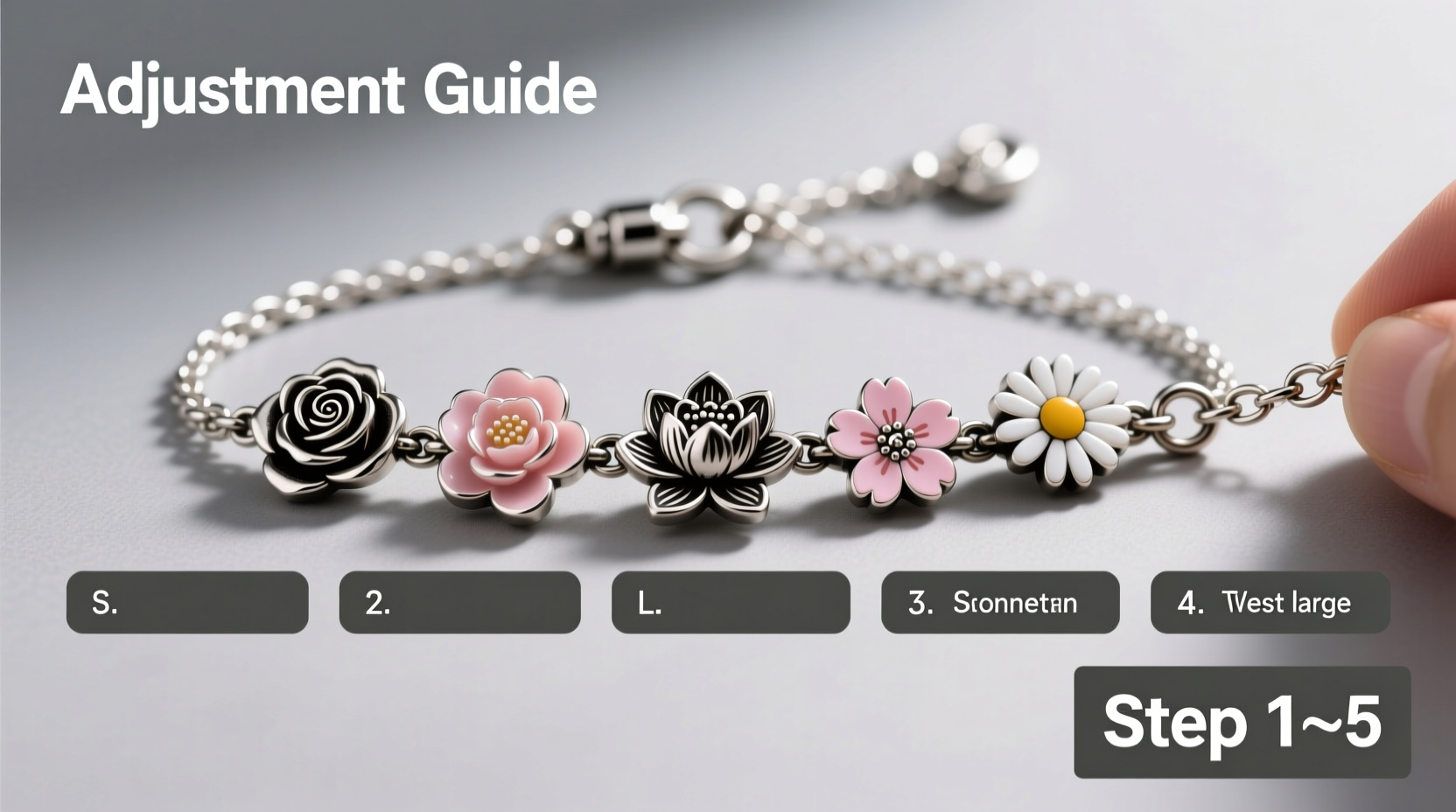
Before making any adjustments, it's essential to understand how the bracelet is constructed. Most five flower bracelets are made using macramé-style knots—typically forward and backward knots—that form each \"flower\" unit. These units are connected by small braided or knotted stems, and the entire piece usually ends with adjustable sliding knots that allow for sizing.
The closure system is key: two cords extend from either end and slide through loops or knots to tighten or loosen the band. This design allows for a customizable fit without clasps, but it also means improper adjustment can lead to slippage or uneven tension across the flowers.
Step-by-Step Guide to Adjusting Your Five Flower Bracelet
- Measure Your Wrist: Use a flexible tape measure to determine your wrist circumference. For most adults, this ranges between 6 and 7.5 inches. Add about 0.25 to 0.5 inches for comfort—this ensures the bracelet isn’t too snug.
- Lay the Bracelet Flat: Place the bracelet on a clean, flat surface under good lighting. Identify the two tail cords used for tightening and the main loop or knot they pass through.
- Loosen the Sliding Knots: Gently pull the tail cords outward to release tension. This opens the bracelet so you can slip it over your hand. Be careful not to tug too hard, as sudden force may distort the flower patterns.
- Put It On and Position Comfortably: Slide the bracelet onto your wrist. Move it to the desired position—usually just below the wrist bone. Avoid placing it too high near the hand joint, where movement could loosen the knot.
- Begin Tightening Gradually: Hold one tail cord steady while gently pulling the other diagonally upward to close the loop. Alternate sides, tightening incrementally. This prevents twisting and keeps the flowers aligned.
- Check Fit and Mobility: Once snug, try moving your hand and wrist naturally. The bracelet should stay in place without pinching or sliding down. You should be able to slip a fingertip underneath comfortably.
- Secure the Final Knot (Optional): If the bracelet tends to loosen over time, tie a simple overhand knot at the end of each tail to prevent further sliding. Alternatively, leave the tails long enough to tuck behind the bracelet for a sleek finish.
Common Pitfalls During Adjustment
- Pulling only one side too tightly, causing the bracelet to twist
- Cutting the cords too short before confirming fit
- Over-tightening, which strains the knots and distorts flower shapes
- Failing to account for swelling during hot weather or physical activity
“Proper fit isn’t just about size—it’s about balance. A well-adjusted five flower bracelet should feel like a natural extension of your hand.” — Lila Tran, Artisan Jewelry Designer
Do’s and Don’ts When Adjusting Your Bracelet
| Do’s | Don’ts |
|---|---|
| Measure your wrist first | Assume one size fits all |
| Tighten both sides evenly | Pull one cord aggressively |
| Leave extra cord for future adjustments | Cut tails immediately after fitting |
| Test fit during different activities | Adjust only when seated quietly |
| Store flat or rolled to preserve shape | Leave it dangling or crumpled in a drawer |
Real Example: Adjusting for Daily Wear and Active Use
Sophie, a yoga instructor, received a handmade five flower bracelet from her sister. She loved the vibrant colors and delicate design but found it slipped off during practice. After measuring her wrist at rest and again post-savasana (when slight swelling occurs), she realized the original fit was too loose.
She followed the adjustment steps carefully: loosened the knot, wore the bracelet during a short flow sequence, then gradually tightened it while mimicking arm movements. By alternating tension on each tail and testing mobility, she achieved a secure fit that stayed put—even during downward dog. She left 1.5 inches of tail, tied small stopper knots, and now wears it daily without worry.
Checklist: Perfect Fit in 7 Steps
- ✅ Measure wrist circumference accurately
- ✅ Lay bracelet flat before adjustment
- ✅ Loosen sliding knots gently
- ✅ Put on and position correctly on wrist
- ✅ Tighten both cords evenly and gradually
- ✅ Test range of motion and comfort
- ✅ Secure ends without cutting too short
Frequently Asked Questions
Can I resize a five flower bracelet after it’s been worn?
Yes. As long as the tail cords remain long enough, you can readjust the fit at any time. Simply loosen the sliding knot, reposition the bracelet, and retighten following the same technique.
What if my bracelet keeps loosening throughout the day?
This usually happens due to uneven tension or insufficient friction in the knot. Try tying a small overhand knot at the base of each tail to lock the position. Also, consider adding a drop of clear nail polish to the final knot (sparingly) to prevent slippage—avoid getting it on the decorative parts.
Is it safe to get the bracelet wet during adjustment?
It depends on the material. Cotton embroidery floss may weaken when wet and stretch upon drying, altering the fit. Silk threads are more durable but can stain. Avoid water exposure unless cleaning, and always dry flat away from direct heat.
Maintaining Long-Term Comfort and Security
Even after perfect adjustment, regular maintenance ensures longevity. Inspect the knots weekly for signs of fraying or loosening. Rotate wear with other bracelets to reduce strain on fibers. If you notice persistent slippage, consider reinforcing the closure with a micro-knot or switching to waxed thread for added grip.
Environmental factors matter too. Humidity and sweat can degrade natural fibers over time. If you live in a humid climate or wear the bracelet while exercising, opt for synthetic threads like nylon, which resist moisture better than cotton.
Conclusion
Adjusting a five flower bracelet for comfort and security is a blend of precision and patience. With the right approach—measuring accurately, tightening evenly, and testing in real-world conditions—you can enjoy a flawless fit that honors both function and artistry. Whether worn as a gift, a keepsake, or a creative project of your own, a well-fitted bracelet enhances your presence with quiet elegance.




 浙公网安备
33010002000092号
浙公网安备
33010002000092号 浙B2-20120091-4
Comments
No comments yet. Why don't you start the discussion?