
The Camellia bracelet, often associated with timeless elegance and refined craftsmanship, is more than just an accessory—it's a statement of personal style. Whether received as a gift or purchased as a self-indulgence, ensuring it fits properly enhances both comfort and visual appeal. A bracelet that’s too loose may slip off, while one that’s too tight can cause discomfort or restrict circulation. Achieving the ideal fit requires attention to detail, the right tools, and a methodical approach. This guide walks you through each stage of adjusting your Camellia bracelet for a secure, personalized fit that feels as good as it looks.
Understanding Your Camellia Bracelet Design
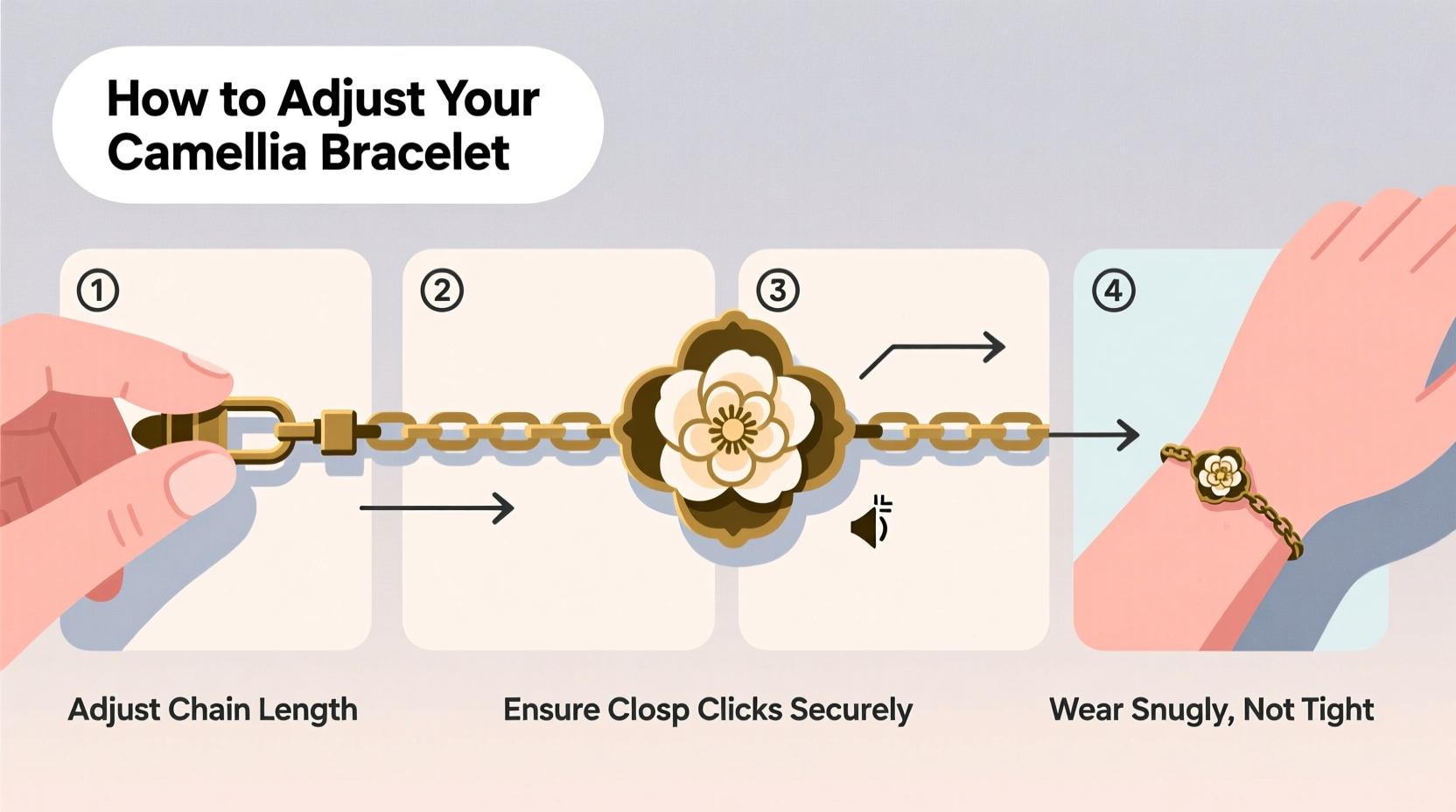
Camellia bracelets typically feature interlocking metal links, a floral-inspired clasp, or flexible mesh construction, depending on the brand and era. Most are made from stainless steel, sterling silver, or gold-plated materials, often centered around a signature camellia flower motif. The design influences how adjustments are made—some models allow for link removal, while others use adjustable chains or sliding mechanisms.
Before making any changes, identify your bracelet type:
- Link-style: Composed of individual metal segments connected by pins; common in luxury brands.
- Chain-with-extender: Features a short chain extension for minor size adjustments.
- Flexible mesh or bangle: Often one-size-fits-most with slight elasticity.
Knowing your model ensures you apply the correct adjustment method without damaging delicate components.
Step-by-Step Guide to Adjusting a Link-Style Camellia Bracelet
For precision-fit customization, follow this timeline-tested process. This method applies to most link-style bracelets where sizing is adjusted by removing or adding links.
- Measure your wrist: Use a soft measuring tape to wrap around the narrowest part of your wrist (above the bone). Add 0.5 inches for comfort. For example, if your wrist measures 6.5 inches, aim for a 7-inch bracelet length.
- Determine how many links to remove: Each link usually adds 3–5mm. Compare your desired length to the current size. Mark the links to be removed using a small piece of tape.
- Gather tools: You’ll need a pin pusher tool (available in jewelry tool kits), a small hammer, a block of wood, and a microfiber cloth to protect the finish.
- Position the bracelet: Place it on the wood block with a link hole facing upward. Align the pin hole with the tool’s tip.
- Push out the pin: Gently tap the pin pusher until the pin begins to emerge from the other side. Stop once enough is exposed to grip with pliers.
- Remove the pin completely: Using fine-tipped pliers, pull the pin straight out. Keep pins safe—they’re reusable when resizing larger.
- Detach the selected links: Separate the chain at the opened joint and remove the necessary number of links.
- Reconnect the chain: Align the open ends and reinsert the pin. Tap it back gently until flush with the link. Avoid over-hammering to prevent deformation.
- Test the fit: Slide the bracelet on. It should rest snugly but allow a finger to slip between the band and skin.
This process preserves structural integrity while tailoring the bracelet to your anatomy.
Adjusting Non-Link Camellia Bracelets
Not all Camellia bracelets use removable links. Many modern versions incorporate alternative sizing systems designed for ease of use.
Using an Extender Chain
If your bracelet has a small chain attached to the clasp, simply hook the closure onto the desired link. This provides up to 1 inch of additional room, ideal for fluctuating wrist sizes due to temperature or activity.
Sliding Knot or Adjustable Cord Designs
Some fabric or silk-threaded Camellia bracelets use sliding knots. To tighten, gently pull the adjustment cords in opposite directions. To loosen, hold the knot and slide it outward. These styles offer infinite micro-adjustments and are excellent for gifting when exact sizes are unknown.
Flexible Mesh or Hinged Bangles
These rely on spring tension. Open slightly by applying even pressure with both hands and slipping it over the hand. Ensure it closes securely on the wrist without pinching. Do not force open beyond its natural range.
| Bracelet Type | Adjustment Method | Best For |
|---|---|---|
| Link-style metal | Pin removal/addition | Precise, permanent fit |
| Extender chain | Clasp repositioning | Minor seasonal changes |
| Sliding knot cord | Knot repositioning | Versatile wear, unisex sizing |
| Mesh/hinged bangle | Elastic expansion | Quick on/off, formal events |
Expert Insight: Why Proper Fit Matters
A well-fitted bracelet does more than look better—it protects your investment and prevents loss. Jewelry designers emphasize ergonomics as much as aesthetics.
“Even the most exquisite bracelet loses its charm if it constantly slips or pinches. A proper fit balances security and comfort, letting the design speak for itself.” — Lila Montrose, Master Jeweler & Accessories Designer
Improperly sized bracelets are responsible for nearly 40% of accidental jewelry losses, according to industry reports. Ensuring your Camellia bracelet stays put during daily movement is not just about preference—it’s about preservation.
Mini Case Study: Sarah’s Perfect Fit Journey
Sarah inherited her grandmother’s vintage Camellia bracelet—a cherished heirloom with sentimental value. While beautiful, it was two sizes too large and slipped off during a dinner event, narrowly avoiding loss down a drain. Distressed, she researched adjustments and discovered her model used removable links. With guidance from a local jeweler and this guide, she safely removed three links. The result? A secure fit that honors the past while fitting perfectly into her present life. “It finally feels like it belongs on my wrist,” she said. “I don’t worry about losing it anymore.”
Checklist: Adjusting Your Camellia Bracelet Safely
- ✔ Measure your wrist accurately
- ✔ Identify your bracelet type
- ✔ Gather appropriate tools (pin pusher, pliers, soft cloth)
- ✔ Work on a stable, clean surface
- ✔ Remove pins slowly and carefully
- ✔ Reassemble securely and test fit
- ✔ Store leftover links and pins in a labeled bag
Frequently Asked Questions
Can I resize my Camellia bracelet at home without tools?
For extender chains or sliding knot designs, yes. However, link-style bracelets require specialized tools to avoid damaging pins or links. Attempting removal with improvised tools (like nails or needles) risks scratching the metal or bending components permanently.
How tight should a Camellia bracelet be?
It should stay securely on your wrist without sliding past the hand. There should be slight movement—about the thickness of a finger between the bracelet and skin—to allow for circulation and comfort during extended wear.
Will resizing affect the resale value?
Professional resizing generally maintains value, especially if original pins and links are preserved. However, poorly executed DIY adjustments can decrease worth. When in doubt, have a certified jeweler perform the work.
Final Thoughts and Call to Action
Your Camellia bracelet deserves more than a generic fit—it deserves to move with you, feel effortless, and remain secure through every chapter of your day. Taking the time to adjust it properly transforms it from a mere ornament into a seamless extension of your personal style. Whether you choose to handle minor tweaks yourself or seek professional help for intricate models, the goal remains the same: harmony between beauty and function.




 浙公网安备
33010002000092号
浙公网安备
33010002000092号 浙B2-20120091-4
Comments
No comments yet. Why don't you start the discussion?