
Becoming a chartered financial advisor is a respected career path that combines analytical rigor with interpersonal skill. These professionals help individuals and businesses make informed decisions about investments, retirement planning, tax strategies, and wealth preservation. The title “Chartered Financial Advisor” (often associated with designations like ChFC or CFP) signals expertise, ethical standards, and comprehensive training. This guide outlines the exact steps, required certifications, core competencies, and strategic milestones to build a credible and sustainable career in financial advising.
Understanding the Role of a Chartered Financial Advisor
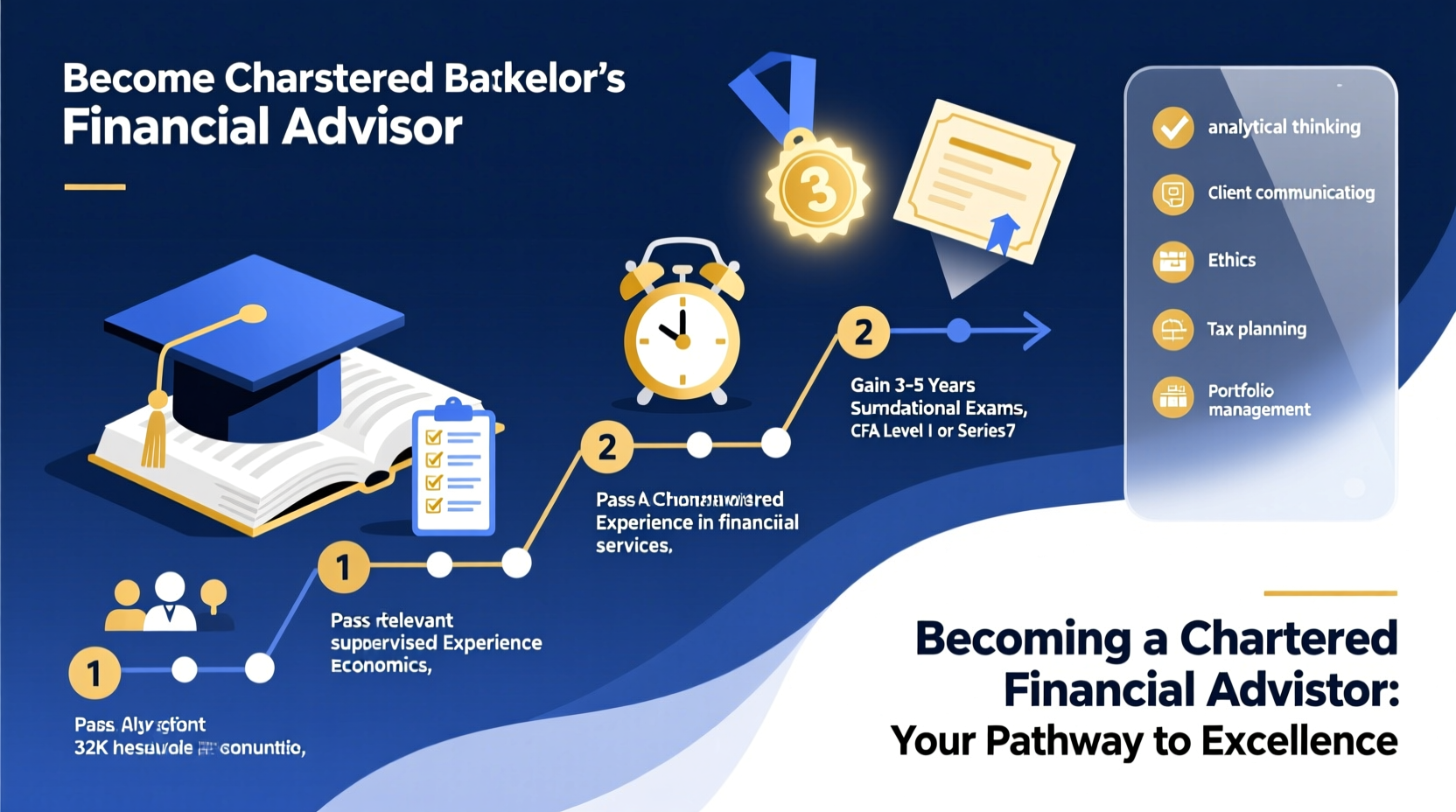
A chartered financial advisor provides holistic financial planning services grounded in fiduciary responsibility. Unlike general sales-oriented agents, chartered advisors are trained to assess clients’ entire financial picture—assets, liabilities, goals, risk tolerance, and life stages—and deliver customized, compliant recommendations. They may work independently, at wealth management firms, banks, or insurance companies.
The term “chartered” typically refers to professionals who have earned advanced credentials such as the Chartered Financial Consultant (ChFC) or Certified Financial Planner (CFP), both of which require rigorous education, experience, and ethics training. While not government-regulated titles, these designations are industry benchmarks for competence and professionalism.
“Clients don’t just want returns—they want clarity, confidence, and continuity. A true financial advisor acts as both strategist and steward.” — Michael Reynolds, CFP® and Principal at Legacy Wealth Partners
Step-by-Step Pathway to Becoming a Chartered Financial Advisor
Building a career as a chartered financial advisor follows a structured progression. While timelines vary, most professionals complete the journey within 3–5 years. Below is a realistic, actionable roadmap:
- Earn a Bachelor’s Degree: Most advisors hold degrees in finance, economics, accounting, or business. Coursework in statistics, taxation, and behavioral finance provides foundational knowledge.
- Obtain Entry-Level Industry Experience: Begin in roles such as financial services associate, paraplanner, or client service representative. This builds familiarity with compliance, client interaction, and product offerings.
- Secure Required Licenses: In the U.S., passing the FINRA Series 7 and Series 66 exams (or Series 63 and 65) is mandatory for selling securities and providing advisory services.
- Pursue a Recognized Certification: Choose between the CFP, ChFC, or other specialized designations. Each has specific coursework, exam, and experience requirements.
- Accumulate Practical Experience: Complete 2–3 years of full-time financial planning experience under supervision.
- Adhere to Continuing Education: Maintain your designation through ongoing learning and adherence to ethical codes.
Key Certifications Compared: CFP vs. ChFC
The two most recognized paths to becoming a chartered financial advisor are the Certified Financial Planner (CFP) and the Chartered Financial Consultant (ChFC). Both are respected, but differ in focus and structure.
| Feature | CFP (Certified Financial Planner) | ChFC (Chartered Financial Consultant) |
|---|---|---|
| Administered By | CFP Board | The American College of Financial Services |
| Core Focus | Comprehensive financial planning | Broad-based financial consulting with emphasis on insurance and estate planning |
| Courses Required | 6 college-level courses (or equivalent) | 9 college-level courses |
| Exam Format | One 6-hour exam | Eight 2.5-hour exams (one per course) |
| Experience Requirement | 6,000 hours (or 4,000 for apprenticeship) | 3 years full-time in financial services |
| Fiduciary Pledge | Required | Required |
| CE Requirements | 30 hours every 2 years (including 2 on ethics) | 30 hours every 2 years |
The CFP is often preferred by those focusing on holistic planning, while the ChFC appeals to advisors emphasizing insurance, estate transfer, and legacy planning. Some professionals earn both to expand credibility and service range.
Essential Skills for Long-Term Success
Technical knowledge alone won’t sustain a successful advisory practice. Top performers combine technical mastery with soft skills that foster trust and retention.
- Active Listening: Clients reveal goals and fears through conversation. The ability to listen deeply enables tailored solutions.
- Communication Clarity: Explaining complex topics—like Monte Carlo simulations or stepped-up basis—in simple terms is critical.
- Behavioral Finance Insight: Understanding emotional biases helps prevent clients from making panic-driven decisions during market volatility.
- Digital Proficiency: Familiarity with CRM systems, financial planning software (e.g., eMoney, MoneyGuidePro), and cybersecurity protocols is now standard.
- Business Development: Whether employed or independent, advisors must generate leads, network effectively, and convert prospects into clients.
Mini Case Study: From Analyst to Independent Advisor
Sarah Kim began her career as a data analyst at a regional bank. Over two years, she supported senior advisors, learned client meeting protocols, and studied for the CFP program part-time. After passing the exam, she transitioned to a registered investment advisory (RIA) firm, where she managed portfolios and developed financial plans. Three years later, Sarah launched her own fee-only practice, specializing in young professionals and dual-income families. Her combination of technical rigor and empathetic communication helped her grow to $45 million in assets under management within five years of going independent.
Sarah’s story reflects a common trajectory: start in support roles, earn credentials, gain hands-on experience, then scale through specialization and client trust.
Checklist: Becoming a Chartered Financial Advisor
Use this checklist to track your progress toward becoming a certified financial advisor:
- ☐ Earn a bachelor’s degree in finance, economics, or related field
- ☐ Pass the FINRA Series 7 and Series 66 (or 63/65) exams
- ☐ Enroll in CFP or ChFC program through an accredited institution
- ☐ Complete required coursework and pass certification exams
- ☐ Accumulate 3,000–6,000 hours of relevant financial planning experience
- ☐ Submit certification application and adhere to ethics standards
- ☐ Begin continuing education every two years
- ☐ Build a niche (e.g., retirement planning, small business owners, divorce financial planning)
Frequently Asked Questions
Can I become a chartered financial advisor without a finance degree?
Yes. While a finance-related degree helps, many successful advisors come from backgrounds in psychology, education, or even engineering. What matters most is completing the required coursework for your chosen certification and demonstrating practical competence.
How much does it cost to earn the CFP or ChFC designation?
Expect total costs between $3,500 and $7,000, including study materials, exam fees, and course tuition. The CFP exam fee is $825; ChFC programs can range from $5,000–$6,500 depending on the provider. Scholarships and employer reimbursement programs may offset expenses.
Is the CFP more prestigious than the ChFC?
Both are highly respected. The CFP is more widely recognized among consumers due to aggressive public awareness campaigns. However, the ChFC curriculum is broader in areas like estate planning and risk management. Many employers value both equally.
Conclusion: Your Journey Starts Now
Becoming a chartered financial advisor is not a sprint—it’s a deliberate, disciplined pursuit of expertise and integrity. The certifications you earn, the skills you refine, and the relationships you build form the foundation of a meaningful career. Whether you aim to join a national firm or launch your own practice, the demand for trustworthy financial guidance continues to grow.




 浙公网安备
33010002000092号
浙公网安备
33010002000092号 浙B2-20120091-4
Comments
No comments yet. Why don't you start the discussion?