
Transforming discarded wooden pallets into a functional, stylish sofa is more than just a DIY project—it’s a statement of sustainability, creativity, and practical living. With minimal investment and basic tools, you can craft a custom seating solution that fits your space and reflects your personal aesthetic. Whether destined for a backyard, patio, or urban apartment, a pallet sofa offers durability, modularity, and character that mass-produced furniture often lacks.
This guide walks through every phase: sourcing safe materials, designing for comfort, assembling with precision, and finishing with style. No prior woodworking expertise is required—just attention to detail and a willingness to build something meaningful.
Selecting the Right Pallets
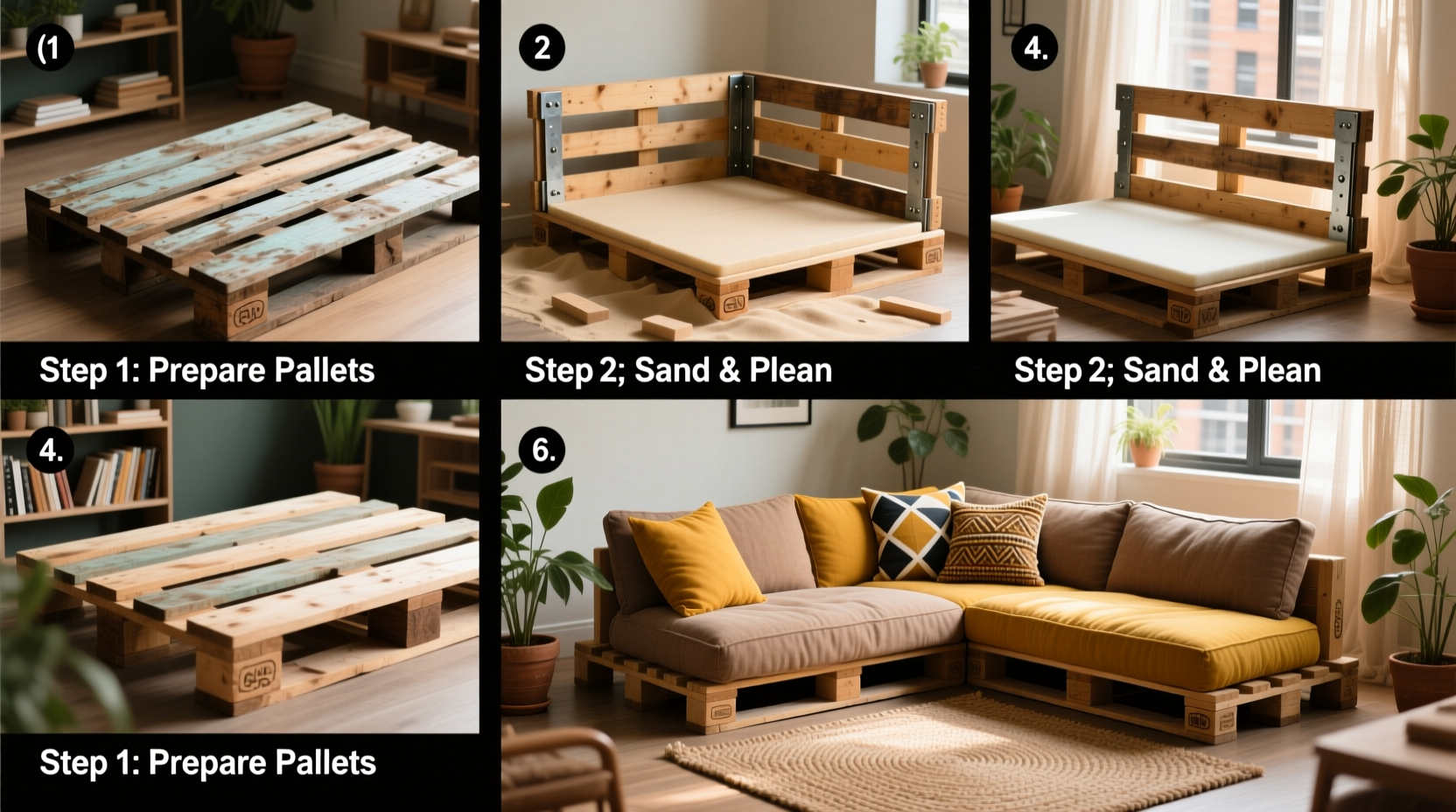
The foundation of your sofa begins with choosing the correct pallets. Not all pallets are created equal, and some may carry health or structural risks. Heat-treated (HT) stamped pallets are ideal—they’ve been kiln-dried to eliminate pests and pathogens, making them safer and more stable.
Avoid pallets marked with \"MB\" (methyl bromide), a toxic fumigant banned in many countries. Inspect each pallet for rot, excessive warping, protruding nails, or signs of chemical spills. Standard EUR/EPAL or GMA pallets (approximately 48” x 40”) are widely available and dimensionally consistent, simplifying alignment during assembly.
Design Planning and Measurements
Before cutting or assembling, sketch a layout based on your intended use and space. A standard three-pallet L-shaped design works well for most patios or lounges: two pallets form the seat base, and one stands vertically as the backrest.
Consider ergonomics: an ideal seated height is 16–18 inches, which aligns with standard pallet thickness. For deeper comfort, stack two pallets for the seat. Reclining angles between 100° and 110° promote relaxation; adjust by angling the backrest slightly backward.
| Design Feature | Recommended Measurement | Purpose |
|---|---|---|
| Seat Height | 16–18 inches | Matches average chair height |
| Seat Depth | 20–24 inches | Allows leg support without strain |
| Backrest Angle | 100°–110° | Encourages relaxed posture |
| Cushion Thickness | 4–6 inches | Balances softness and support |
Tools and Materials Checklist
- 3–4 heat-treated wooden pallets (depending on size)
- Orbital sander or sanding block (80 & 120 grit)
- Power drill with screwdriver bit
- Exterior-grade wood screws (2.5–3 inches)
- Wood filler (optional, for cracks)
- Outdoor sealant or eco-friendly wood finish
- Measuring tape and carpenter’s pencil
- Safety gear: gloves, goggles, mask
- Outdoor cushions or foam + weather-resistant fabric
“Upcycled furniture gains value not just from cost savings, but from its story and environmental impact.” — Lena Torres, Sustainable Design Consultant
Assembly: Step-by-Step Construction
- Disassemble and Prepare: Remove loose boards or protruding nails. Sand all surfaces thoroughly, especially where skin will contact wood. Focus on edges and corners to prevent splinters.
- Layout Your Base: Position two pallets side by side to form the seat. Ensure they’re flush and level. Use a spirit level if placing on uneven ground.
- Secure the Frame: Drill pilot holes through connecting edges, then fasten with exterior-grade screws. Two screws per joint provide stability.
- Attach the Backrest: Stand a third pallet at the desired angle. Secure it to the seat frame using metal brackets or long screws driven diagonally (toe-screwing). Reinforce corners with corner braces if needed.
- Optional Armrests: Cut a pallet in half vertically to create arm supports. Attach securely to the ends using brackets or embedded screws.
- Finishing Touches: Fill large gaps with wood filler. Once dry, sand smooth. Apply at least two coats of water-based outdoor sealant, allowing full drying time between layers.
Comfort and Style Enhancements
A sturdy frame is only half the equation. Comfort comes from thoughtful upholstery. Pre-made outdoor cushions in fade-resistant fabric offer convenience, but custom options allow perfect fit and personalized flair.
To make your own: cut high-density foam to match pallet dimensions (typically 40x48 inches). Wrap in batting for softness, then cover with UV-protected, mold-resistant fabric like Sunbrella. Use a staple gun to secure the underside neatly.
For visual appeal, consider paint or stain. Whitewash gives a coastal cottage look; dark walnut stain adds modern sophistication. Stencil patterns or add throw pillows in complementary colors to elevate style.
Real Example: Urban Balcony Transformation
In Berlin, designer Mira Chen converted four salvaged pallets into a compact U-shaped sofa for her fifth-floor balcony. She sanded and stained the wood in matte gray, added built-in side tables from leftover pallet slats, and paired it with navy-blue cushions. The entire project cost under €50 and became her favorite morning coffee spot—proof that small spaces benefit most from tailored, handmade solutions.
Maintenance and Longevity Tips
To extend the life of your pallet sofa, place it under a covered area or use a breathable, waterproof cover when not in use. Avoid prolonged exposure to rain, which can warp wood and promote mold.
Inspect annually for loose joints or wear. Tighten screws, reapply sealant, and rotate cushions to ensure even aging. In humid climates, elevate the sofa slightly off the ground using plastic feet or treated bricks to improve airflow.
Frequently Asked Questions
Can I leave my pallet sofa outside year-round?
It’s possible with proper sealing and covering, but longevity improves significantly when stored indoors during winter or heavy rainy seasons. Even treated wood degrades faster under constant moisture.
Are pallet sofas safe for children?
Yes, provided they’re fully sanded, sealed, and structurally sound. Always check for sharp edges or loose components. Adding rounded corner guards offers extra safety.
How do I clean the cushions?
Most outdoor fabrics can be wiped with mild soapy water. For machine-washable covers, remove and launder according to manufacturer instructions. Allow full air drying before reuse.
Conclusion
Building a comfortable and stylish pallet sofa is more than a weekend project—it’s an act of mindful design. From sourcing sustainable materials to tailoring dimensions and finishes to your taste, each decision shapes not just a piece of furniture, but a philosophy of intentional living. With careful planning and attention to detail, your creation will offer years of enjoyment while reducing waste and expressing individuality.




 浙公网安备
33010002000092号
浙公网安备
33010002000092号 浙B2-20120091-4
Comments
No comments yet. Why don't you start the discussion?