
Creating a dedicated space for reading doesn’t require a spare room or a large budget. With thoughtful planning and resourceful choices, you can build a cozy reading nook in under $100 — even in the smallest of homes. Whether tucked beside a window, nestled in a closet, or carved out from a quiet corner, a well-designed reading nook encourages relaxation, focus, and daily escape into stories. This guide walks you through every practical decision, from selecting the right location to sourcing affordable materials, ensuring your nook feels intentional, inviting, and uniquely yours.
Choose the Right Location
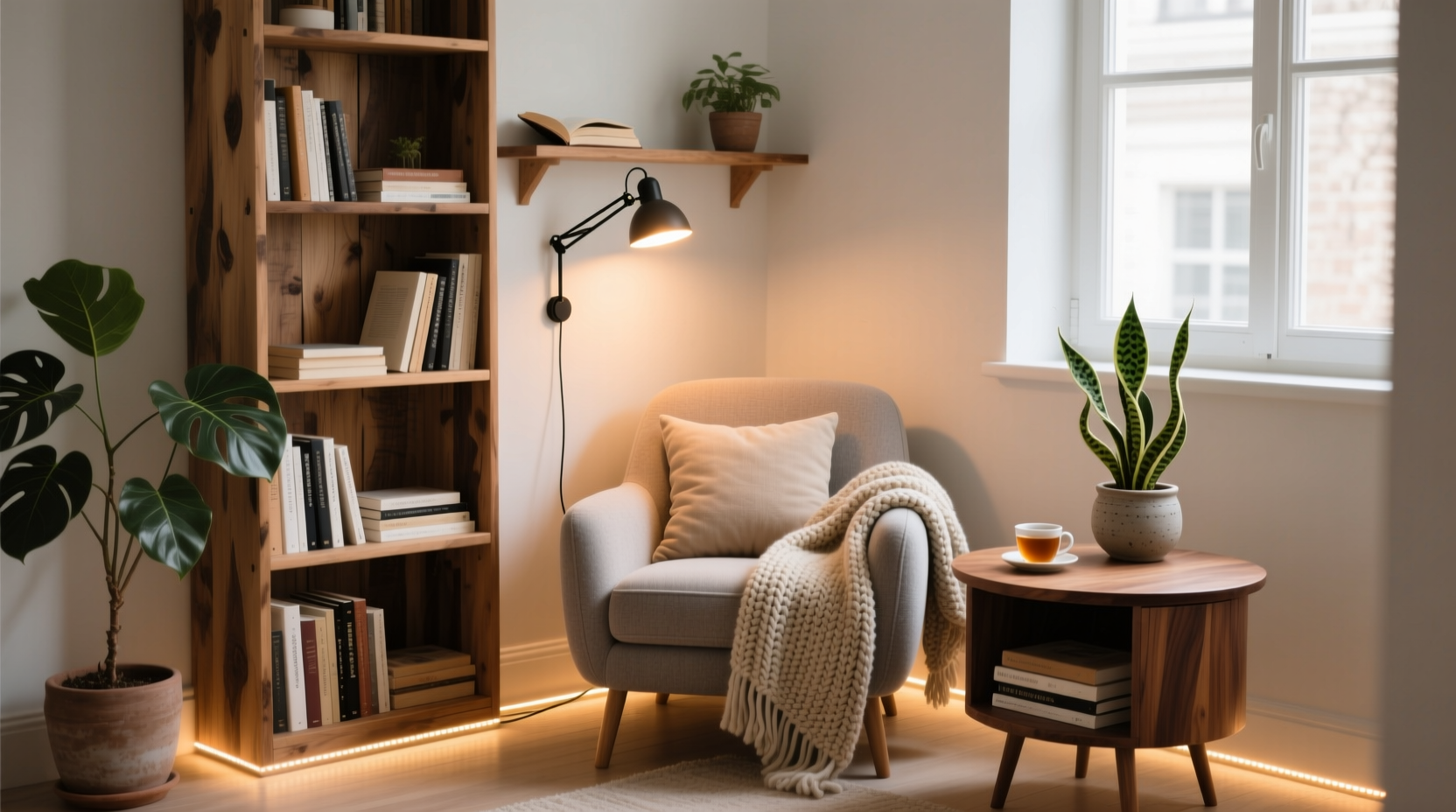
The success of a reading nook begins with location. The ideal spot balances natural light, minimal foot traffic, and a sense of enclosure. While many envision a nook near a window, other overlooked spaces can work just as well — the alcove beside a staircase, an unused hallway, or even a repurposed closet.
Natural daylight reduces eye strain and elevates mood, making morning and afternoon reading more enjoyable. However, if natural light is limited, layering ambient and task lighting can compensate effectively. Avoid high-traffic areas like hallways or entryways where distractions are frequent. Instead, seek quieter zones that offer psychological separation from household activity.
If space is tight, consider vertical solutions. A lofted reading perch, a fold-down wall seat, or a deep windowsill conversion can maximize square footage without sacrificing comfort. The key is intentionality — designate the area clearly so it mentally registers as a retreat.
Design Essentials on a Budget
A functional reading nook relies on four core elements: seating, lighting, storage, and ambiance. Each can be achieved affordably with strategic sourcing and DIY ingenuity.
- Seating under $50: Floor cushions, thrifted armchairs, or a cushioned window bench made from plywood and foam padding cost significantly less than retail furniture. Look for secondhand pieces in good condition — minor fabric flaws can often be hidden with throws or slipcovers.
- Lighting under $30: A clip-on adjustable reading lamp or a small floor lamp with a warm bulb (2700K–3000K) provides focused illumination. Solar-powered fairy lights or LED strips add soft glow without increasing electricity costs.
- Storage under $15: Use a small wooden crate, woven basket, or hanging shelf to store books and reading glasses. These items double as decor when styled intentionally.
- Ambiance under $20: Layer textures with a $10 throw blanket, a $5 indoor plant, and a $12 scented candle or essential oil diffuser. Sound matters too — a compact white noise machine or a Bluetooth speaker for soft background music enhances immersion.
Total investment: under $100, assuming some items may already be owned or borrowed.
Material Comparison: Cost vs. Longevity
| Material | Avg. Cost | Pros | Cons |
|---|---|---|---|
| Plywood (for benches) | $20–$30 | Durable, paintable, easy to cut | Requires tools and effort |
| Foam Padding + Fabric | $15–$25 | Customizable, lightweight | May compress over time |
| Thrifted Furniture | $20–$40 | Eco-friendly, unique character | May need cleaning or repair |
| LED Strip Lights | $10–$18 | Energy-efficient, dimmable | Limited brightness for reading |
Step-by-Step Assembly Guide
Follow this seven-step process to build your nook efficiently and economically.
- Measure and mark your space. Use painter’s tape to outline the footprint. Standard dimensions: 3' x 3' for floor seating, 2' x 4' for a window seat.
- Source seating. Visit local thrift stores, Facebook Marketplace, or Craigslist. Prioritize sturdy frames and clean fabrics. If building a bench, cut plywood to size and sand edges smooth.
- Add comfort. Layer 2–3 inches of high-density foam on seating, secured with non-slip rug pad or spray adhesive. Cover with a washable cotton cover or repurpose an old duvet cover.
- Install lighting. Position a clamp lamp on a nearby bookshelf or install a plug-in wall sconce. Ensure the bulb directs light onto the page, not into the eyes.
- Integrate storage. Place a low basket beneath the seat or mount a floating shelf within arm’s reach. Limit to five frequently read titles to avoid clutter.
- Layer textiles. Drape a textured throw over the backrest and add one lumbar pillow for lumbar support. Choose earthy tones or calming blues for visual serenity.
- Finalize ambiance. Add a small potted plant like a snake plant or pothos, which thrive in low light. Play a nature sounds playlist during use to deepen focus.
Real-Life Example: Sarah’s Closet Conversion
Sarah, a remote worker living in a 600-square-foot apartment, transformed a shallow coat closet into a reading sanctuary. The space measured just 2.5 feet wide and 4 feet deep, but with creative adjustments, it became her favorite retreat.
She removed the rod and installed a cushioned bench using a pre-cut plywood board ($22), two folding legs ($15), and a 3-inch foam topper covered in navy linen ($30). A $12 USB-powered LED strip was mounted above head level, activated by a motion sensor switch. A magnetic pocket organizer on the door holds bookmarks and reading glasses.
To enhance privacy, she hung a lightweight curtain from a tension rod. Total cost: $97. “I read for 30 minutes every night now,” she said. “It feels like I’ve claimed a piece of the apartment just for me.”
“Small spaces demand smarter design, not sacrifice. A reading nook isn’t about size — it’s about creating psychological separation from daily chaos.” — Lena Torres, Interior Designer & Author of *Compact Living*
Avoid Common Pitfalls
Even well-intentioned nooks fail when basic usability principles are ignored. Steer clear of these frequent mistakes:
- Poor lighting placement: Overhead lights create glare on pages. Always use directional task lighting positioned slightly behind and above the shoulder.
- Overcrowding: Resist the urge to fill every inch. Clutter disrupts calm. Stick to three functional items and one decorative touch.
- Ignoring ergonomics: Sitting on the floor for long periods strains the lower back. Elevate hips slightly above knees using a firm cushion or low stool.
- Forgetting acoustics: Hard surfaces reflect sound. Add a small rug, curtain, or tapestry to absorb noise and improve auditory privacy.
Do’s and Don’ts at a Glance
| Action | Do | Don’t |
|---|---|---|
| Lighting | Use warm, focused task lights | Rely solely on ceiling fixtures |
| Seating | Support lower back and elevate hips | Sit flat on hard floors without padding |
| Decor | Limit to 2–3 meaningful items | Crowd shelves with knickknacks |
| Location | Choose quiet, low-traffic zone | Place near noisy appliances or doors |
FAQ: Your Reading Nook Questions Answered
Can I build a reading nook in a rental?
Absolutely. Focus on non-permanent modifications: use tension rods, removable adhesive hooks, peel-and-stick wallpaper, and freestanding furniture. Most landlords approve temporary changes as long as walls aren’t damaged.
What if I don’t have natural light?
Artificial lighting can be just as effective. Combine ambient light (a small table lamp) with direct task lighting (a swing-arm wall light). Choose bulbs with a color temperature between 2700K and 3000K to mimic warm daylight and reduce eye fatigue.
How do I keep the nook from becoming cluttered?
Adopt a “one in, one out” rule for books. Store seasonal reads elsewhere and rotate them monthly. Use baskets with lids to conceal smaller items. Spend two minutes tidying after each use to maintain order.
Final Checklist Before You Begin
- ✅ Identify a quiet, low-traffic corner or recessed space
- ✅ Measure dimensions and sketch a rough layout
- ✅ Set a firm budget (recommended: $80–$100)
- ✅ Source seating: thrifted chair, floor cushion, or DIY bench
- ✅ Purchase a warm-toned, adjustable reading light
- ✅ Select one storage solution: basket, crate, or shelf
- ✅ Gather soft layers: throw blanket, small pillow
- ✅ Add one green element: low-maintenance plant or dried bouquet
- ✅ Test lighting and seating comfort before finalizing
- ✅ Dedicate the space solely to reading and reflection




 浙公网安备
33010002000092号
浙公网安备
33010002000092号 浙B2-20120091-4
Comments
No comments yet. Why don't you start the discussion?