
Constructing a realistic animal model from building blocks is more than a creative challenge—it’s an exercise in observation, patience, and structural understanding. Among the most beloved subjects for such builds is the Labrador Retriever, known for its friendly expression, sturdy build, and distinctive coat. While many attempt simple representations, creating a detailed, anatomically accurate model requires careful planning and execution. This guide walks through the entire process of assembling a high-detail Labrador Retriever model using standard interlocking building blocks, suitable for hobbyists, educators, and enthusiasts alike.
1. Planning Your Labrador Model
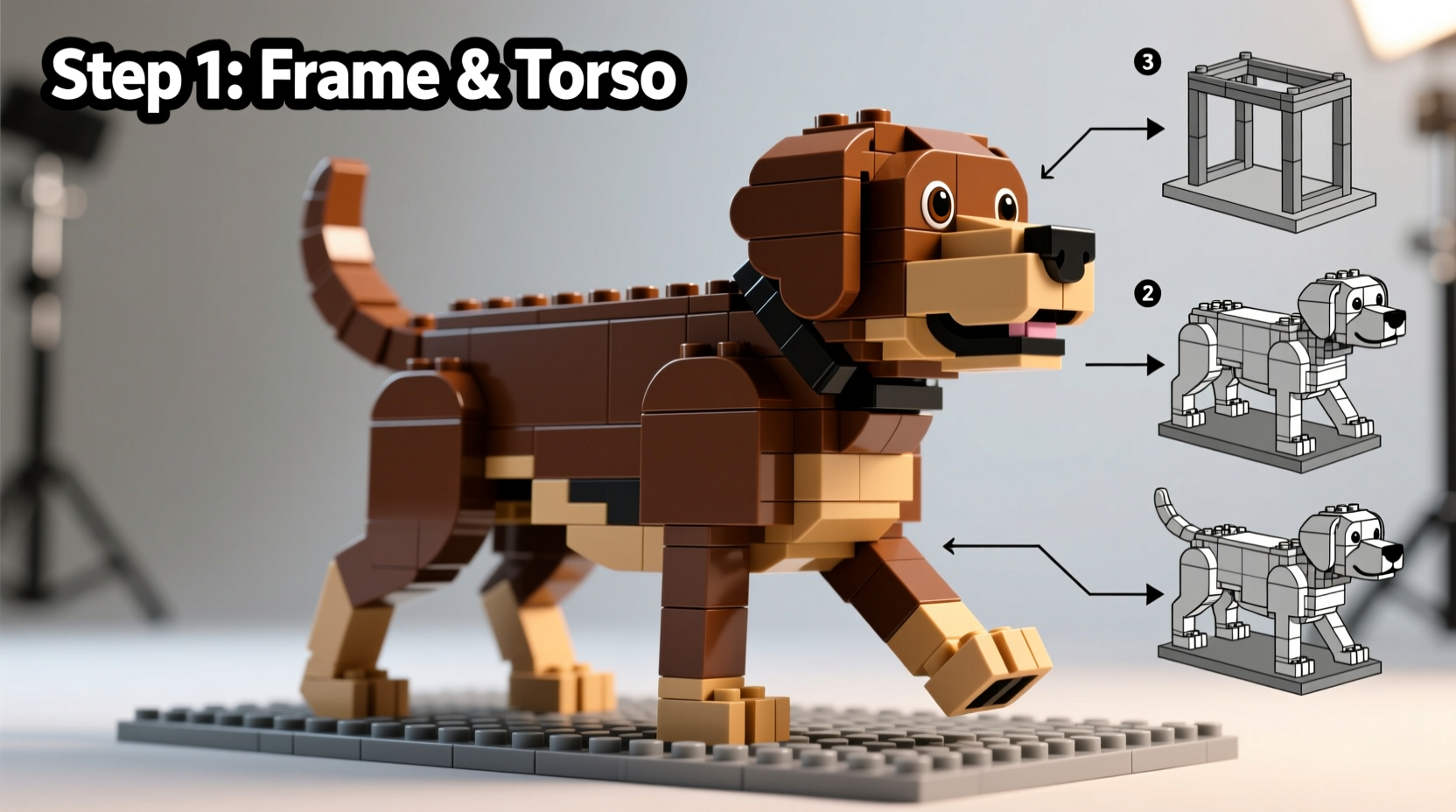
Before placing the first block, it's essential to understand the proportions and anatomy of a Labrador Retriever. These dogs typically have a broad head, strong neck, deep chest, muscular hindquarters, and a thick otter tail. Begin by gathering reference images from multiple angles—front, side, rear, and three-quarter views. Pay attention to key features: the slope of the back, the set of the ears, and the curve of the tail.
Sketch a basic blueprint or use digital modeling software to map out major sections. Break the dog’s body into zones: head, torso, legs, and tail. Estimate block counts per section based on scale. A common scale for display models is 1:5, meaning each inch of the real dog translates to roughly five rows of standard-sized blocks.
2. Gathering Materials and Tools
Selecting the right components ensures both durability and visual fidelity. While traditional plastic interlocking bricks are most common, consider incorporating specialty pieces like curved slopes, tiles, and flexible connectors for smoother contours.
| Component | Purpose | Suggested Quantity |
|---|---|---|
| 1x1 to 4x4 Bricks (Tan, Beige, Chocolate) | Main coat color (choose shade based on yellow, black, or chocolate Lab) | 300–500 |
| Slope and Curved Pieces | Head shaping, snout contour, chest rounding | 50–75 |
| Plate Layers (1–3 units tall) | Layering for smooth elevation changes | 200+ |
| Minifigure Eyes or Dot Stickers | Eyeballs for realism | 2 |
| Flexible Rods or Hinges | Tail articulation (optional) | 1–2 |
In addition to blocks, keep tools handy: a brick separator, flathead screwdriver for tight removals, and small clamps if you plan to glue critical joints. For stability, consider a baseplate or wooden platform to anchor the model.
3. Step-by-Step Assembly Process
Follow this structured sequence to ensure proportionality and balance throughout construction.
- Build the Torso Framework: Start with a rectangular core using 2x4 and 2x6 bricks. Add layers gradually to form a barrel-shaped chest. Use plates to elevate the back slightly toward the hips.
- Create the Neck and Head Base: Attach a narrowing column of bricks at the front. The head should be wide at the skull and taper toward the muzzle. Use rounded slopes for the forehead and jawline.
- Shape the Snout: Extend forward with smaller bricks, angling slightly downward. Leave space for nostrils using two small black round pieces or recessed holes.
- Add the Legs: Build four sturdy columns—shorter in front, slightly bent at “knees” using hinge pieces. Ensure even spacing and alignment under the torso.
- Form the Tail: Stack bricks upward and then curve gently over the back. For a dynamic look, angle it slightly to one side. Chocolate Labs may need darker bricks; yellow Labs benefit from sand-tan gradients.
- Refine Facial Features: Insert eye pieces just below the skull ridge. Use small black bricks for pupils. Add subtle brow lines with dark tan or brown bricks above the eyes.
- Surface Detailing: Apply outer layering with tiles and smooth slopes to mimic fur texture. Avoid jagged edges—use staggered patterns to simulate natural flow.
“Accuracy in animal models comes not from perfect symmetry, but from capturing the essence of movement and expression.” — Dr. Lena Torres, Architectural Sculptor and LEGO® Artist
4. Realistic Example: Building ‘Buddy’ the Show-Quality Lab
A hobbyist in Portland, Oregon, recently completed a detailed yellow Labrador named \"Buddy\" for a local maker fair. Using over 650 pieces, they began with a focus on posture—Buddy was posed mid-stride, requiring offset leg placement and weight distribution. The builder used dark tan for the main coat, light nougat for the inner ears and muzzle, and white tiles sparingly beneath the eyes to suggest age and character.
To achieve a glossy nose, they embedded a small black dome piece flush with the snout. The tail was built with flexible hinges, allowing slight adjustment for display. After completion, the model was sealed with a matte acrylic spray to reduce glare and protect against dust. Attendees praised the lifelike stance and expressive face, proving that attention to behavioral detail enhances realism as much as anatomical precision.
5. Finishing Touches and Display Tips
Once assembled, inspect the model from all angles. Look for gaps, uneven seams, or areas where color transitions appear abrupt. Fill minor voids with micro-tiles or adhesive putty if necessary.
- Rotate the model frequently during assembly to maintain balanced proportions.
- Use a soft brush to remove dust from crevices.
- If displaying long-term, avoid direct sunlight to prevent color fading.
- For added realism, mount the model on a custom base with grass-textured tiles or a simulated backyard scene.
Do’s and Don’ts of Animal Block Modeling
| Do | Don't |
|---|---|
| Use reference photos from multiple angles | Rush the initial framework |
| Test limb positioning with temporary pieces | Overuse bright or unrealistic colors |
| Work in consistent lighting | Ignore weight distribution in poses |
| Take progress photos for troubleshooting | Forget about scale consistency across body parts |
Frequently Asked Questions
Can I make a moving Labrador model?
Yes, though it requires advanced techniques. Incorporate ball joints, turntables, or hinge elements at shoulders, hips, and tail base. Keep movement subtle to preserve structural integrity. Fully articulated models are best displayed on stands.
What if I don’t have the exact color blocks?
Use close approximations and rely on shading. Layer lighter and darker tones to create depth—this mimics natural fur variation. You can also paint individual pieces with acrylics, but only after testing on spare bricks.
How long does a detailed build take?
Expect 8 to 15 hours depending on experience and detail level. Beginners should allocate extra time for adjustments. Breaking the project into daily stages—e.g., torso one day, head the next—improves focus and reduces fatigue.
Conclusion: Bring Your Vision to Life
Building a detailed Labrador Retriever model from blocks is a rewarding fusion of artistry and engineering. It challenges spatial reasoning, hones fine motor skills, and results in a unique tribute to one of the world’s most cherished dog breeds. Whether you're recreating a beloved pet or exploring animal anatomy creatively, the process cultivates patience and precision.




 浙公网安备
33010002000092号
浙公网安备
33010002000092号 浙B2-20120091-4
Comments
No comments yet. Why don't you start the discussion?