
In a world where beauty trends push endless layers of product—from 10-step skincare to 20-shade eyeshadow palettes—many are rediscovering the power of less. A minimalist makeup routine isn’t about sacrificing style or self-expression; it’s about intentionality. It’s choosing quality over quantity, efficiency over excess, and enhancing your natural features without relying on a dozen different tools and tubes.
For those juggling work, family, fitness, or simply craving more morning peace, streamlining your makeup process can reclaim valuable minutes each day. More importantly, it reduces decision fatigue, lowers spending, and often improves skin health by minimizing exposure to unnecessary chemicals. This guide walks you through building a personalized, effective, and time-saving minimalist makeup routine—step by step.
Why Minimalism Works in Makeup
Minimalist beauty is rooted in the idea that simplicity enhances authenticity. When you pare down to only what works for your skin tone, lifestyle, and goals, you eliminate guesswork and clutter. Dermatologists and estheticians increasingly support simplified routines, especially for those with sensitive or acne-prone skin.
“Overloading the skin with multiple makeup products can disrupt its natural barrier. A streamlined approach often leads to healthier skin and longer-lasting wear.” — Dr. Lena Torres, Board-Certified Dermatologist
Additionally, a minimalist routine aligns with slow beauty—a movement emphasizing sustainability, mindfulness, and ethical consumption. Fewer products mean less packaging waste, fewer synthetic ingredients, and reduced impulse buying.
Step-by-Step: Building Your Minimalist Routine
Creating a minimalist makeup routine doesn’t mean starting from scratch—it means curating with purpose. Follow this five-phase timeline to build a system that works for your daily life.
Phase 1: Audit Your Current Collection (Day 1–2)
Begin by gathering every makeup product you own. Lay them out and categorize them: foundation, concealer, blush, eyeshadow, mascara, lip products, tools, etc. Then, ask yourself:
- Have I used this in the last 6 weeks?
- Does it perform well? (e.g., blends easily, doesn’t crease, matches my skin tone)
- Is it expired? (Most mascaras last 3 months; foundations, 6–12 months)
- Do I reach for it regularly, or is it situational?
Discard expired items, donate unopened duplicates, and set aside products that serve no real function. Be ruthless—sentimental attachment has no place in an efficient routine.
Phase 2: Define Your Daily Needs (Day 3)
Your routine should reflect your lifestyle. A teacher who speaks all day needs long-wearing lip color; a remote worker may prioritize skin clarity over full coverage. Consider:
- How much time do you realistically have each morning?
- What’s your skin type? (Oily, dry, combination, sensitive)
- Are you frequently indoors, outdoors, or under bright lights?
- Do you prefer a “no-makeup” look or subtle enhancement?
The goal isn’t perfection—it’s consistency and confidence with minimal effort.
Phase 3: Select Multi-Use Products (Day 4–5)
The cornerstone of minimalism is versatility. Choose products that pull double or triple duty. For example:
| Product | Primary Use | Secondary Use |
|---|---|---|
| Tinted Moisturizer with SPF | Light coverage + sun protection | Replaces foundation and sunscreen |
| Cream Blush | Cheek color | Lip tint and eyelid wash |
| Brow Pencil + Tinted Brow Gel | Define brows | Subtle eyeliner when smudged |
| Neutral Eyeshadow Palette | Eyelid base or liner | Contour or highlight if shades match skin tones |
Look for formulas that are easy to blend, long-wearing, and non-comedogenic. Creams and sticks often require fewer tools and less precision than powders.
Phase 4: Build Your Core Routine (Day 6)
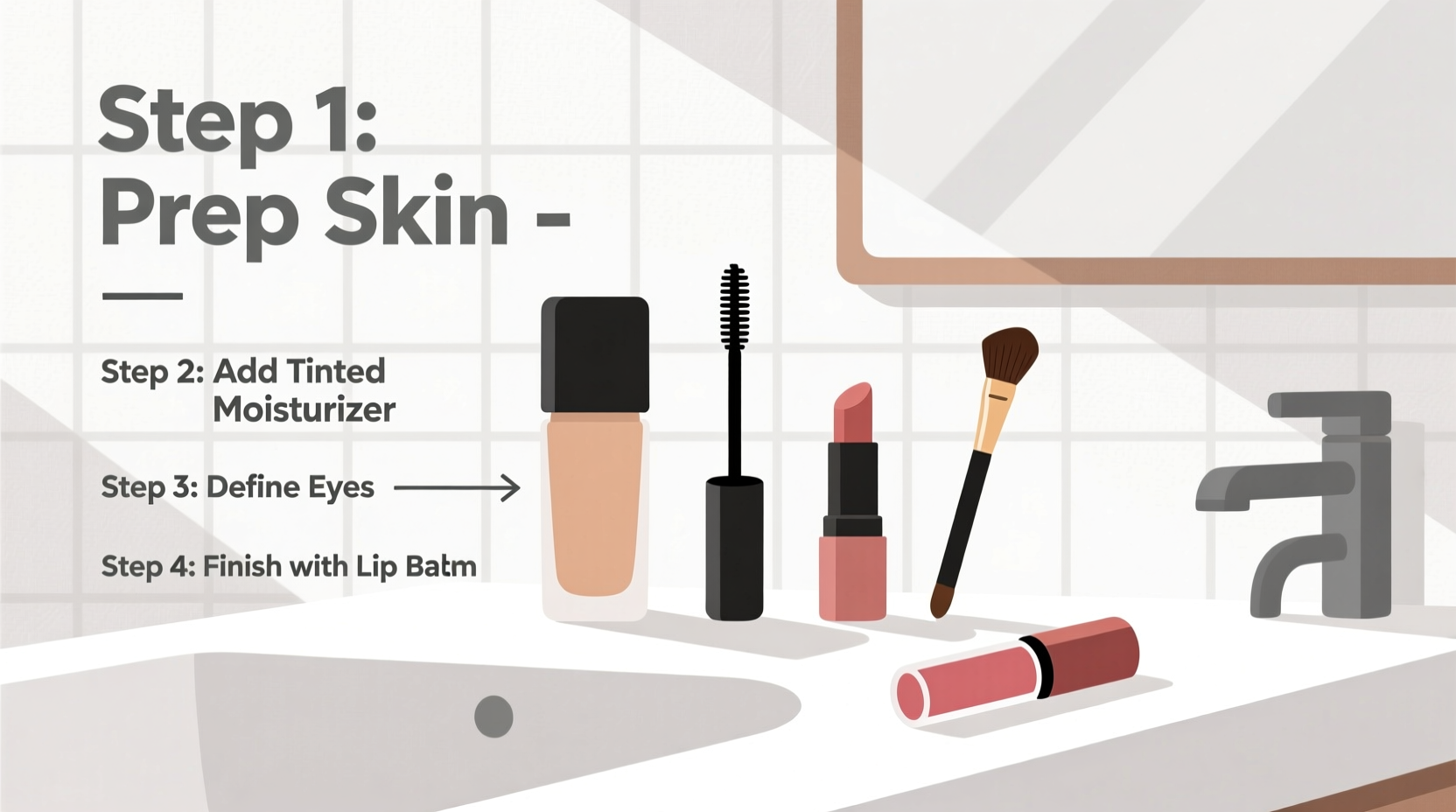
Aim for a 5-product maximum for daily use. Here’s a sample minimalist lineup:
- Skincare Prep: Cleanse, moisturize, apply SPF. Healthy skin is the best canvas.
- Even Skin Tone: Tinted moisturizer or CC cream applied with fingers (30 seconds).
- Conceal & Brighten: One dab of concealer under eyes and center forehead if needed.
- Add Warmth: Cream blush blended across cheeks and lightly on lips.
- Define Eyes & Brows: Curl lashes, apply one coat of mascara, groom brows with clear gel.
This routine takes under 5 minutes once mastered. Skip steps when unnecessary—some days, only SPF and mascara are needed.
Phase 5: Maintain & Refine (Ongoing)
Every 3 months, reevaluate. Has your skin changed? Are you using everything? Replace only what’s essential. Avoid sales-driven purchases. Stick to a “one in, one out” rule: if you buy a new lipstick, retire an old one.
Essential Checklist for a Functional Minimalist Routine
Before finalizing your kit, ensure it meets these criteria:
- ✅ Covers your skin concerns (redness, dullness, dark circles)
- ✅ Uses products with overlapping functions
- ✅ Takes less than 7 minutes to apply
- ✅ Includes SPF (non-negotiable for daytime)
- ✅ Features shades that match your current skin tone year-round
- ✅ Requires only one or two tools (e.g., fingers, sponge, spoolie)
- ✅ Is easy to reapply or touch up during the day if needed
If any item fails these checks, reconsider its necessity.
Real Example: From 15 to 5 Products
Sophie, a 34-year-old project manager and mother of two, used to spend 25 minutes every morning applying foundation, powder, contour, blush, highlighter, eyeshadow, eyeliner, mascara, brow pencil, lip liner, lipstick, and setting spray. She often felt rushed and frustrated when her makeup looked “too much” for school drop-offs but “not enough” for client calls.
After auditing her routine, she realized she only truly loved her concealer, black mascara, and one rose-pink cream blush. She replaced her foundation with a hydrating tinted SPF, switched to a tinted brow gel, and began using her blush on her lips. Her new routine:
- Moisturizer + SPF
- Tinted moisturizer (applied with fingertips)
- Concealer under eyes
- Cream blush on cheeks and lips
- Mascara and brow gel
Total time: 4 minutes. She reported feeling more confident, less stressed, and noticed her skin improved within weeks due to reduced product load.
Common Pitfalls to Avoid
Minimalism sounds simple, but execution can falter without awareness. Watch for these traps:
- Buying “mini” versions of the same 10 products: Quantity disguised as minimalism isn’t minimalism.
- Chasing trends: Limited-edition palettes rarely earn a spot in a functional routine.
- Skipping skincare: No amount of makeup compensates for dehydrated or irritated skin.
- Ignoring seasonal shifts: You may need a slightly heavier moisturizer or deeper tint in winter—plan adjustments ahead.
Remember: minimalism isn’t deprivation. It’s focus. You’re not removing joy—you’re removing friction.
Frequently Asked Questions
Can I still wear bold makeup sometimes?
Absolutely. A minimalist routine refers to your daily base. Keep a red lipstick or glitter shadow for evenings or events—but store them separately so they don’t clutter your everyday kit.
How do I choose the right shade without trying dozens of products?
Start with brands offering online shade finders or samples. Focus on undertones (warm, cool, neutral) and test swatches along your jawline in natural light. When in doubt, go slightly lighter—you can always build coverage.
Isn’t multi-use makeup less effective?
Not if chosen wisely. High-quality cream blushes double as lip tints without drying or fading. The key is selecting pigmented, blendable formulas designed for multiple areas. Avoid products that emphasize “long wear” at the expense of texture—those often crack or look heavy on lips.
Final Thoughts: Less Product, More Presence
A minimalist makeup routine isn’t a trend—it’s a sustainable practice that aligns beauty with intention. By reducing your arsenal to only what serves you, you save time, money, and mental energy. You also shift the focus from covering up to enhancing what’s already there.
Every minute saved at the mirror is a minute gained for movement, meditation, conversation, or simply breathing deeply before the day begins. That’s the real benefit of minimalism: not just a simpler routine, but a fuller life.




 浙公网安备
33010002000092号
浙公网安备
33010002000092号 浙B2-20120091-4
Comments
No comments yet. Why don't you start the discussion?