
Morning routines are not about rigid schedules or copying what influencers do. They’re about creating a personalized sequence of actions that set the tone for focus, energy, and intention throughout your day. The most effective routines aren’t built overnight—they evolve through consistency, self-awareness, and small wins. Many people attempt a morning ritual only to abandon it within days because it’s too ambitious, misaligned with their lifestyle, or lacks immediate rewards. This guide walks you through a realistic, research-backed process to design a morning routine that fits your life—and actually lasts.
Why Most Morning Routines Fail
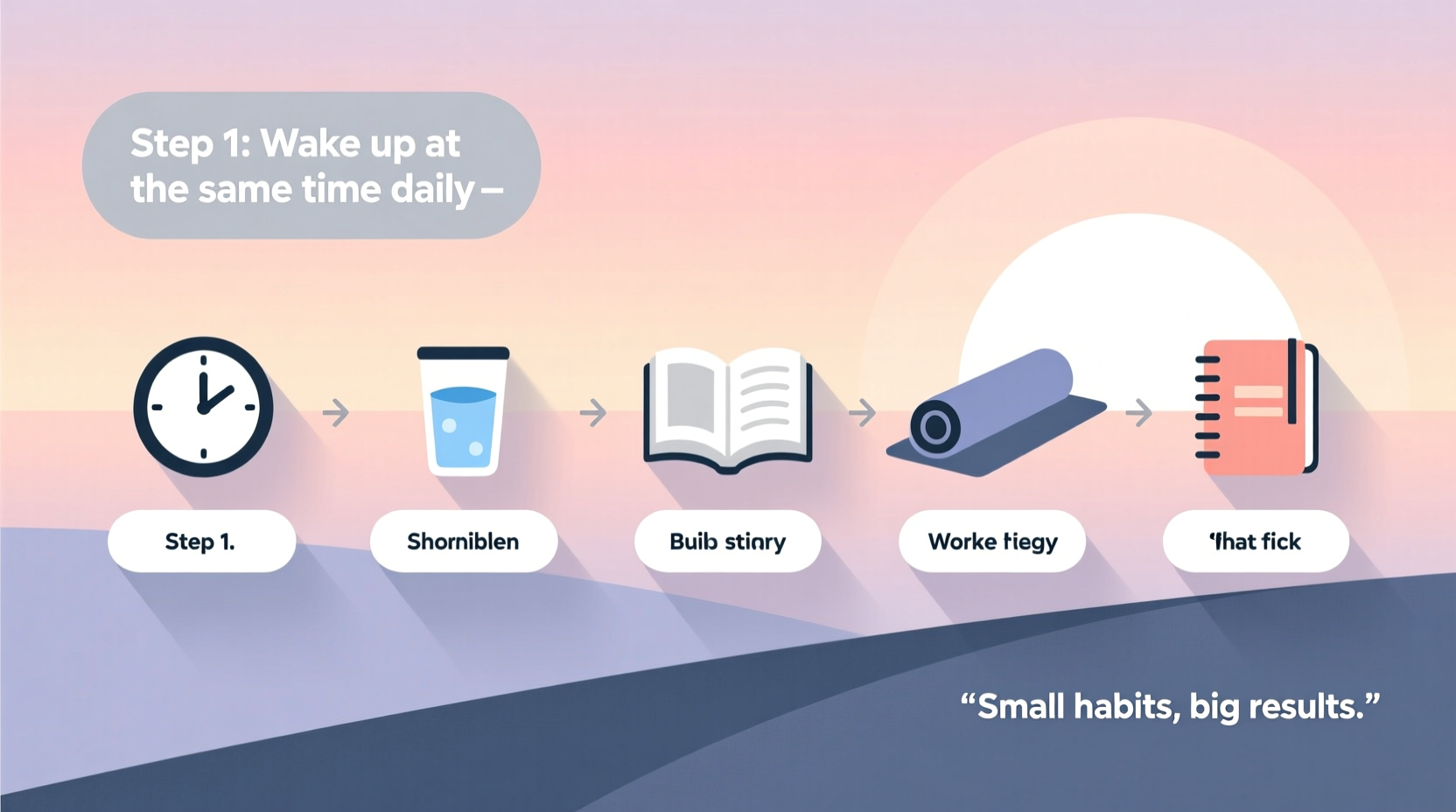
The allure of waking up at 5 a.m. to meditate, journal, run five miles, and drink green juice is strong. But when reality hits—kids wake up early, work starts at 7, or sleep was poor—the grand plan collapses. The core reason these routines fail isn’t lack of discipline; it’s poor design.
Behavioral scientists emphasize that habits stick when they are obvious, attractive, easy, and satisfying—a framework popularized by James Clear in *Atomic Habits*. A morning routine fails when it violates one or more of these principles:
- Not obvious: No clear trigger or starting point.
- Unattractive: Feels like a chore rather than something meaningful.
- Too hard: Requires too much effort early in the day.
- No immediate reward: No sense of accomplishment or benefit.
The goal isn’t to build the “perfect” routine—it’s to build one that works for you, adapts over time, and survives busy weeks and off-days.
Step-by-Step Guide to Building a Sustainable Routine
Follow this six-phase process to create a morning routine that evolves with your life and becomes second nature.
- Assess Your Current Wake-Up Pattern (Week 1)
Spend one week observing your natural rhythm without changing anything. Track when you wake up, how you feel, what you do first, and whether you hit snooze. Use a notebook or notes app. This baseline data reveals your true starting point—not an idealized version.
- Define Your Morning Intentions
Ask yourself: What kind of day do I want to have? How do I want to feel by 9 a.m.? Answers might include \"calm,\" \"focused,\" \"in control,\" or \"energized.\" These emotional goals shape your routine. If you want calm, meditation may help. If you want energy, movement is likely key.
- Select 1–3 Anchor Habits
Pick foundational actions that are non-negotiable but achievable. Examples: hydrating, making your bed, stretching for two minutes, or writing three things you’re grateful for. Limiting choices reduces decision fatigue.
- Design the Sequence
Arrange habits in a logical flow. For example: wake → bathroom → drink water → stretch → journal → shower. Attach new habits to existing ones (e.g., after brushing teeth, write in journal). This is called \"habit stacking.\"
- Optimize Your Environment
Make desired behaviors easier and distractions harder. Place your journal and pen on your nightstand. Lay out workout clothes the night before. Keep your phone across the room to avoid scrolling. Environment shapes behavior more than willpower.
- Test and Refine Over 30 Days
Commit to your routine for one month, but allow adjustments. If you consistently skip journaling, replace it with something simpler. If you're always rushed, shorten the routine. Use weekly check-ins to evaluate what worked and what didn’t.
Checklist: Launch Your Routine in 7 Days
- ✅ Observe current wake-up time and mood for 3 days
- ✅ Identify your top emotional goal for mornings (e.g., clarity, peace)
- ✅ Choose one anchor habit to start with (e.g., drink water)
- ✅ Prepare your environment the night before (set out clothes, fill water bottle)
- ✅ Set a consistent wake-up time—even on weekends (within 30 mins)
- ✅ Perform your anchor habit immediately upon rising
- ✅ Reflect each evening: Did I follow through? What helped or hindered?
After seven days, add a second habit only if the first feels automatic.
Do’s and Don’ts of Effective Morning Routines
| Do | Don’t |
|---|---|
| Start small—focus on consistency over complexity | Try to adopt 7 new habits at once |
| Anchor new habits to existing ones (e.g., after brushing teeth, meditate) | Rely solely on motivation |
| Adjust based on energy levels and life changes | Stick to a failing routine out of guilt |
| Protect your first 60 minutes from digital input | Check email or social media immediately |
| Celebrate small wins—acknowledge completion | Ignore progress because it’s not perfect |
Real Example: How Sarah Built a Routine That Lasted
Sarah, a 34-year-old project manager and mother of two, tried multiple times to start a morning routine. She’d read books like *The 5 AM Club* and felt guilty when she couldn’t replicate them. After her third failed attempt, she decided to rethink her approach.
Instead of aiming for an hour of meditation and exercise, she started with one rule: drink a glass of water before touching her phone. She placed a filled glass on her nightstand every night. The first few days were hard—she reached for her phone instinctively—but by day five, the water became automatic.
Once that stuck, she added two minutes of deep breathing while waiting for the kettle. Three weeks in, she introduced journaling one thing she wanted to accomplish that day. Her full routine now takes 12 minutes and includes hydration, breathwork, intention setting, and making her bed. She still misses days, especially when the kids are sick, but she returns quickly because the foundation is simple and forgiving.
“I stopped trying to be someone else’s version of disciplined,” she said. “Now my mornings feel like mine.”
“The best morning routine is the one you can do consistently, even when you don’t feel like it.” — Dr. Rebecca Tran, Behavioral Psychologist
Advanced Tips for Long-Term Success
Once your core routine is stable, consider layering in additional elements—strategically.
- Use the “Minimum Viable Routine” on tough days: Define a stripped-down version (e.g., just water + one breath cycle) to maintain continuity.
- Track streaks visually: Mark an X on a calendar for each successful day. The visual chain becomes motivating to preserve.
- Review monthly: Is your routine still serving you? Seasons change, jobs shift, energy fluctuates. Your routine should too.
- Pair habits with rewards: Sip your favorite coffee only after completing your routine. Link pleasure to performance.
Frequently Asked Questions
What if I’m not a morning person?
That’s okay. You don’t need to wake up earlier to build a good routine. Focus on what you do in the first 30 minutes after waking, regardless of the time. A 9 a.m. routine done with intention is more valuable than a forced 5 a.m. struggle.
How long does it take to form a morning habit?
Research varies, but a 2009 study published in the European Journal of Social Psychology found that it takes an average of 66 days for a behavior to become automatic—though it ranged from 18 to 254 days depending on the person and habit. Consistency matters more than speed.
Should I include exercise in my morning routine?
If movement energizes you, yes. But don’t force intense workouts if they drain you. Gentle stretching, walking, or yoga may be more sustainable. Match the activity to your energy type—some thrive on exertion, others on stillness.
Conclusion: Build a Routine That Serves You, Not the Ideal
A lasting morning routine isn’t about mimicking productivity gurus or achieving perfection. It’s about designing a daily beginning that aligns with who you are, how you live, and what you value. The most powerful routines grow slowly, adapt continuously, and prioritize consistency over intensity.
Start with one action. Make it easy. Repeat it. Celebrate showing up, not just succeeding. Over time, those small moments compound into lasting change—more focus, greater resilience, and a stronger sense of agency over your day.




 浙公网安备
33010002000092号
浙公网安备
33010002000092号 浙B2-20120091-4
Comments
No comments yet. Why don't you start the discussion?