
A well-curated wardrobe isn’t about owning dozens of trendy items. It’s about having fewer, better-quality pieces that work together seamlessly. A capsule wardrobe—typically defined as a small collection of essential clothing items—can reduce decision fatigue, save money, and elevate your personal style. This guide walks you through the process of building a functional starter wardrobe from scratch, using timeless staples that adapt to seasons, occasions, and evolving tastes.
Why Start with a Capsule Wardrobe?
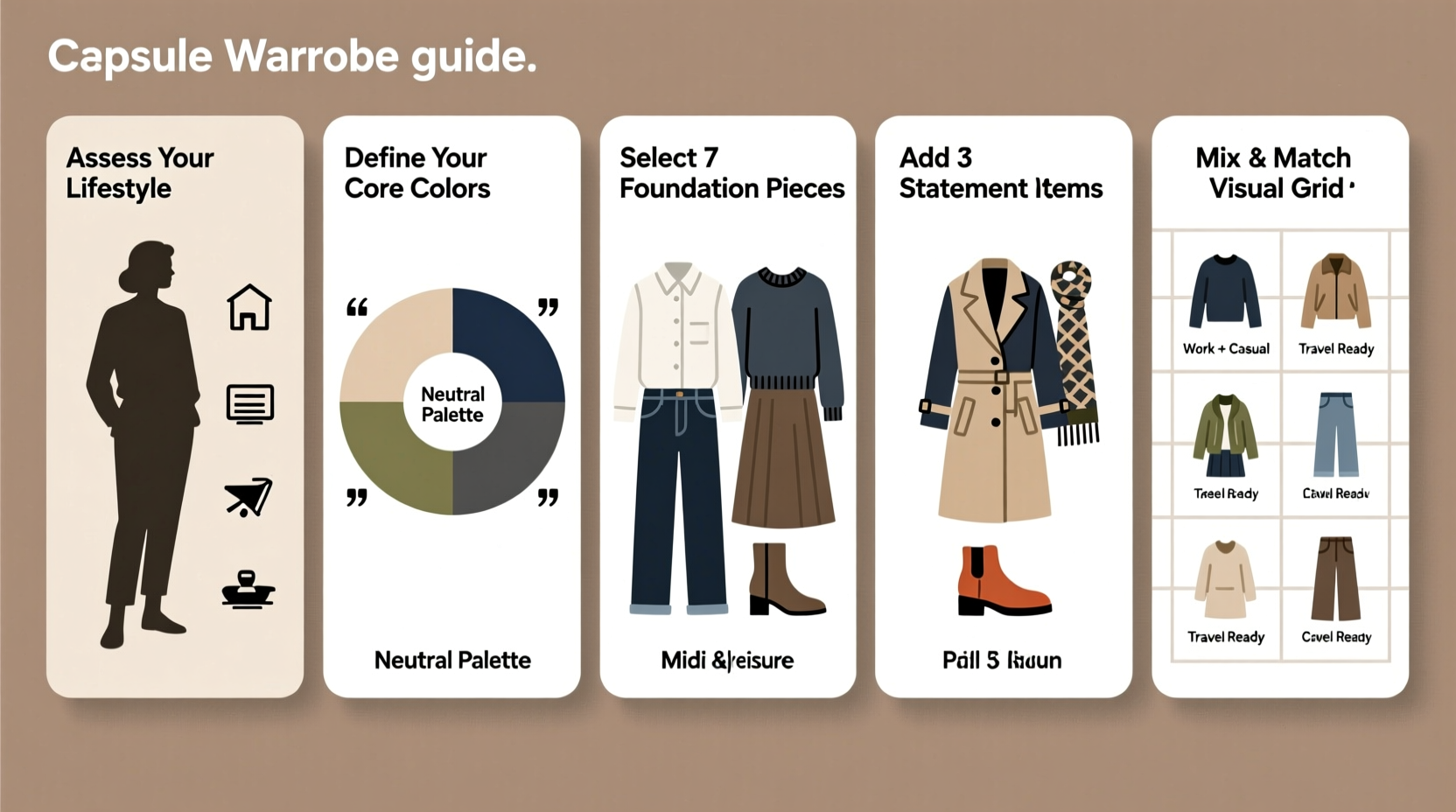
The modern closet often overflows with clothes yet underperforms in utility. Many people wear only 20% of their wardrobe 80% of the time. A capsule approach flips this imbalance by focusing on intentionality. By selecting high-quality, neutral-toned basics that mix and match effortlessly, you create more outfits with fewer items.
Capsule wardrobes originated in the 1970s with Susie Faux, a London boutique owner, and gained renewed popularity through designer Donna Karan’s “seven easy pieces” concept. Today, minimalism and sustainable fashion have revived interest in this method—not just for aesthetics, but for lifestyle efficiency.
“Simplicity is the ultimate sophistication.” — Leonardo da Vinci
This philosophy applies perfectly to dressing well. When every piece complements the others, getting dressed becomes faster, shopping becomes more deliberate, and clutter fades away.
Step 1: Define Your Personal Style and Lifestyle Needs
Before buying anything, take inventory of how you actually live. Are you mostly working from home? Do you commute to an office? Attend social events weekly? The function of your clothing should align with your daily routines.
Begin by asking three key questions:
- What environments do I dress for? (e.g., office, gym, casual outings)
- What colors make me feel confident? (e.g., navy, charcoal, camel, white)
- Which silhouettes suit my body type? (e.g., tailored fits, A-line cuts, relaxed tailoring)
Review your current wardrobe. Identify the five items you reach for most often. Chances are they’re comfortable, flattering, and easy to pair. Use these as templates for future purchases.
Step 2: Choose a Cohesive Color Palette
A successful capsule wardrobe relies on color harmony. Stick to a base palette of neutrals that blend across seasons. These anchor your look and allow accent pieces to stand out without clashing.
Recommended core colors:
- Black or deep charcoal
- Navy blue
- Cream or off-white
- Medium gray
- Earth tones like olive green or camel
Once the foundation is set, add 1–2 seasonal accent colors (like burgundy in winter or sky blue in summer) for variety without chaos.
Avoid bright, trend-driven hues unless they serve a specific purpose. The goal is versatility, not novelty.
Step 3: Build the Foundation – Core Essentials
Your starter capsule should include 25–40 pieces total, including tops, bottoms, outerwear, and shoes. Below is a breakdown of non-negotiable essentials categorized by function.
| Category | Essential Items | Quantity Suggestion |
|---|---|---|
| Tops | White button-down, black crewneck tee, striped breton top, neutral turtleneck, blouse | 5–7 |
| Bottoms | Dark wash jeans, black trousers, navy chinos, midi skirt, tailored shorts | 4–5 |
| Dresses | LBD (little black dress), shirt dress, wrap dress | 2–3 |
| Outerwear | Trench coat, wool blazer, denim jacket, tailored coat | 3–4 |
| Shoes | Black ankle boots, white sneakers, loafers, nude pumps | 4 pairs |
| Layers & Accessories | Scarf, belt, tote bag, crossbody bag, watch | 5–6 |
Each item should meet three criteria: fit well, feel comfortable, and coordinate with at least three other pieces. For example, a white button-down should pair with jeans, trousers, and skirts—and work under a blazer or worn alone.
Step 4: Prioritize Quality Over Quantity
Investing in durable fabrics pays off in longevity and appearance. Natural fibers like cotton, wool, silk, and linen breathe better, drape more elegantly, and age gracefully compared to synthetic blends.
Look for signs of craftsmanship:
- Fine, even stitching
- Reinforced seams
- Subtle labeling (minimal logos)
- Weight and texture indicating density
You don’t need luxury brands, but avoid fast fashion when possible. Instead, choose mid-range labels known for consistency—such as Everlane, Uniqlo, COS, or Arket—where ethical production and fabric quality are prioritized.
“Buy less, choose well, make it last.” — Vivienne Westwood
This mantra encapsulates the essence of a sustainable capsule wardrobe. One well-made wool blazer can last a decade; five poorly constructed ones may not survive a season.
Step 5: Assemble and Test Your Capsule
Once you’ve gathered your core items, lay them out together. Try creating at least 15 different outfits using only what’s in your capsule. If any piece fails to integrate, reconsider its place.
Follow this simple test:
- Pick a bottom (e.g., black trousers).
- Pair it with three different tops.
- Add two layers (blazer, cardigan).
- Switch shoes and accessories to change the formality.
If each combination looks intentional and appropriate for real-life scenarios, your capsule is functioning.
Store off-season items out of sight but accessible. Rotate in key seasonal additions—like a cashmere sweater in winter or a linen shirt in summer—without disrupting the core.
Mini Case Study: From Cluttered Closet to Confident Dressing
Sophie, a 32-year-old marketing consultant, spent years accumulating clothes but still felt she had “nothing to wear.” Her closet held 80+ items, many unworn due to fit issues or lack of pairing options. After reading about capsule wardrobes, she cleared everything out and started fresh.
She began by identifying her daily needs: hybrid office work, client meetings, and weekend errands. She chose a palette of navy, gray, cream, and burgundy. Over six weeks, she purchased nine core pieces within her budget: a trench coat, two pairs of trousers, dark jeans, a turtleneck, a silk blouse, a wrap dress, loafers, ankle boots, and a structured tote.
Within a month, Sophie reported spending 40% less time choosing outfits and receiving multiple compliments on her polished appearance. More importantly, she stopped impulse buying because she could assess new items against her existing system.
Her experience underscores a central truth: clarity breeds confidence.
Common Pitfalls to Avoid
Even with good intentions, mistakes can derail a capsule wardrobe. Watch out for these traps:
- Buying “potential” pieces: That ill-fitting dress you’ll “lose weight for” rarely gets worn. Buy for your body now.
- Ignoring maintenance: Stains, loose buttons, or stretched collars ruin otherwise great garments. Repair promptly.
- Over-customizing too soon: Start neutral. Add personality through accessories before expanding into bold patterns.
- Forgetting comfort: A beautiful blazer isn’t useful if you can’t raise your arms. Fit trumps fashion.
Checklist: Building Your Starter Capsule Wardrobe
- Assess your lifestyle and daily dressing needs.
- Define a cohesive color palette based on neutrals.
- Declutter your current wardrobe—keep only what fits and flatters.
- Select 5–7 tops, 4–5 bottoms, 2–3 dresses, 3–4 outerwear pieces, and 4 shoe types.
- Choose natural fabrics and prioritize fit and durability.
- Test at least 15 mix-and-match outfits before finalizing.
- Rotate seasonally while maintaining core consistency.
- Limit future purchases to true gaps or upgrades.
FAQ
How many pieces should a starter capsule wardrobe have?
Most effective starter capsules contain between 25 and 40 items, including clothing and shoes but excluding underwear and workout gear. The exact number depends on climate and lifestyle, but the principle remains: minimal, coordinated, and complete.
Can I include patterns in a capsule wardrobe?
Yes, but sparingly. Small-scale patterns like pinstripes, subtle checks, or classic Breton stripes can add visual interest while remaining versatile. Avoid large, loud prints that limit pairing options.
How often should I update my capsule?
Reassess every 3–6 months. Replace worn items, adjust for seasonal changes, and refine based on what you actually wear. Growth is part of the process—your style will evolve, and so should your wardrobe.
Final Thoughts: Less Isn’t Lack—It’s Liberation
Building a starter wardrobe with capsule essentials isn’t about restriction. It’s about liberation—from indecision, from clutter, from the pressure to constantly chase trends. When you know what works, dressing becomes effortless. You stop asking, “What should I wear?” and start knowing exactly what to reach for.
The power of a capsule lies not in its size, but in its coherence. Each piece supports the others. Every choice reinforces your identity. And over time, you develop a deeper relationship with your clothes—one rooted in respect, utility, and joy.




 浙公网安备
33010002000092号
浙公网安备
33010002000092号 浙B2-20120091-4
Comments
No comments yet. Why don't you start the discussion?