
Facebook groups remain one of the most powerful tools for building community, nurturing engagement, and growing influence in any niche. With over 1.8 billion people using Facebook Groups every month, the platform offers unmatched access to audiences seeking connection and value. But creating a group is only the beginning. Sustained growth requires strategy, consistency, and a deep understanding of human behavior online.
This guide walks through every phase—from defining your purpose to scaling engagement—using proven tactics that have helped thousands of creators build thriving communities from the ground up.
Define Your Purpose and Target Audience
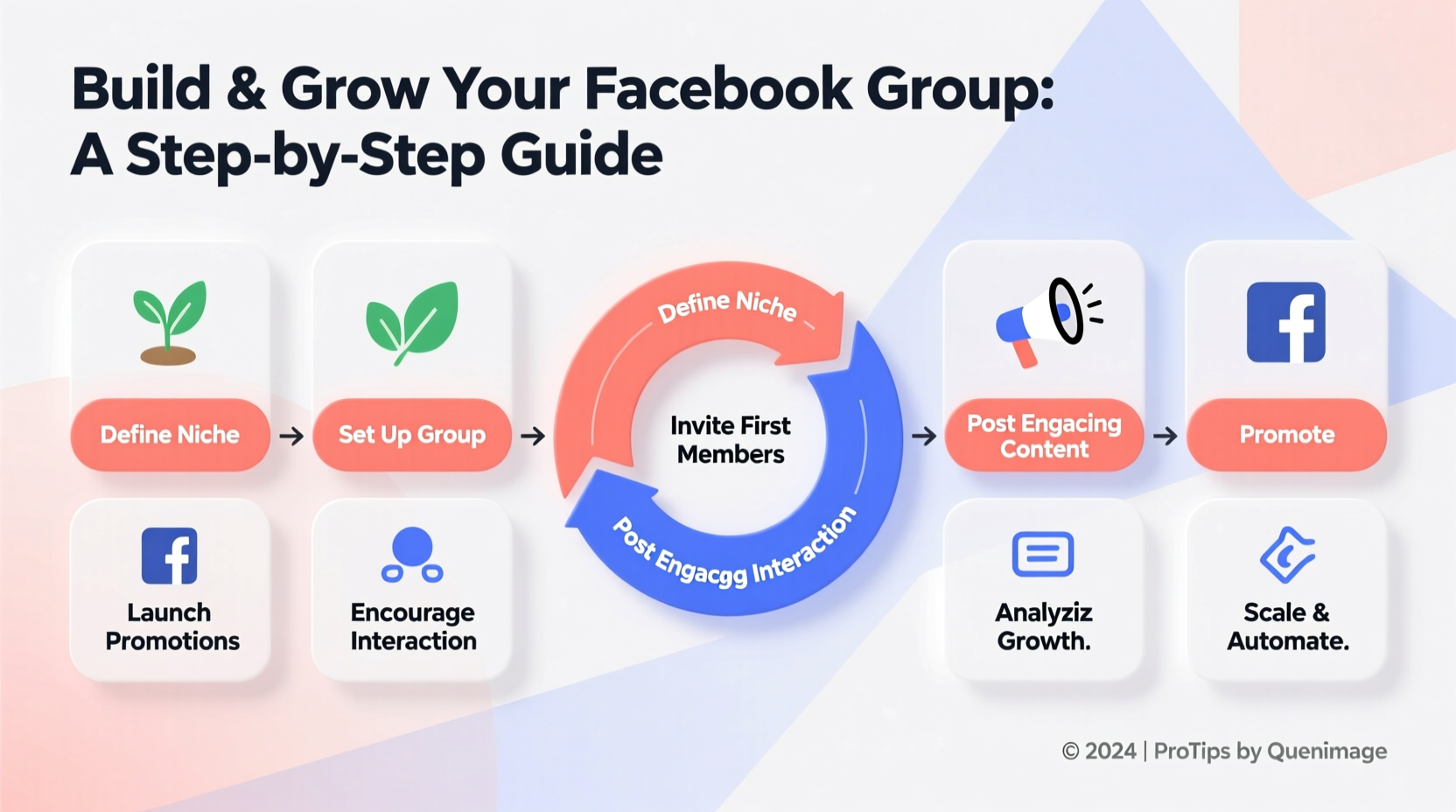
The foundation of every successful Facebook group starts with clarity. A vague or overly broad group will attract inconsistent members and struggle to generate meaningful interaction. Begin by asking three key questions:
- Who am I serving? (e.g., new moms, freelance designers, keto dieters)
- What specific problem do they face that my group can solve?
- What outcome will members achieve by participating?
A well-defined niche creates focus. For example, “Digital Marketing Tips” is too broad. “Facebook Ads for E-commerce Startups Under $10k/Month” is specific, actionable, and attracts a targeted audience.
Build Your Group Structure and Rules
Before inviting your first member, set clear structural guidelines. These prevent chaos as your group scales and establish a culture of respect and value.
Choose the right privacy setting: Most successful groups start as “Private – Visible” so members feel safe sharing, but the group can still appear in search results.
Create clear rules: Post them prominently in the \"Group Rules\" section and pin a welcome post. Good rules include:
- No self-promotion without admin approval
- Be respectful—no hate speech or personal attacks
- Stay on topic (e.g., no off-topic memes)
- Use English only (if applicable)
Assign roles early. As your group grows, recruit trusted members as moderators to help enforce rules and spark discussions.
Essential Setup Checklist
- ✅ Choose a clear, keyword-rich group name
- ✅ Write a compelling description with relevant hashtags
- ✅ Set privacy to Private – Visible
- ✅ Add 5–7 detailed rules
- ✅ Upload a branded cover image (1640x856 pixels recommended)
- ✅ Enable member approval to filter spammers
Launch and Seed Initial Engagement
A silent group repels new members. To avoid this, seed your group with valuable content before launching publicly.
Start by inviting 10–20 close contacts who fit your target audience. Ask them to introduce themselves and respond to a few starter questions you post. This creates early activity and social proof.
Post 3–5 pieces of high-value content in the first week:
- A welcome video introducing yourself and the group’s mission
- A weekly challenge or prompt (e.g., “Share your biggest struggle with meal prep”)
- A helpful resource (e.g., free checklist, template, or guide)
- A poll to gather insights and boost visibility
Engagement begets engagement. The more active your group appears, the more likely Facebook’s algorithm is to recommend it.
Real Example: The Freelance Writers’ Circle
Jamie, a copywriter, launched a private group for beginner freelancers. Before going public, she invited five colleagues and posted daily prompts: “What’s your ideal client?” “What’s stopping you from raising rates?” Within two weeks, the group had 15 active members and consistent daily comments. When she opened enrollment to her email list, new members joined because they saw real conversations happening—not an empty forum.
Grow Strategically Using Proven Tactics
Organic growth doesn’t happen by accident. It follows a repeatable pattern of visibility, value, and invitation.
1. Cross-Promote Thoughtfully
Mention your group in relevant places: Instagram bios, YouTube descriptions, newsletters, and other social profiles. Avoid spamming; instead, explain the benefit: “Join 2,300+ freelancers getting weekly pitch templates and client leads.”
2. Collaborate with Micro-Influencers
Partner with niche creators who serve your audience. Offer to guest-post in their group in exchange for a feature in yours. Even a single shoutout from a trusted figure can drive dozens of high-quality members.
3. Leverage Facebook’s Discovery Tools
Ensure your group appears in searches by including keywords in the name and description. Encourage members to add the group to their profiles (“Follow Group”)—this increases visibility in News Feeds.
“Communities grow fastest when members feel ownership. Give them space to lead, share, and contribute—not just consume.” — Sarah Chen, Community Growth Strategist
Do’s and Don’ts of Facebook Group Growth
| Do’s | Don’ts |
|---|---|
| Post consistently (3–5 times per week minimum) | Leave the group inactive for days |
| Respond to every new member’s introduction | Ignore new joiners |
| Host live Q&As or weekly challenges | Rely only on text posts |
| Encourage members to invite others with shared interests | Allow mass invitations or spam bots |
| Use polls, videos, and stories to boost reach | Post only links or promotional content |
Scale Engagement and Retain Members
Acquiring members is only half the battle. Long-term success depends on retention. People stay in groups where they feel seen, heard, and supported.
Implement these practices to deepen engagement:
- PIN key resources: Highlight a welcome post, FAQ, or freebie so new members know where to start.
- Highlight member wins: Feature success stories weekly. “Congrats to Maria for landing her first $1k client!”
- Create recurring events: Weekly live trainings, feedback threads, or accountability check-ins build habit and loyalty.
- Use reactions and replies strategically: Admins should react to nearly every post. A simple ❤️ or 👏 signals appreciation.
Monitor analytics under “Group Insights” to track growth, top posts, and active hours. Post during peak times for maximum visibility.
Frequently Asked Questions
How long does it take to grow a Facebook group?
It varies, but most groups see meaningful traction within 3–6 months with consistent effort. Groups that post daily, engage personally, and offer unique value often reach 1,000 members in under 90 days.
Can I promote my business in my Facebook group?
Yes, but sparingly and only when relevant. Focus first on providing value. Promotions should never exceed 20% of your content. Instead, let trust build naturally—members will seek out your offerings.
What if my group isn’t growing?
Diagnose the issue: Is your content engaging? Are you responding to members? Is your niche too broad? Try hosting a live event or collaborating with another group to jumpstart activity.
Conclusion: Start Small, Think Big
Every large community began with a single post and a handful of members. Success isn’t about immediate scale—it’s about consistent care, genuine connection, and relentless value.
You don’t need thousands of followers to start. You need one clear idea, a defined audience, and the willingness to show up every day. Build your group like a garden: plant good content, remove weeds (spam, negativity), and nurture what grows.




 浙公网安备
33010002000092号
浙公网安备
33010002000092号 浙B2-20120091-4
Comments
No comments yet. Why don't you start the discussion?