
Replacing a kitchen faucet is one of the most impactful upgrades you can make in your home. Whether you're dealing with a slow drip, outdated design, or simply want better functionality, swapping out an old faucet for a new one improves water efficiency, enhances kitchen aesthetics, and prevents long-term water damage. While it may seem intimidating, with the right tools and a clear plan, this task is entirely manageable for most homeowners. This guide walks you through every stage—from preparation to final testing—with precision and practical advice.
Gather Your Tools and Materials
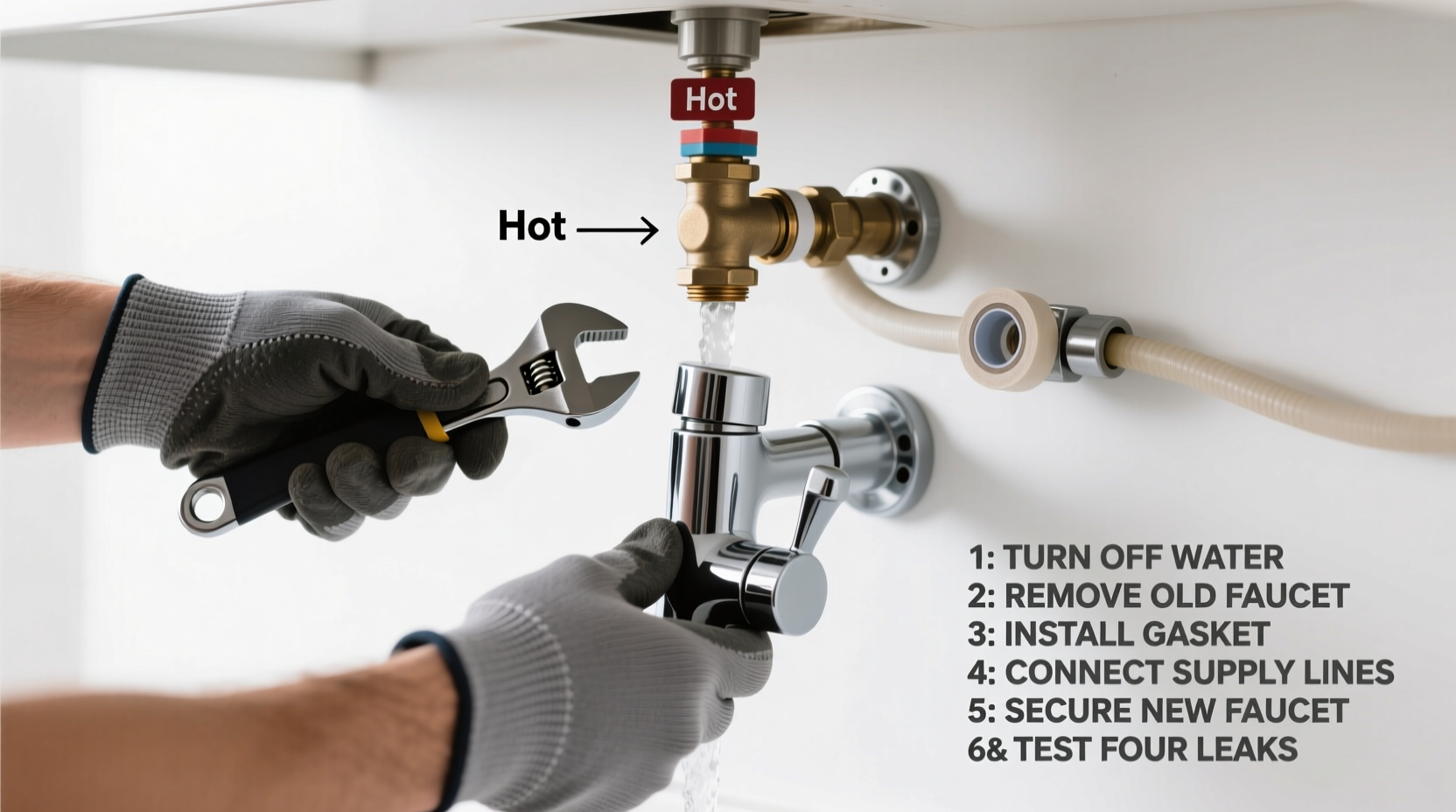
Before disconnecting any plumbing, ensure you have all necessary supplies on hand. Working without the right tools leads to frustration and potential mistakes. Here’s what you’ll need:
- New kitchen faucet (ensure compatibility with your sink configuration)
- Adjustable wrench or basin wrench
- Plumber’s putty or silicone sealant
- Teflon tape (plumber’s tape)
- Screwdrivers (flathead and Phillips)
- Bucket or towel (to catch residual water)
- Flashlight (for visibility under the sink)
- Utility knife (optional, for removing old sealant)
- Plumbing tape measure (to verify dimensions)
Turn Off Water Supply and Prepare the Workspace
Safety and preparation are critical. Begin by shutting off both the hot and cold water valves located beneath the sink. These are typically found on the supply lines connected to the wall or floor. Turn the knobs clockwise until they stop. If valves are stiff or corroded, use a wrench gently to avoid breaking them.
Next, turn on the existing faucet to release any remaining water pressure and drain leftover water from the lines. Place a bucket or towel underneath the connections to catch drips.
“Never skip turning off the water. One missed valve can lead to a flooded cabinet—and worse, flooring damage.” — James Rivera, Master Plumber with 22 years of residential experience
Clear the area under the sink. Remove cleaning products, storage containers, or anything that could get wet or obstruct access. Use a flashlight to inspect connections and assess how much space you’re working with. Tight spaces benefit from a basin wrench, which reaches behind pipes more effectively than standard tools.
Remove the Old Faucet
Start by disconnecting the water supply lines. Use an adjustable wrench to loosen the nuts connecting the hot and cold lines to the faucet tailpieces. Keep the bucket nearby—some residual water will spill out.
Once disconnected, locate the mounting hardware securing the faucet to the sink. Underneath the sink, you’ll find either a large nut or a set of brackets holding the faucet in place. Use a basin wrench to loosen and remove these fasteners. Be patient; corrosion can make them difficult to budge. If stuck, apply penetrating oil and wait 5–10 minutes before trying again.
From above the sink, gently wiggle the faucet to break any seal created by old plumber’s putty or silicone. Lift it straight up and away. Use a utility knife to scrape off any remaining sealant from the sink surface. A clean, smooth rim ensures a proper seal for the new installation.
Install the New Kitchen Faucet
Now comes the core of the process: installing your new faucet. Follow the manufacturer’s instructions closely, as configurations vary between brands and models. However, the general steps remain consistent.
- Prepare the sink surface: Wipe the mounting area thoroughly. Apply a thin bead of plumber’s putty or silicone sealant around the base flange of the faucet (if required by the model). Some faucets use rubber gaskets instead—check your manual.
- Insert the faucet: Feed the faucet’s tailpieces through the mounting holes from above. Align the handles and spout in your preferred orientation before securing.
- Secure from below: Slide the provided washer and mounting nut onto the tailpieces and tighten using a basin wrench. Do not over-tighten, as this can crack porcelain sinks or distort metal components.
- Attach supply lines: Connect the hot and cold water lines to their respective valves. Wrap Teflon tape around the male threads first—about 3–4 wraps—to prevent leaks. Hand-tighten, then give a quarter-turn with a wrench.
- Check alignment: Ensure the faucet sits evenly and moves smoothly if it has a sprayer or swivel spout.
| Do’s | Don’ts |
|---|---|
| Use Teflon tape on threaded connections | Reuse old supply lines unless they’re in perfect condition |
| Double-check water shutoff before starting | Over-tighten mounting nuts or fittings |
| Test for leaks gradually | Ignore manufacturer-specific instructions |
| Clean the sink deck before installation | Work in dim lighting—use a headlamp or flashlight |
Test the Installation and Finalize Setup
With the faucet secured and lines reconnected, it’s time to test. Slowly open the shutoff valves and monitor for leaks at every connection point. Look especially at the supply line joints and the base of the faucet.
Turn on the faucet and let water run for 30 seconds to flush out any debris from installation. Check both hot and cold settings. If you notice dripping or seepage, tighten the affected connection slightly—but remember, over-tightening causes more problems than it solves.
If your faucet has a pull-down or pull-out spray, test the mechanism. Ensure it retracts smoothly and doesn’t tangle. Adjust tension if your model allows it.
Wipe down the sink and dispose of old parts. Consider recycling metal components like the old faucet through local scrap programs.
Mini Case Study: Upgrading a 15-Year-Old Kitchen Faucet
Sarah M., a homeowner in Portland, OR, decided to replace her aging two-handle faucet after noticing persistent drips and mineral buildup. She purchased a modern single-handle pull-down model online, matching the three-hole configuration of her sink. Following a guide similar to this one, she completed the replacement in under two hours on a Saturday morning. The only challenge was a corroded supply line nut, which she loosened with penetrating oil after 10 minutes. After installation, she tested thoroughly and discovered a small leak at the cold water connection—resolved by adding another wrap of Teflon tape. “I saved over $180 by doing it myself,” she said. “And my kitchen looks ten years newer.”
Frequently Asked Questions
How long does it take to change a kitchen faucet?
For a DIYer with basic tools and no complications, expect 1–2.5 hours. First-timers may take longer, especially if dealing with corroded parts or tight spaces.
Can I replace a two-hole faucet with a single-hole model?
Yes, but you may need a deck plate (also called a escutcheon) to cover unused holes. Alternatively, install decorative caps if the new faucet doesn’t require them.
Do I need plumber’s putty for all faucets?
No. Many modern faucets use rubber gaskets or come with pre-applied seals. Always refer to the manufacturer’s instructions—using putty where it’s not needed can cause oozing and mess.
Final Checklist Before You Finish
- Water supply turned off ✅
- Old water drained from lines ✅
- Workspace cleared and dry ✅
- Mounting surface cleaned ✅
- New faucet aligned and secured ✅
- Supply lines connected with Teflon tape ✅
- All connections leak-free after testing ✅
- Functionality of sprayer and handle confirmed ✅
Conclusion
Changing a kitchen faucet doesn’t require professional training—just patience, the right tools, and attention to detail. By following this methodical approach, you gain control over your home’s functionality and aesthetics while avoiding costly service calls. Every successful DIY plumbing project builds confidence and self-reliance. Now that your new faucet is installed and running smoothly, enjoy the fresh flow of water and the satisfaction of a job well done.




 浙公网安备
33010002000092号
浙公网安备
33010002000092号 浙B2-20120091-4
Comments
No comments yet. Why don't you start the discussion?