
Language shapes how we interact with digital platforms, and Instagram is no exception. Whether you're traveling abroad, learning a new language, or simply more comfortable navigating apps in your native tongue, adjusting Instagram’s language can make your experience more intuitive and enjoyable. Unlike many apps that allow in-app language changes, Instagram relies on your device's system language setting—making the process slightly indirect but still straightforward. This guide walks you through everything you need to know to change Instagram’s display language across devices, troubleshoot common issues, and personalize your social media environment for maximum comfort and usability.
Why Language Settings Matter on Instagram
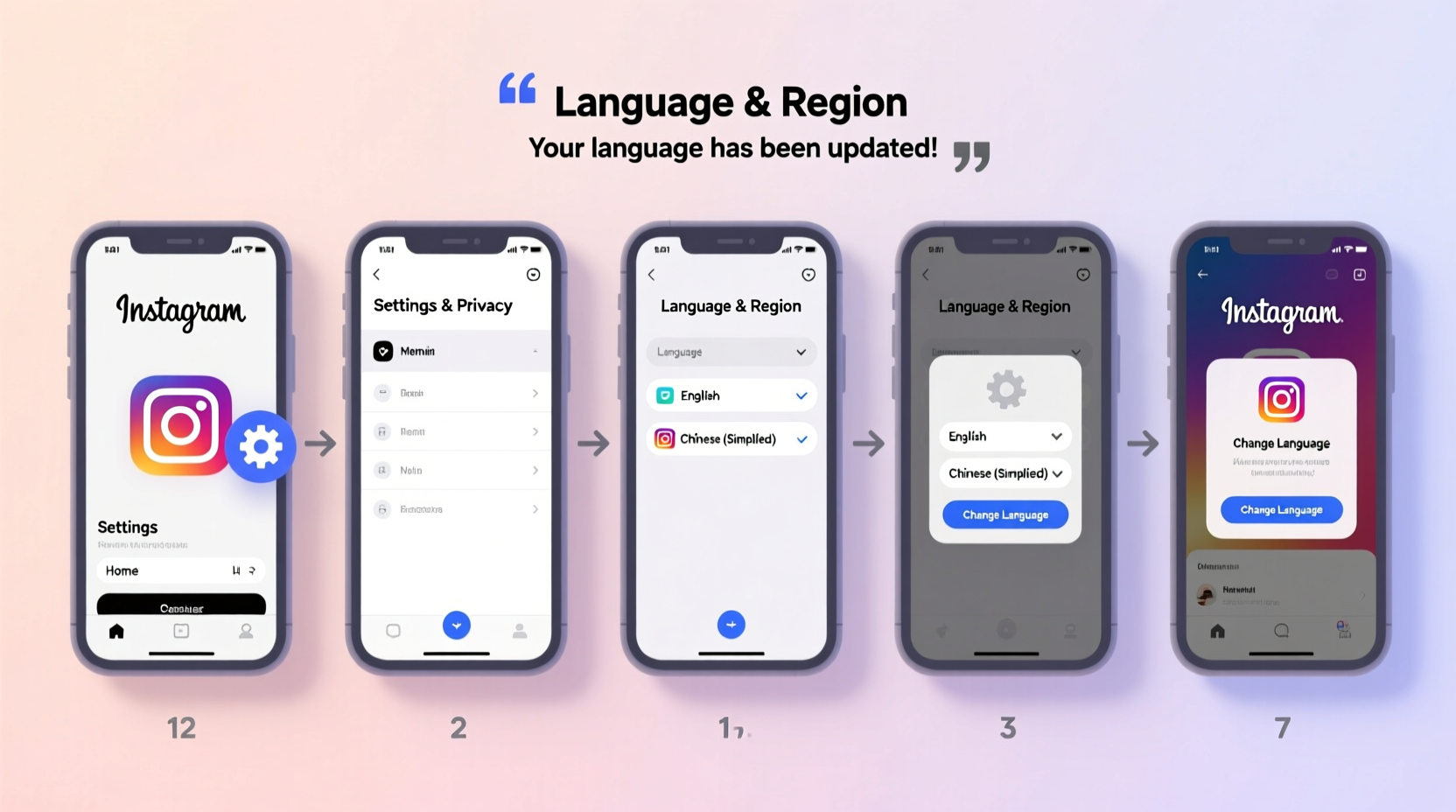
The language of your Instagram interface affects more than just menu labels. It influences notifications, error messages, search suggestions, and even algorithmic content recommendations. For non-native English speakers or bilingual users, switching to a preferred language can reduce cognitive load, improve comprehension, and enhance overall engagement. According to a 2023 report by Statista, over 60% of Instagram users access the app primarily in a language other than English, underscoring the importance of localization in user experience design.
Instagram does not offer a standalone language toggle within its app settings. Instead, it dynamically adjusts based on the language set at the operating system level. This means any change must begin with your phone or computer’s system preferences. While this may seem limiting, it ensures consistency across all apps and services on your device.
How to Change Instagram Language on Mobile Devices
Since Instagram pulls language data from your device, updating the system language will automatically reflect in the app after a restart or refresh. Below are detailed steps for both major mobile platforms.
Changing Language on iPhone (iOS)
- Open the Settings app on your iPhone.
- Scroll down and tap General.
- Select Language & Region.
- Tap iPhone Language.
- Choose your preferred language from the list (e.g., Español, Français, Deutsch).
- Confirm the change when prompted. Your device will restart and reload in the selected language.
- Launch Instagram—it will now display in the new language.
Changing Language on Android Devices
- Open the Settings app.
- Navigate to System > Languages & input (varies slightly by manufacturer).
- Tap Languages, then Add a language.
- Select your desired language and set it as primary by dragging it to the top of the list.
- Your device will adjust system-wide, including Instagram.
- Reopen Instagram to see the updated interface.
“Users often overlook the connection between OS-level settings and app behavior. Aligning your system language with your communication needs streamlines digital interactions.” — Lena Park, UX Localization Specialist
Adjusting Instagram Language on Desktop (Web Browser)
On desktop, Instagram uses your browser's preferred language setting rather than the operating system. This gives you more flexibility if you want different languages across devices or accounts.
Steps for Google Chrome
- Open Chrome and click the three-dot menu in the top-right corner.
- Go to Settings > Languages.
- Under “Preferred languages,” click Add languages and select your desired option.
- Once added, click the three-dot icon next to the language and select Display Google Chrome in this language.
- Relaunch the browser.
- Visit instagram.com—the interface should now appear in the chosen language.
For Firefox and Safari
- Firefox: Preferences > General > Language > Choose your preferred language for displaying pages.
- Safari: System Settings > Language & Region > Drag preferred language to the top. Safari inherits from macOS settings.
What to Do If Instagram Doesn’t Reflect the New Language
Sometimes, even after changing system or browser settings, Instagram may continue displaying in the previous language. Here’s how to resolve common issues:
| Issue | Possible Cause | Solution |
|---|---|---|
| Language unchanged after device setting update | App cache hasn't refreshed | Close and relaunch Instagram; force-stop the app on Android or swipe away on iOS |
| Only some text changed | Partial localization support | Some features may remain in original language due to limited translation coverage |
| Web version shows old language | Browser language priority mismatch | Ensure preferred language is at the top of your browser’s language list |
| Change reverted after reboot | Multiple languages with conflicting priorities | Remove unused languages or reorder them explicitly in system settings |
Mini Case Study: Maria’s Multilingual Experience
Maria, a university student studying abroad in France, found herself struggling with Instagram’s English interface despite being fluent. Daily notifications like “You’re all caught up” and “New post from…” felt intrusive and distracting in a foreign language. After switching her iPhone to French via Settings > General > Language & Region, she noticed an immediate improvement. Not only did menus and prompts become clearer, but her Explore page began showing more French-language creators and local events. Within days, her engagement increased—not because the content changed, but because her understanding deepened. She later switched back to Spanish during visits home, appreciating how seamlessly Instagram adapted each time.
Checklist: Successfully Changing Instagram Language
- ✅ Identify your preferred interface language
- ✅ Access device or browser language settings
- ✅ Set desired language as primary/default
- ✅ Restart the device or relaunch the browser
- ✅ Open Instagram to confirm language change
- ✅ Clear app or browser cache if needed
- ✅ Test navigation and notifications for full visibility
Frequently Asked Questions
Can I use Instagram in multiple languages at once?
No, Instagram supports only one display language at a time, determined by your device or browser’s primary language setting. However, you can freely view posts, comments, and captions in any language regardless of your interface preference.
Will changing the language affect my account content?
No. Your photos, videos, captions, direct messages, and profile information remain unchanged. Only the app’s navigational elements—such as buttons, menus, and alerts—are translated.
Does Instagram support all languages?
Instagram supports over 90 languages, including widely spoken ones like Arabic, Hindi, Portuguese, Japanese, and Russian. However, translation quality varies. Some regional dialects or less common languages may have incomplete or machine-translated interfaces.
Conclusion: Take Control of Your Digital Environment
Your social media experience should adapt to you—not the other way around. By aligning Instagram’s language with your personal or cultural context, you gain greater clarity, comfort, and confidence while browsing. The process requires a small adjustment outside the app, but the payoff in usability is significant. Whether you're reconnecting with heritage, improving language skills, or simply preferring familiar terms, taking control of your interface language is a simple yet powerful customization.




 浙公网安备
33010002000092号
浙公网安备
33010002000092号 浙B2-20120091-4
Comments
No comments yet. Why don't you start the discussion?