
Moving to a new home is more than just unpacking boxes—it’s also about updating official records, including your voter registration. An outdated address can disqualify your ballot or delay your ability to vote in local elections. With deadlines looming and procedures varying by state, it's essential to act early and correctly. This comprehensive guide walks you through the entire process of changing your voter registration address with clarity, confidence, and security.
Why Updating Your Voter Registration Matters
Your voter registration links you to your designated polling place and ensures you receive the correct ballot for your district. When you move—even within the same city—your voting district may change due to redistricting or jurisdictional boundaries. Failing to update your address could result in:
- Being turned away at the polls
- Receiving an incorrect or delayed mail-in ballot
- Losing eligibility to vote in local races that directly impact your community
Nearly one in four voters who show up on Election Day with an outdated registration are unable to cast a regular ballot, according to the U.S. Election Assistance Commission. Taking a few minutes now can protect your right to vote later.
Step-by-Step Guide to Changing Your Voter Registration Address
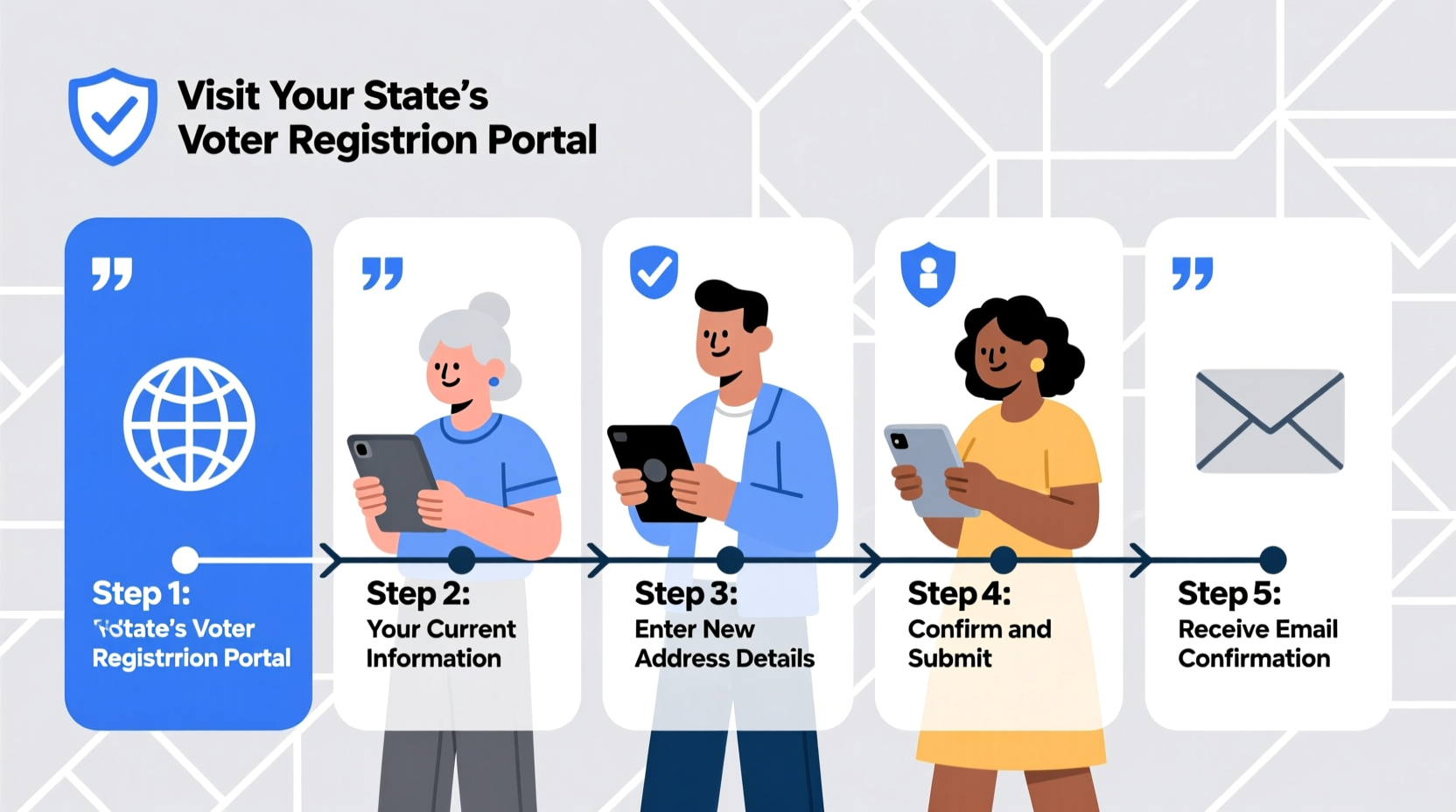
Follow these seven steps to ensure your voter registration is updated accurately and on time.
- Determine Your State’s Deadline
Each state sets its own voter registration deadline, typically ranging from 15 to 30 days before an election. Some states offer same-day registration, but most require advance action. Visit vote.gov and enter your state to find the exact cutoff date. - Gather Required Information
You’ll need:- Current legal name
- Previous and new addresses
- Date of birth
- Driver’s license number or last four digits of your Social Security number (varies by state)
- Signature (digital or physical, depending on method)
- Choose Your Submission Method
Most states allow three primary ways to update your address:- Online: Fastest and most convenient for eligible states.
- By Mail: Requires printing and mailing a form.
- In Person: At your local election office or DMV.
- Submit the Change
Go to vote.gov, select your state, and follow the prompts. The site redirects you to your state’s official election website where you can complete the process. If online updates aren’t available, download the National Mail Voter Registration Form, fill in your new address, and check the “Change of Address” box. - Include Proof If Required
A few states, like Georgia and Arizona, may ask for a copy of a photo ID, utility bill, or bank statement to verify your new address. Always check your state’s requirements before submitting. - Confirm Your Update
After submission, request email or text confirmation if available. Many states provide a tool to check your registration status online. Use it two weeks after submitting to verify your new address is active. - Update Additional Records
While you’re at it, update your address with the DMV and USPS to avoid complications. A mismatch between your driver’s license and voter registration can raise flags during verification.
State-by-State Comparison: Methods and Deadlines
| State | Online Update? | Mail Deadline (General Election) | Same-Day Registration? |
|---|---|---|---|
| California | Yes | 15 days before election | No |
| Texas | No* | 30 days before election | No |
| New York | No | 25 days before election | No |
| Colorado | Yes (via DMV sync) | Automatic update; no deadline | Yes |
| Wisconsin | Yes | 20 days before election | Yes (during early voting) |
*Texas allows online changes only if you already have a valid voter registration; otherwise, a paper form is required.
Mini Case Study: How Maria Avoided Voting Delays After Moving
Maria Rodriguez moved from Phoenix to Tucson in July 2023. She assumed her voter registration would transfer automatically because she updated her driver’s license. On Election Day, however, poll workers informed her she wasn’t registered at her new address.
She was able to cast a provisional ballot, but it took three weeks for election officials to confirm her eligibility and count her vote. Afterward, Maria learned that Arizona requires separate updates for the DMV and voter registration—despite sharing data, the systems don’t always sync immediately.
Now, she updates her voter registration within 48 hours of any move, using the state’s online portal. “I almost missed my chance to vote on school funding,” she said. “Never again.”
Expert Insight on Voter Registration Accuracy
“Maintaining accurate voter rolls depends on civic participation. When individuals update their registration promptly, they not only protect their own right to vote but also help election officials run cleaner, more efficient processes.” — Dr. Lisa Benson, Senior Fellow, Brennan Center for Justice
Checklist: Ensuring a Smooth Address Change
- ✅ Check your current registration status at vote.gov
- ✅ Confirm your state’s registration deadline
- ✅ Choose your update method: online, mail, or in person
- ✅ Fill out the form with your new address and required ID info
- ✅ Submit before the deadline
- ✅ Request confirmation or verify status online
- ✅ Update DMV and USPS records simultaneously
Frequently Asked Questions
Can I use a P.O. Box as my voter registration address?
No. You must provide your physical residential address. A P.O. Box can be used as a mailing address for receiving ballots in some states, but your legal residence must be a physical location.
What if I move after the registration deadline?
If you’ve moved within the same county, many states allow you to update your address at the polls during early or Election Day voting. If you’ve moved across county lines, rules vary—some states let you vote a limited ballot, while others require re-registration for the next election.
Is my information secure when I update online?
Yes. Official state election websites use encrypted connections and comply with federal cybersecurity standards. Never use third-party sites that ask for payment or excessive personal details—they may be scams.
Final Steps and Peace of Mind
Updating your voter registration address isn’t just bureaucratic housekeeping—it’s a fundamental act of civic responsibility. Elections are decided by margins sometimes as narrow as a few hundred votes. By ensuring your registration is current, you guarantee your voice is counted where it matters most: in your new community.
The process takes less time than setting up cable internet or transferring utilities. And unlike those services, your vote influences policies on education, infrastructure, public safety, and healthcare.




 浙公网安备
33010002000092号
浙公网安备
33010002000092号 浙B2-20120091-4
Comments
No comments yet. Why don't you start the discussion?