
Transform your living space with a soft, handcrafted touch. A cherry blossom pillow cover brings the delicate beauty of spring into your home year-round. Whether you're new to sewing or have years of experience, this project is accessible, customizable, and deeply satisfying. With just a few materials and some mindful attention to detail, you can create a piece that reflects both your style and craftsmanship.
Why Make Your Own Pillow Cover?
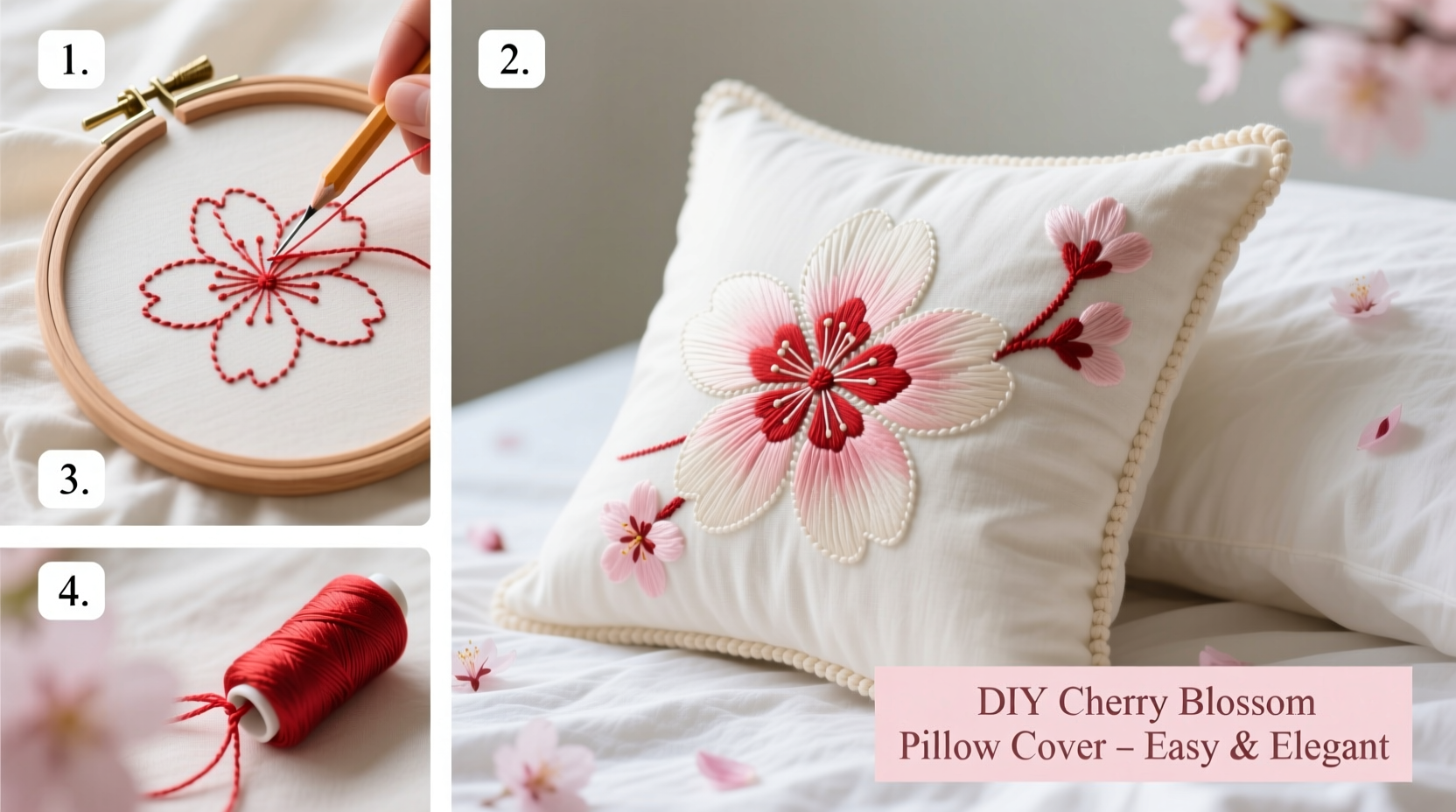
Store-bought decor often lacks personality. Creating your own pillow cover allows full control over fabric choice, color palette, and design details. The cherry blossom theme—symbolizing renewal and fleeting beauty—adds an artistic and emotional layer to your space. Plus, handmade items carry a warmth that mass-produced goods simply can’t replicate.
This project doubles as a mindful activity. The rhythmic motion of stitching, the careful placement of petals, and the satisfaction of seeing your vision come to life contribute to a calming, meditative process. It’s not just about decoration—it’s about intention.
Materials & Tools You’ll Need
Gathering everything ahead of time ensures a smooth workflow. Here's what to prepare before starting:
- ½ yard of medium-weight fabric (cotton, linen, or cotton-linen blend)
- Fabric scissors
- Sewing machine (or needle for hand-sewing)
- Thread in coordinating colors (pink, green, beige)
- Pillow insert (standard size: 18” x 18”)
- Tailor’s chalk or fabric marker
- Ruler or measuring tape
- Pins or clips
- Embroidery needle and floss (for hand-painted or stitched blossoms)
- Iron and ironing board
- Optional: Fabric paint, stencil, or transfer paper for design
Choosing the Right Fabric
Light to medium-weight natural fabrics work best. They’re breathable, easy to sew, and accept embroidery or paint gracefully. Avoid stretchy knits or slippery satins unless you're experienced—they complicate alignment and hemming.
“Handmade textiles add soul to a room. A single custom pillow can shift the entire energy of a space.” — Lena Torres, Interior Textile Designer
Step-by-Step Construction Guide
Follow these clear steps to assemble your pillow cover with precision and care.
- Measure and cut the fabric: Cut two squares: one 19” x 19” (front panel), and one split into two pieces: 19” x 10” and 19” x 7” (back overlap closure).
- Design the cherry blossom motif: Lightly sketch branches using tailor’s chalk. Begin at the bottom corner and sweep upward diagonally. Keep lines soft and organic.
- Add blossoms: Use a coin or small lid to trace 5-petal flower shapes (about 1” diameter). Space them naturally along the branches.
- Prepare the back panels: Place the two back pieces overlapping by 3 inches to create a hidden closure. Pin right sides together with the front panel.
- Sew around the edges: Using a ½” seam allowance, stitch all four sides. Backstitch at the start and end. Trim corners carefully to reduce bulk.
- Turn and press: Flip the cover right-side out through the overlap opening. Use a blunt tool (like a chopstick) to push out corners. Iron flat for crisp edges.
- Topstitch (optional): Sew ¼” from the edge around the entire pillow for a polished finish.
Adding the Cherry Blossom Design
The visual heart of this project lies in the blossom artwork. Choose one or combine techniques based on your comfort level.
Option 1: Hand Embroidery (Beginner-Friendly)
Use French knots for flower centers and lazy daisy stitches for petals. Outline branches with stem stitch in brown or gray thread. This method adds rich texture and dimension.
Option 2: Fabric Paint & Stencils (No-Sew Option)
Trace or use a cherry blossom stencil. Apply soft pink paint with a sponge dabber for a watercolor effect. Let dry completely before handling.
Option 3: Fusible Appliqué
Cut blossom shapes from contrasting fabric, iron on with fusible webbing, then secure with a zigzag or straight stitch. Great for bolder, graphic styles.
| Technique | Skill Level | Time Required | Durability |
|---|---|---|---|
| Hand Embroidery | Beginner+ | 2–3 hours | High (with proper care) |
| Fabric Painting | Beginner | 1–2 hours | Moderate (avoid frequent washing) |
| Fusible Appliqué | Intermediate | 2.5 hours | High |
Real-Life Example: Sarah’s Spring Refresh
Sarah, a working mom in Portland, wanted to refresh her bedroom without spending much. She’d never embroidered before but followed this guide over a weekend. Using leftover linen and DMC floss, she created two pillow covers featuring delicate pink blossoms. “I was surprised how relaxing it was,” she said. “Now my bed feels like a retreat. My daughter even asked me to teach her the French knot.” Her story shows that meaningful decor doesn’t require expertise—just curiosity and a little time.
Common Pitfalls & How to Avoid Them
Even simple projects can run into snags. Stay confident with these solutions:
- Uneven seams: Always pin fabric and double-check measurements before cutting.
- Paint bleeding: Use fabric paint designed for textiles and avoid overloading the brush.
- Distorted design: Sketch lightly first. If unsure, practice on scrap fabric.
- Back closure too tight: Ensure the overlap is at least 3 inches so the pillow fits easily.
Customization Ideas
Make the design your own with these variations:
- Swap pink for white or pale lavender blossoms for a monochrome scheme.
- Add green felt leaves for extra dimension.
- Incorporate names or dates with delicate cursive embroidery—ideal for gifts.
- Use dark fabric (navy or charcoal) with metallic thread for an evening-garden feel.
Frequently Asked Questions
Can I make this without a sewing machine?
Absolutely. Use a backstitch or running stitch with strong thread. For the closure, hand-sew buttons or add ribbon ties instead of an envelope back.
How do I wash the finished pillow cover?
Turn it inside out and hand-wash in cold water with mild detergent. Lay flat to dry. Avoid wringing or machine drying, especially if painted or heavily embroidered.
I’m nervous about drawing freehand. Any alternatives?
Yes. Print a cherry blossom image, place it under sheer fabric, and trace with a lightbox or bright window. Or use iron-on transfer pens for precise transfers.
Checklist: Your DIY Cherry Blossom Pillow Project
- ☐ Choose fabric and pre-wash
- ☐ Cut front and back panels
- ☐ Sketch or transfer blossom design
- ☐ Embellish using embroidery, paint, or appliqué
- ☐ Pin and sew front to back (right sides together)
- ☐ Trim, turn, and press
- ☐ Insert pillow and enjoy!
Final Thoughts
Crafting a cherry blossom pillow cover isn’t just about making something beautiful—it’s about slowing down, engaging your hands, and creating with purpose. This project welcomes beginners with open arms and offers seasoned crafters a canvas for refinement. Every stitch or brushstroke becomes part of a personal narrative woven into your home.
No matter your skill level, the result will be uniquely yours—a quiet celebration of nature, creativity, and care. So gather your supplies, set aside an afternoon, and let the blossoms bloom under your fingertips.




 浙公网安备
33010002000092号
浙公网安备
33010002000092号 浙B2-20120091-4
Comments
No comments yet. Why don't you start the discussion?