
Building a small wooden box is one of the most rewarding first projects in woodworking. It teaches precision, introduces joinery fundamentals, and results in a functional or decorative object you can be proud of. Whether you're new to the craft or looking to refine your technique, this guide walks through every stage—from selecting materials to finishing—with practical advice that applies at any skill level.
Selecting Materials and Tools
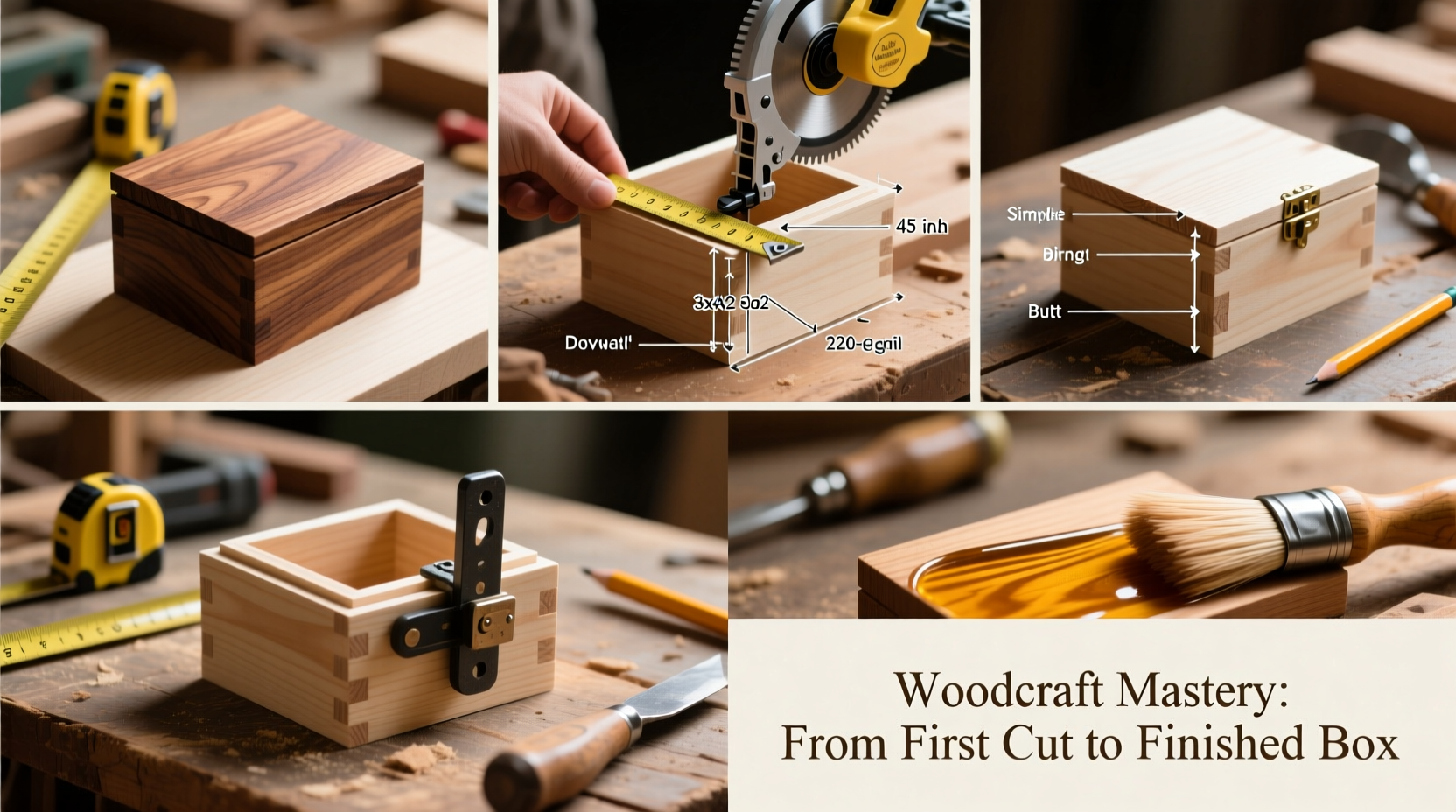
The foundation of a well-made wooden box lies in thoughtful material selection and having the right tools on hand. For beginners, soft hardwoods like poplar, cherry, or walnut are ideal. They’re easier to work with than dense tropical woods but still offer grain beauty and durability. Avoid warped, cracked, or overly knotted boards.
A basic toolkit allows you to complete the project safely and accurately. As you progress, specialized tools can improve efficiency and finish quality.
Essential Tools Checklist
- Measuring tape and combination square
- Pencil or marking knife
- Hand saw or miter saw (for straight cuts)
- Chisels (¼\", ½\")
- Coping saw or scroll saw (for internal cuts if needed)
- Sanding blocks or orbital sander (120–220 grit)
- Clamps (bar or F-style, minimum 4)
- Wood glue (aliphatic resin, e.g., Titebond II)
- Ruler and scratch awl
“Start simple. A well-executed box with clean lines is more impressive than an ambitious one full of gaps.” — Daniel Hickman, Master Woodworker & Instructor
Design and Planning Your Box
Before making any cuts, sketch your design. Decide on dimensions, lid type (flush, overlapping, or hinged), and whether you want finger joints, rabbets, or butt joints. A standard beginner’s box might measure 6” x 4” x 3” (L x W x H).
Use graph paper or free design software like SketchUp Free to visualize proportions. Label each part: front, back, sides, bottom, and lid. Remember, the bottom panel usually fits into a groove or rests on dados, so its size must account for the thickness of surrounding walls.
| Joint Type | Difficulty | Strength | Best For |
|---|---|---|---|
| Butt Joint + Glue | Easy | Low | Beginner practice boxes |
| Rabbet Joint | Moderate | Medium | Stronger side/bottom connections |
| Dado + Rabbet | Moderate | High | Secure bottom panel fit |
| Finger Joint | Advanced | Very High | Showcase craftsmanship |
Step-by-Step Construction Process
Follow this sequence to assemble a durable, square box with crisp edges and tight seams.
- Mill the stock: Flatten one face and square one edge using a jointer or hand plane. Then rip to width on a table saw or with a circular saw and guide.
- Cut components to length: Use a miter gauge or crosscut sled for precise, square ends. Measure twice, cut once.
- Create joints: For rabbets, set your router bit or dado stack to half the wood thickness. Rout along the inner edges where panels meet. For dados to hold the bottom, cut centered grooves 1/4” deep.
- Dry-fit the assembly: Clamp pieces without glue. Check for gaps and squareness using a carpenter’s square. Adjust as needed.
- Glue up: Apply even beads of wood glue to mating surfaces. Wipe excess immediately with a damp cloth. Clamp firmly and let cure 24 hours.
- Attach the bottom: Insert the bottom panel into the dado or rabbet. Secure with glue and optional brad nails or pins if desired.
- Sand thoroughly: Start at 120 grit, progress to 180, then 220. Round sharp edges slightly for comfort and aesthetics.
“Patience during dry-fitting prevents frustration later. If it’s not square now, it won’t be after gluing.” — Lena Torres, Fine Woodworking Artisan
Finishing Techniques for a Professional Look
Finishing enhances both appearance and longevity. Choose based on function: a jewelry box benefits from a smooth, wipeable film finish, while a rustic keepsake box may look better with natural oil.
Common Finish Options
- Mineral spirits + boiled linseed oil: Simple, food-safe, brings out grain. Reapply annually.
- Wiping varnish: Durable, water-resistant, easy to apply with a rag.
- Shellac: Fast-drying, excellent for sealing knots or stains.
- Polyurethane (oil-based): Hard, protective coat—ideal for frequently handled boxes.
Always sand lightly between coats with 320-grit paper. Apply thin layers—three to four are better than one thick one. Let each dry fully before recoating.
Mini Case Study: From First Attempt to Gallery-Quality
Mark, a hobbyist in Portland, built his first box from pine using butt joints and white glue. The corners gapped, and the finish bubbled. Instead of discouragement, he used it as a learning tool. He studied joinery videos, invested in a small chisel set, and rebuilt the same design in cherry using rabbets. His second version was tighter and smoother. By his fifth box—featuring a lift-off lid and hand-rubbed tung oil finish—he sold one at a local craft fair. “The key,” he says, “was treating each mistake as data, not failure.”
Advanced Tips and Creative Upgrades
Once comfortable with basics, explore enhancements that elevate your work:
- Add a magnetic catch or brass hinge for a functional lid.
- Incorporate contrasting wood inlays or banding for visual interest.
- Use a router to create a recessed lid that sits flush within the walls.
- Try dovetail joints by hand for a signature mark of fine craftsmanship.
- Line the interior with velvet or felt for jewelry storage.
For accuracy in repetitive tasks, build simple jigs. A stop block ensures identical cuts; a shooting board perfects end grain. These small investments compound over time.
FAQ
What wood should I avoid for my first box?
Avoid very hard woods like maple (difficult to cut cleanly without sharp tools) and unstable woods like green lumber or plywood with veneer tears. Stick to stable, kiln-dried hardwoods.
How do I fix a gap in a joint after gluing?
If minor, fill with a paste made from sawdust and glue. Let dry, then sand flush. For larger gaps, disassemble carefully with chisels, re-cut, and reglue. Prevention through careful fitting is best.
Can I make a wooden box without power tools?
Absolutely. Many traditional boxes were made with hand saws, planes, and chisels. You’ll need more time and patience, but the process deepens your understanding of wood behavior and tool control.
Conclusion
Crafting a small wooden box is more than a beginner project—it’s a gateway to mastering fundamental skills that apply across woodworking. Each cut, joint, and finish choice builds confidence and competence. Whether you’re creating a gift, organizing desk items, or simply enjoying the feel of handmade objects, the act of building something lasting with your hands has enduring value.




 浙公网安备
33010002000092号
浙公网安备
33010002000092号 浙B2-20120091-4
Comments
No comments yet. Why don't you start the discussion?