
There’s something undeniably joyful about handmade accessories—especially when they carry a personal touch. A DIY peach keychain is more than just a functional item; it’s a tiny burst of summer, a whimsical accent that adds personality to your keys, bag, or journal. With soft colors, playful texture, and a nostalgic charm, this craft blends creativity with simplicity. Whether you're making one for yourself or as a heartfelt gift, the process is relaxing, accessible, and rewarding.
This guide walks you through every stage of creating a three-dimensional, felt-based peach keychain using beginner-friendly techniques. From selecting the right materials to adding delicate finishing touches, each step ensures a polished, professional-looking result—even if it's your first time sewing by hand.
Gathering Your Materials
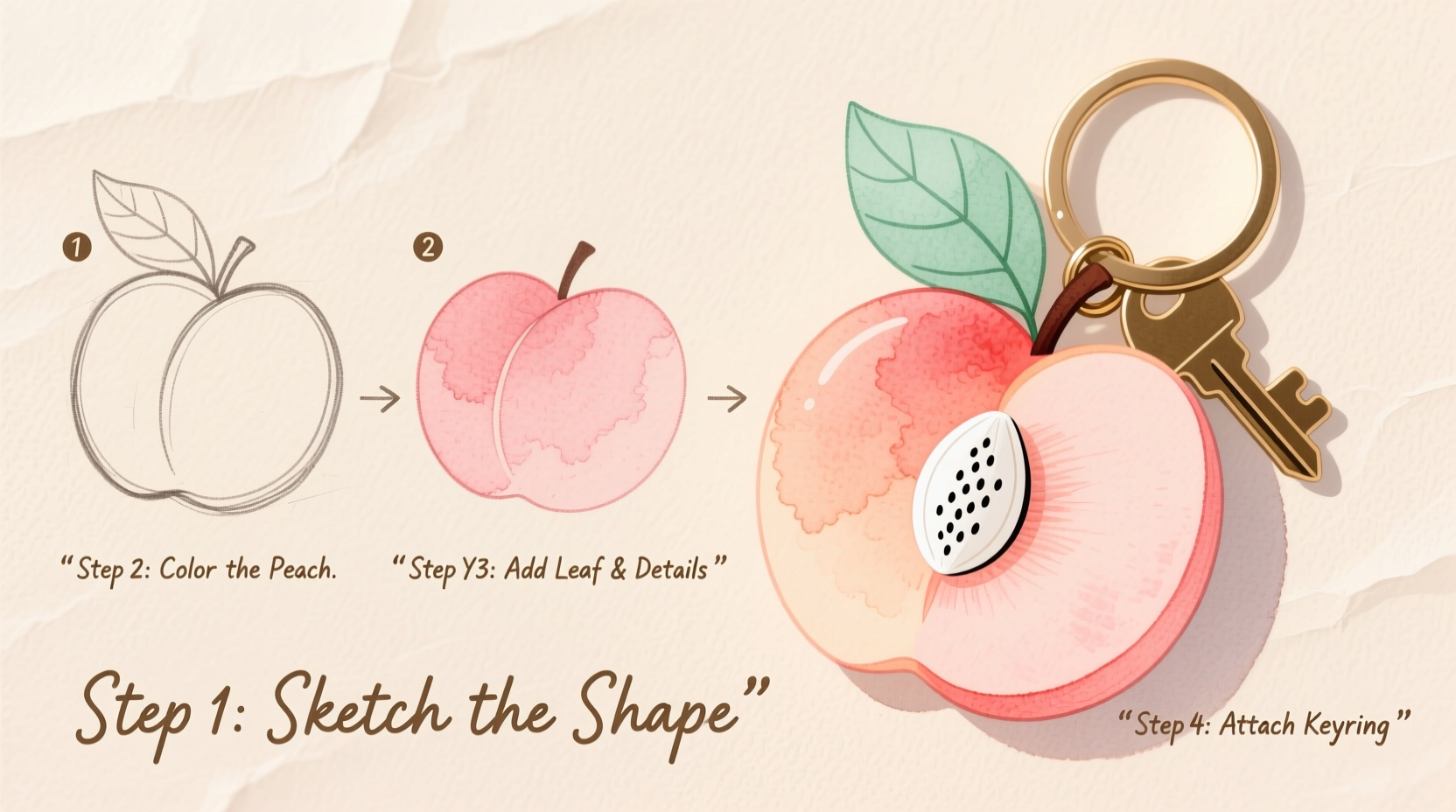
The foundation of any successful craft lies in preparation. For this project, you’ll need a small set of affordable, easy-to-find supplies. Most can be sourced from local craft stores or online retailers specializing in sewing and embroidery essentials.
- Pink, peach, and light green felt (craft-weight)
- Embroidery floss (peach, dark pink, green, and brown)
- Small needle suitable for hand sewing
- Scissors with sharp tips
- Fabric glue (optional, for securing knots)
- Keyring or lobster clasp
- Stuffing (polyester fiberfill or cotton)
- Pencil or chalk for tracing
- Printed or hand-drawn template of a peach shape (about 2.5 inches tall)
Creating the Peach Shape: Cutting and Tracing
Begin by designing or downloading a symmetrical peach outline. The ideal size is between 2 and 3 inches in height to ensure portability without sacrificing detail. Print the template or draw it freehand on paper, then cut it out carefully.
Place the paper template on the peach-colored felt and trace around it twice—once for the front and once for the back of the fruit. Then, cut two slightly smaller oval shapes from pink felt to layer on top, simulating the blush of a ripe peach. For the stem and leaf, trace small oblong and teardrop shapes onto green felt.
| Component | Felt Color | Quantity Needed |
|---|---|---|
| Main body (front/back) | Peach | 2 pieces |
| Blush overlay | Pink | 2 pieces |
| Stem | Green | 1 piece |
| Leaf | Green | 1 piece |
Accuracy isn’t critical—imperfections give handmade items character—but clean edges make stitching easier. Take your time cutting, especially around curves.
Assembling the Keychain: Stitching and Stuffing
Lay one peach-colored felt piece flat. Position a pink oval slightly off-center near the top to mimic natural shading. Using a matching pink embroidery thread and a whip stitch or blanket stitch, secure the pink layer to the base. Repeat for the second peach half.
Next, align the two peach halves with their outer sides facing each other. Begin sewing around the edge using a backstitch for durability, leaving a 1-inch gap at the bottom for turning and stuffing. Keep stitches close together (about 1/8 inch apart) for a tight seal.
- Sew around the perimeter, reinforcing corners gently.
- Turn the piece right-side out using a pencil or blunt tool to push out the curves.
- Add a small pinch of stuffing—just enough to give plumpness without distorting the shape.
- Hand-stitch the opening closed using a ladder stitch for an invisible finish.
Now attach the stem and leaf. Position the green stem at the top center and the leaf overlapping it slightly to one side. Secure both with tight, nearly invisible stitches using green thread. A single brown stitch across the stem adds dimension, mimicking bark texture.
Adding Character: Embroidered Details
The defining feature of a realistic peach is its subtle cleft down the middle and fuzzy skin texture. Use a single strand of dark pink embroidery floss to create a gentle curved line from top to bottom center. A lazy daisy stitch along the seam adds a suggestion of fuzziness.
For extra realism, lightly “feather” short straight stitches radiating from the cleft using diluted pink floss. These should be sparse and irregular—nature isn’t uniform. On the leaf, add a central vein with a backstitch and two or three lighter side veins branching outward.
“Hand embroidery transforms simple shapes into expressive miniatures. It’s not about perfection—it’s about suggestion.” — Lila Nguyen, Textile Artist & Craft Educator
These details elevate your keychain from cute to artisanal. Even minimal stitching makes a dramatic difference in perceived quality.
Attaching the Keyring and Final Touches
To complete the piece, loop a small keyring or lobster clasp through the base of the stem. Sew it securely with multiple passes of green thread, knotting and securing the end with a dot of fabric glue to prevent unraveling.
If desired, lightly sand the surface of the felt with fine-grit sandpaper to create a softer, slightly worn texture—this mimics the delicate skin of a real peach. Avoid over-sanding, which can damage the fibers.
📋 Quick Checklist Before You Finish:- Are all seams tightly closed?
- Is the stuffing evenly distributed?
- Are embroidered details balanced and secure?
- Is the keyring firmly attached?
- Have loose threads been trimmed and secured?
A Real-Life Example: Sarah’s Gift Project
Sarah, a college student from Portland, wanted to make personalized gifts for her four roommates. She chose fruit-themed keychains based on their favorite snacks. For Mia, who loved smoothies, she made a peach version following this method.
Using leftover felt from a previous craft, Sarah spent under two hours completing all five keychains. She added initials to the back of each with iron-on transfer paper. Her roommates were delighted—not just by the cuteness, but by the evident care in the stitching and texture work. One later commented, “I’ve never lost my keys since—I don’t want to lose this little peach!”
Sarah’s experience shows how a modest DIY project can become meaningful keepsake when crafted with attention to detail.
Frequently Asked Questions
Can I wash a felt peach keychain?
Felt is sensitive to moisture and agitation. Spot clean only with a damp cloth and mild soap. Avoid submerging it, as this may cause shrinking or color bleeding.
What if I don’t have embroidery floss?
You can use regular sewing thread, but double or triple it to match the thickness of floss. However, embroidery floss offers richer color and smoother handling, so it’s worth keeping in your craft kit.
Can kids make this project safely?
With supervision, yes. Replace needles with fabric glue for assembly, and pre-cut shapes to reduce risk. Older children (ages 10+) can learn basic stitches under guidance.
Bring Joy Through Simple Creation
Crafting a DIY peach keychain is more than a pastime—it’s a mindful act of creation that connects you to the tactile world. In a digital age dominated by speed and efficiency, taking time to sew, stuff, and embellish a tiny object fosters presence and pride. Each stitch becomes a quiet rebellion against mass production, a celebration of individuality.
Whether you keep it for yourself or tuck it into a friend’s birthday card, this little peach carries warmth. And once you master the technique, variations are endless: try plums, apples, or avocados. The skills you build here—pattern use, hand-sewing, textural detailing—are transferable to countless other soft crafts.




 浙公网安备
33010002000092号
浙公网安备
33010002000092号 浙B2-20120091-4
Comments
No comments yet. Why don't you start the discussion?