
The lion dance, a vibrant symbol of celebration and good fortune in Chinese culture, is more than just a performance—it’s an art form rich in color, movement, and symbolism. Bringing that energy into everyday life doesn’t require a full costume or stage. With a handmade lion dance keychain, you can carry a piece of tradition with you, whether on your keys, backpack, or as a thoughtful handmade gift. This guide walks you through creating your own miniature lion using simple materials, accessible techniques, and cultural respect.
Gathering Your Materials
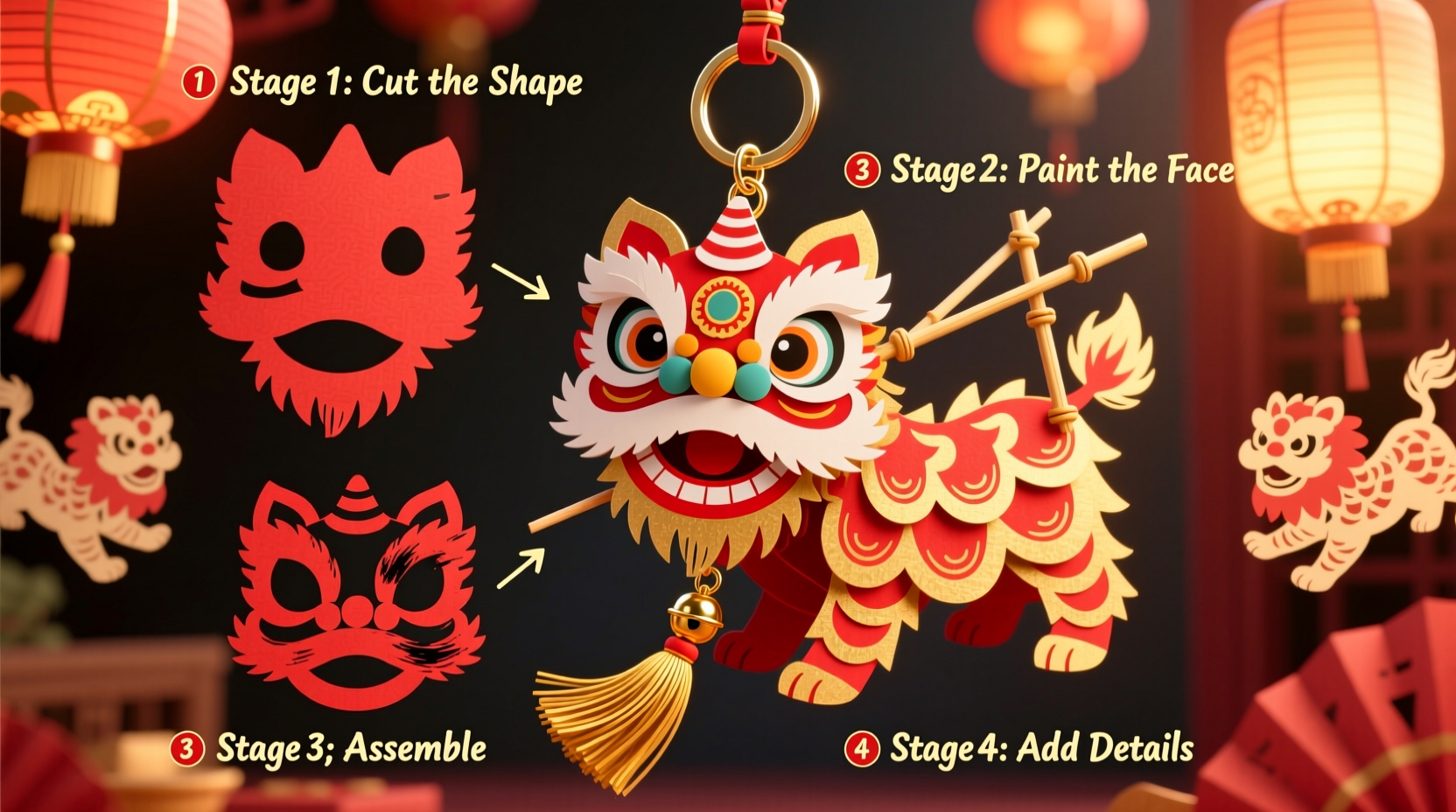
Before beginning construction, ensure you have all necessary supplies. The beauty of this project lies in its accessibility—most items can be found at craft stores or repurposed from household materials.
- Felt sheets (red, gold, black, white, yellow)
- Small jingle bell or metal ring for the keychain attachment
- Embroidery floss or thin yarn (gold or red)
- Needle and strong thread (or fabric glue)
- Scissors (fabric scissors preferred)
- Pencil or chalk for tracing
- Cardboard or paper for templates
- Fiberfill stuffing or cotton balls
- Tacky glue or hot glue gun (low-temp recommended)
Designing the Lion: Structure and Symbolism
The lion dance mask features distinct elements: bold eyes, a prominent forehead, a flowing mane, and expressive mouth. Each part carries meaning—large eyes ward off evil, the open mouth scares away bad spirits, and the golden forehead symbolizes prosperity.
Start by sketching a simplified lion face on paper. Focus on symmetry and exaggerated features typical of traditional lion dance masks. Divide the face into key components:
- Face Base: Oval shape, about 2.5 inches tall.
- Eyes: Large, round, often outlined in black with white highlights.
- Nose: Wide and bulbous, usually red or gold.
- Mouth: Open with visible teeth and sometimes a tongue.
- Mane: Radiating curved strips around the face.
- Horn or Tassel: Small protrusion on top, often red or gold.
Transfer each component onto cardboard to create reusable templates. Trace these shapes onto colored felt and cut them out carefully.
Step-by-Step Assembly Process
Follow this sequence to assemble your lion keychain with precision and charm.
- Create the Face Base: Cut two identical oval pieces from red or gold felt. These will form the front and back of the 3D keychain.
- Attach Facial Features: Glue or sew on the eyes, nose, and mouth using contrasting colors. Use black felt for pupils and white for glints to add depth.
- Build the Mane: Cut 8–10 curved strips from gold or yellow felt. Arrange them in a sunburst pattern around the front face, layering slightly and securing with glue or stitches at the base.
- Add Dimension: Place a small amount of stuffing between the two face ovals before sewing three sides closed. This gives the lion a soft, padded look.
- Secure the Opening: Before closing the fourth side, insert the jingle bell or keyring loop into the top edge. Then stitch or glue the final seam shut.
- Final Details: Attach a tiny horn (a folded triangle of red felt) or a tassel made from embroidery floss at the top center. You may also embroider whiskers using white thread.
Do’s and Don’ts: Crafting Best Practices
| Do’s | Don’ts |
|---|---|
| Use sharp scissors for clean felt edges | Overstuff the keychain—keep it flat enough to attach easily |
| Sew critical parts like the keyring securely | Rush the drying time when using glue |
| Test layout before gluing or stitching | Use heavy materials that make the keychain bulky |
| Incorporate cultural symbols respectfully | Copy exact religious or ceremonial designs without understanding context |
“Miniature crafts like keychains keep cultural traditions alive in daily life. When made with care, they become more than trinkets—they’re tokens of heritage.” — Dr. Lin Mei, Cultural Arts Educator
Real Example: A Student’s Lunar New Year Project
Jessica, a high school student in Vancouver, wanted to create meaningful gifts for her multicultural friends during Lunar New Year. She followed this method to make five lion keychains using red and gold felt, adding personalized embroidery floss initials on the back.
She reported that the most challenging part was attaching the keyring securely without tearing the felt. Her solution? Reinforcing the top edge with a double layer of felt before sewing. The result was a set of durable, cheerful keychains that became conversation starters among her peers and even inspired a mini workshop at her school’s cultural club.
Customization Ideas and Variations
Once you’ve mastered the basic structure, explore creative variations:
- Color Themes: Use green and silver for a “southern style” lion, or blue and gold for a more mythical look.
- Size Adjustments: Make a larger version as a bag charm or wall decoration.
- Sound Element: Include a tiny bell inside so it jingles when moved.
- Personalization: Add initials or lucky symbols like the Chinese character 福 (fu – luck) on the forehead.
Frequently Asked Questions
Can I make this without sewing?
Yes. Use fabric glue to assemble all parts. Allow 24 hours for full curing, especially where weight-bearing elements like the keyring are attached. Reinforce stress points with double layers of felt.
Is it appropriate to make a lion dance craft if I’m not of Chinese heritage?
Absolutely—cultural appreciation is encouraged when done respectfully. Avoid sacred or ritual-specific symbols (like temple emblems), focus on general festive designs, and acknowledge the tradition behind the craft.
How long does it take to make one keychain?
For beginners, allow 1.5 to 2 hours including drying time. With practice, you can complete one in under 45 minutes.
Crafting Checklist
- Sketch lion face and create paper templates
- Cut out all felt pieces using templates
- Arrange and attach facial features to front oval
- Glue or sew on mane pieces in a radial pattern
- Insert stuffing and keyring, then seal edges
- Add final details: horn, tassel, or embroidery
- Inspect durability and reinforce weak seams
Conclusion: Bring Tradition to Life, One Keychain at a Time
Crafting a lion dance keychain is more than a DIY project—it’s a gesture of connection to a living cultural tradition. With patience and attention to detail, you transform humble materials into a symbol of joy, courage, and celebration. Whether you're making it for Lunar New Year, a gift, or simply to enjoy the meditative rhythm of needle and thread, this little lion carries big meaning.




 浙公网安备
33010002000092号
浙公网安备
33010002000092号 浙B2-20120091-4
Comments
No comments yet. Why don't you start the discussion?