
Nighttime can be especially difficult when anxiety takes hold. As the world quiets down, racing thoughts often grow louder. The stillness meant for rest becomes a battleground of what-ifs, regrets, and worries about tomorrow. For many, this mental unrest leads to hours of lying awake, reinforcing a cycle of poor sleep and heightened anxiety.
The good news: you don’t have to accept restless nights as inevitable. A structured, intentional bedtime routine can signal safety to your nervous system, quiet mental chatter, and prepare your body for deep, restorative sleep. This guide walks you through a practical, evidence-based process to build a personalized nighttime ritual that reduces anxiety and improves sleep hygiene—one night at a time.
Why Bedtime Routines Matter for Anxiety
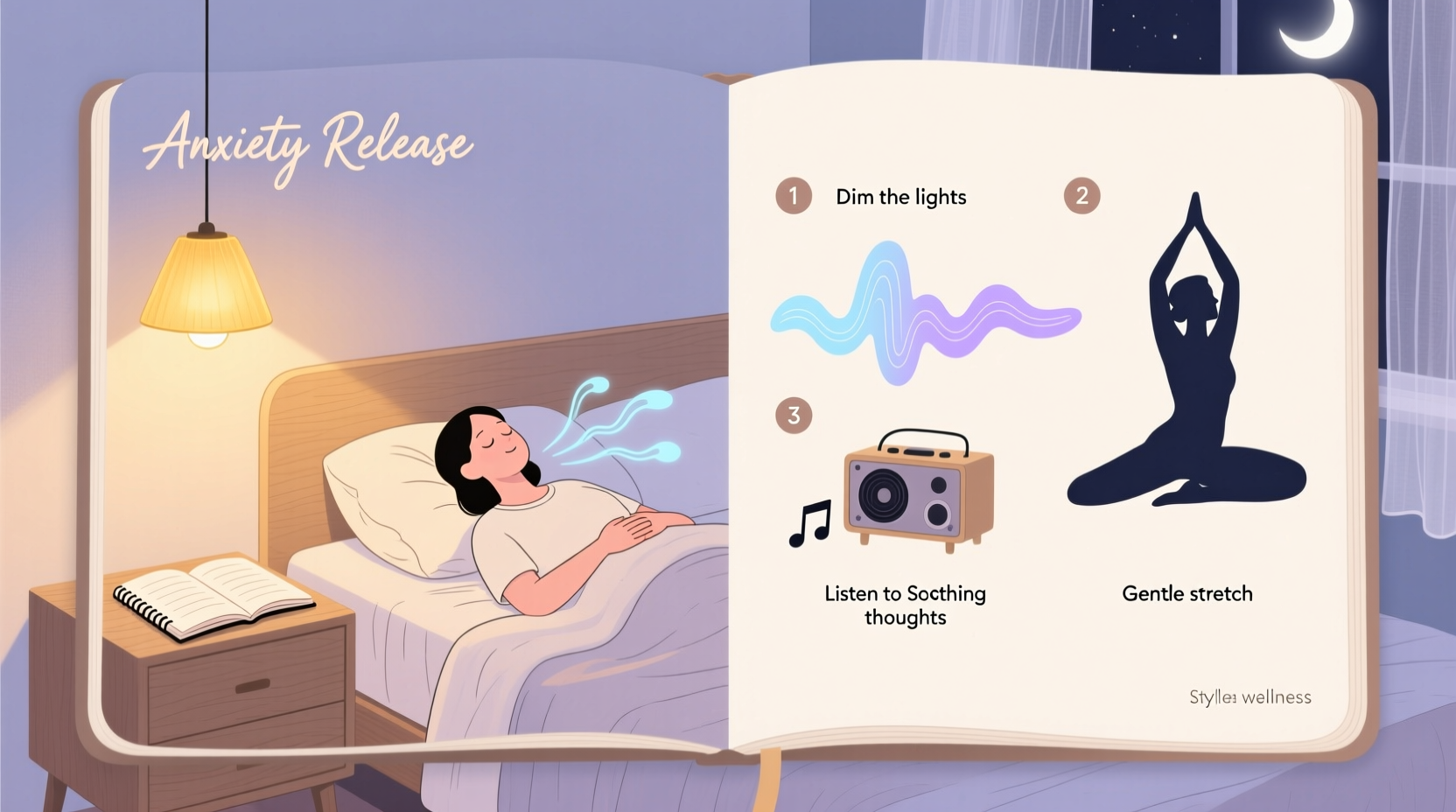
Anxiety thrives in unpredictability. When your brain senses threat—real or imagined—it activates the sympathetic nervous system, triggering the fight-or-flight response. At night, without external distractions, internal stimuli like rumination and hyperawareness dominate. This makes falling asleep feel impossible.
A consistent bedtime routine counters this by activating the parasympathetic nervous system—the “rest and digest” mode. Over time, predictable pre-sleep behaviors train your brain to associate specific cues with relaxation. These signals reduce cortisol levels, slow heart rate, and ease muscle tension, making it easier to transition into sleep.
“Sleep is not just downtime. It’s a critical window for emotional regulation. Disrupted sleep worsens anxiety, and untreated anxiety disrupts sleep—a dangerous feedback loop.” — Dr. Rebecca Turner, Clinical Sleep Psychologist
Creating a calming routine breaks that cycle. It’s not about perfection; it’s about consistency and intention. Even small changes, repeated nightly, can significantly lower anxiety over time.
Step-by-Step Guide to Building Your Routine
Building an effective bedtime routine requires more than turning off screens early. It’s a sequence of deliberate actions designed to shift your mind from alertness to calm. Follow these steps to create one tailored to your needs.
- Set a Fixed Sleep-Wake Schedule
Go to bed and wake up at the same time every day—even on weekends. This regulates your circadian rhythm, improving sleep quality and reducing nighttime anxiety spikes. Start by choosing a realistic bedtime based on when you need to rise, then work backward to allow 7–9 hours of sleep. - Begin Wind-Down 60–90 Minutes Before Bed
This is your transition period from activity to rest. Avoid stimulating tasks like checking emails, paying bills, or intense conversations. Instead, initiate low-light, low-stimulation activities such as reading fiction, gentle stretching, or listening to soft music. - Limit Screen Exposure
Blue light from phones, tablets, and TVs suppresses melatonin production. Aim to stop using screens at least 60 minutes before bed. If you must use a device, enable night mode and keep brightness low. - Create a Soothing Environment
Your bedroom should support sleep, not sabotage it. Keep the room cool (60–67°F), dark, and quiet. Use blackout curtains, earplugs, or a white noise machine if needed. Reserve your bed only for sleep and intimacy—no working, eating, or watching TV in bed. - Incorporate Mindfulness or Relaxation Techniques
Practice deep breathing, progressive muscle relaxation, or guided meditation. Even five minutes of focused breathing can lower heart rate and quiet anxious thoughts. Apps like Calm or Insight Timer offer short, sleep-specific sessions. - Engage in a Low-Effort Ritual
Choose a simple, repeatable action to mark the end of your day. Examples include journaling three things you’re grateful for, sipping herbal tea, or applying a calming scent like lavender. The act itself matters less than its consistency. - Respond to Nighttime Anxiety Without Reinforcing It
If anxious thoughts arise, acknowledge them without engaging. Try writing them down on paper to “set them aside” until morning. Remind yourself: “I don’t need to solve this now.” Return focus to your breath or body sensations.
Essential Components of a Calming Routine: What Works
Not all nighttime habits are equally effective. Some may even increase anxiety. Below is a comparison of common practices—what helps, what doesn’t, and why.
| Practice | Do’s | Don’ts |
|---|---|---|
| Reading | Choose fiction or poetry. Use warm lighting. Limit to 30 minutes. | Avoid thrillers, news, or work-related material. Don’t read in bed if it keeps you alert. |
| Meditation | Use body scans or breath-focused techniques. Start with 5–10 minutes. | Don’t force silence or frustration if your mind races. It’s okay to pause and return. |
| Beverages | Sip caffeine-free chamomile or passionflower tea. | Avoid alcohol, which disrupts REM sleep and increases nighttime awakenings. |
| Physical Activity | Try gentle yoga or stretching earlier in the evening. | Don’t exercise within 2–3 hours of bedtime—it raises core body temperature. |
| Journals | Write down worries, gratitudes, or reflections. Use stream-of-consciousness style. | Don’t turn journaling into a problem-solving session. Keep it brief and non-judgmental. |
Real Example: How Sarah Reduced Her Nighttime Anxiety
Sarah, a 34-year-old project manager, struggled with chronic insomnia linked to work-related anxiety. She’d lie awake for hours replaying meetings, worrying about deadlines, and feeling trapped in her thoughts. After months of fatigue affecting her performance, she decided to implement a structured bedtime routine.
She began by setting a fixed bedtime of 10:30 PM and wake time of 6:30 AM. One hour before bed, she turned off her laptop and moved to the living room with a novel. She replaced late-night scrolling with 10 minutes of guided meditation using a sleep app. Ten minutes before lights out, she brewed chamomile tea and wrote three positive moments from her day in a journal.
Within two weeks, Sarah noticed she was falling asleep faster. By week four, her average time to fall asleep dropped from 90 minutes to under 30. While anxious thoughts still surfaced, they no longer controlled her nights. “It’s not magic,” she said. “But doing the same things every night made my brain trust that it was safe to let go.”
Checklist: Build Your Anxiety-Soothing Bedtime Routine
Use this checklist to design and maintain a routine that works for you. Customize each step to fit your lifestyle and preferences.
- ☑ Set a consistent bedtime and wake-up time (within 30 minutes daily)
- ☑ Begin winding down 60–90 minutes before bed
- ☑ Turn off screens and dim lights during wind-down
- ☑ Create a sleep-friendly environment (cool, dark, quiet)
- ☑ Choose one relaxation practice (meditation, breathing, stretching)
- ☑ Include a low-effort ritual (tea, journaling, gratitude list)
- ☑ Keep a notepad nearby to capture intrusive thoughts
- ☑ Avoid caffeine after 2 PM and heavy meals within 3 hours of bed
- ☑ Limit naps to 20 minutes and avoid them after 3 PM
- ☑ Review and adjust your routine weekly—track what helps
Frequently Asked Questions
What if I can’t stop thinking at night?
It’s normal for thoughts to arise. Instead of fighting them, try labeling: “That’s a worry about work,” or “That’s a memory.” Then gently return focus to your breath or body. Writing thoughts down helps externalize them. Remember, the goal isn’t to empty your mind—but to stop engaging with each thought.
How long does it take for a bedtime routine to work?
Most people notice subtle improvements within 1–2 weeks. Significant changes in sleep quality and anxiety levels typically appear by week 4. Consistency is key. Like building any habit, your nervous system needs repetition to relearn safety at night.
Can I use medication or supplements with a bedtime routine?
Some people benefit from magnesium, melatonin, or herbal remedies like valerian root. However, these should complement—not replace—a behavioral routine. Always consult a healthcare provider before starting supplements, especially if you’re on other medications or have underlying conditions.
Final Thoughts: Reclaim Your Nights
Anxiety doesn’t have to steal your sleep. A well-crafted bedtime routine isn’t a luxury—it’s a form of self-care that protects your mental health. By guiding your body and mind through a predictable sequence of calming actions, you send a powerful message: it’s safe to rest.
This isn’t about achieving perfect sleep every night. It’s about building resilience against anxiety’s grip during vulnerable hours. Some nights will still be hard. But with a routine in place, you’ll have tools to return to calm, even when your mind resists.
Start tonight. Choose one small change—turn off your phone 30 minutes earlier, write down one thing you’re grateful for, or take five slow breaths before closing your eyes. Repeat it tomorrow. And the next night. Over time, these moments accumulate into deeper rest, greater peace, and a renewed sense of control.




 浙公网安备
33010002000092号
浙公网安备
33010002000092号 浙B2-20120091-4
Comments
No comments yet. Why don't you start the discussion?