
A capsule wardrobe is more than a minimalist fashion trend—it’s a sustainable, cost-effective approach to dressing well every day. By curating a small collection of versatile, high-quality garments that work together seamlessly, you simplify your mornings, reduce decision fatigue, and eliminate the need for constant shopping. When built entirely from thrifted pieces, this system becomes even more powerful: environmentally responsible, budget-friendly, and uniquely expressive.
Contrary to the myth that secondhand means second-rate, today’s thrift stores—from local charity shops to online resale platforms—are treasure troves of timeless silhouettes, designer labels, and durable fabrics. With patience and strategy, it’s entirely possible to build a full capsule wardrobe without buying anything new. This guide walks you through each phase of the process, offering practical steps, real-world examples, and expert-backed insights to help you create a wardrobe that reflects your style, values, and lifestyle.
Why Combine Capsule Wardrobes with Thrifting?
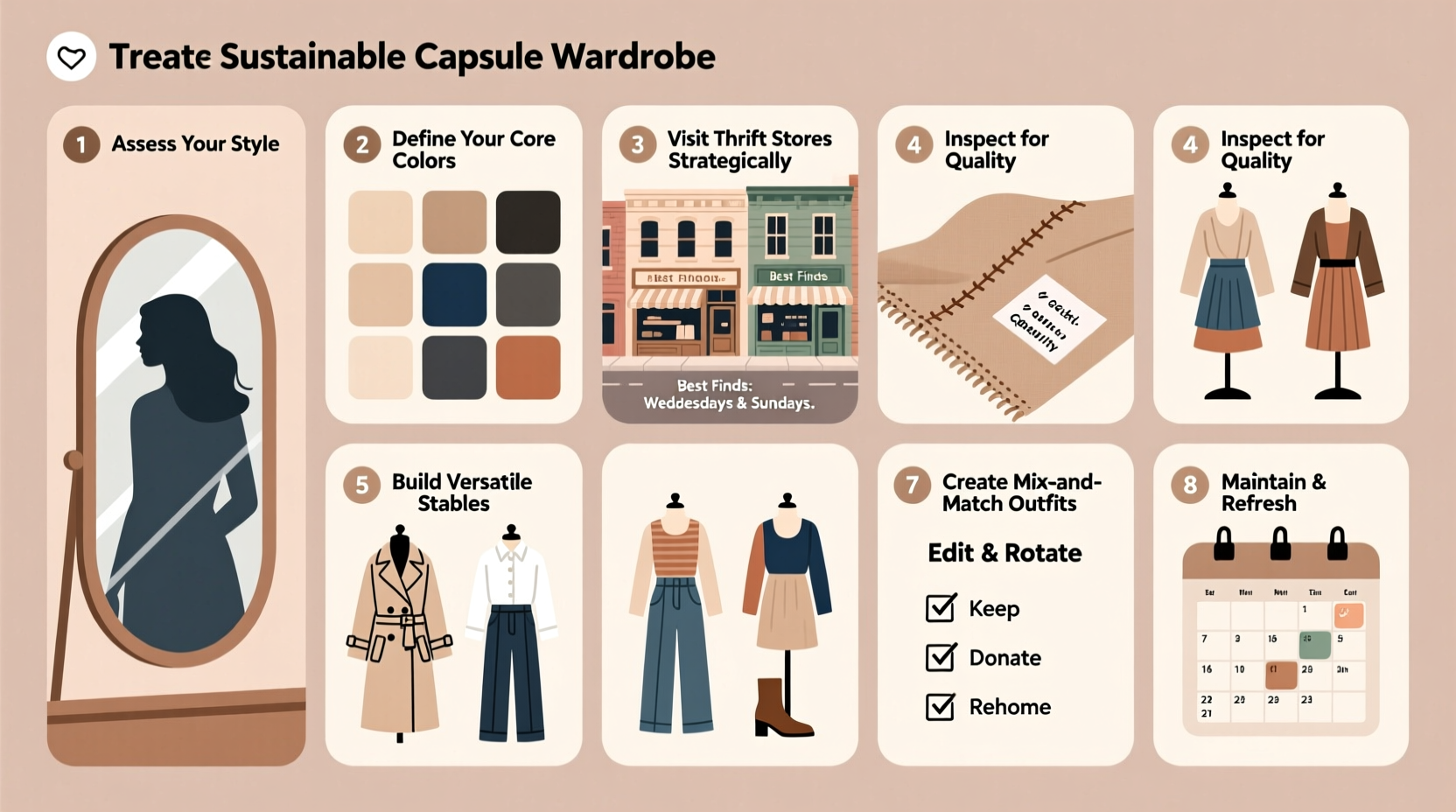
The philosophy behind a capsule wardrobe centers on intentionality: owning fewer clothes that are worn more often. Pairing this concept with thrifting amplifies its benefits. The environmental impact of fashion is staggering—each year, over 92 million tons of textile waste enter landfills, much of it from fast fashion. By sourcing pre-owned clothing, you directly reduce demand for new production and extend the life cycle of existing garments.
Financially, thrifting offers dramatic savings. A complete capsule wardrobe built from retail purchases can cost thousands. The same number of items sourced secondhand may total less than $300, especially when shopping strategically during sales or in off-seasons. Additionally, vintage and older garments often feature higher construction quality than modern equivalents, meaning they last longer and wear better over time.
“Thrifting isn’t just about saving money—it’s about reclaiming value. So many forgotten pieces have years of wear left in them.” — Maya Patel, Sustainable Fashion Consultant
Step-by-Step Guide to Building Your Thrifted Capsule Wardrobe
Creating a functional, cohesive wardrobe from only secondhand finds requires planning, discipline, and a clear vision. Follow these six steps to ensure success:
1. Define Your Style and Lifestyle Needs
Before stepping into a store, take inventory of your daily activities. Are you working in an office? Teaching yoga? Raising kids? Each scenario calls for different clothing functions. List your most common settings (e.g., “work meetings,” “weekend errands,” “cold weather hikes”) and assign appropriate dress codes.
Next, identify your aesthetic preferences. Flip through your current closet and pull out five items you love wearing. Note recurring elements: neutral colors, tailored fits, natural fibers, specific patterns. Use these as reference points to develop a personal style profile—such as “minimalist professional,” “bohemian casual,” or “urban utilitarian.”
2. Determine Your Capsule Size and Structure
A typical capsule wardrobe contains between 25 and 40 pieces, including tops, bottoms, dresses, outerwear, and shoes—but excludes underwear, sleepwear, and workout gear. The exact number depends on climate, laundry frequency, and personal preference.
Structure your capsule around core categories:
- Base Layers: 7–10 tops (t-shirts, blouses, tanks)
- Middle Layer: 3–5 sweaters or cardigans
- Bottoms: 4–6 pairs (jeans, trousers, skirts)
- Dresses/Jumpsuits: 2–4 (if applicable)
- Outerwear: 2–3 jackets or coats
- Shoes: 3–5 pairs (e.g., boots, flats, sneakers)
- Accessories: Scarves, belts, bags (optional but impactful)
All items should coordinate across multiple combinations. Aim for at least 80% of your pieces to be mix-and-match compatible.
3. Audit and Clear Out Your Current Wardrobe
Empty your closet completely. Sort every item into one of four piles: Keep, Repair/Alter, Sell/Donate, and Discard. Be ruthless. Ask yourself:
- Have I worn this in the past year?
- Does it fit my current body and style?
- Is it in good condition?
- Can it pair with at least three other items?
Items that pass these filters may form the foundation of your new capsule. Everything else should go. This purge creates space—both physically and mentally—for your curated secondhand rebuild.
4. Begin Strategic Thrifting
Now that you know what you need, begin sourcing items secondhand. Focus on quality over quantity. Prioritize natural materials like cotton, wool, linen, and silk, which age better and breathe more comfortably than synthetics.
Visit thrift stores regularly and rotate locations. Smaller, community-run shops often receive overlooked donations before larger chains. Shop mid-week when restocking occurs, and avoid weekends crowded with bargain hunters. Bring a measuring tape to check garment dimensions, and always try on when possible.
Use this checklist during each trip:
- Inspect seams, zippers, and underarms for stains or damage
- Feel fabric weight and texture—thicker usually means longer-lasting
- Check care labels; avoid dry-clean-only unless essential
- Ask: Does this match my color palette?
- Can I style this at least three ways?
- Is the silhouette timeless, not trendy?
5. Edit and Refine Over Time
Your first draft of the capsule won’t be perfect—and that’s okay. Wear the pieces for two to three weeks. Keep notes on what works and what doesn’t. Maybe a blouse wrinkles too easily, or a skirt rides up when walking. Replace problem items gradually.
Limit replacements to one per week to avoid impulse buys. Always remove an old piece before adding a new one to maintain balance. After three months, reassess: How many outfits did you actually wear? Which items stayed in the drawer? Adjust accordingly.
6. Maintain and Rotate Seasonally
Store off-season clothes in breathable cotton bins or vacuum-sealed bags (avoid plastic if possible). Clean all garments before storage to prevent odor and pest attraction. Reintroduce seasonal pieces gradually as weather shifts, ensuring continuity in your styling.
Every six months, repeat your audit. Update your capsule to reflect changes in job, body, or taste. Let go of what no longer serves you and celebrate how far you’ve come.
Do’s and Don’ts of Thrifted Capsule Building
| Do | Don’t |
|---|---|
| Set a strict shopping list based on gaps in your wardrobe | Wander aimlessly hoping to “find something cool” |
| Buy slightly oversized items if fabric allows tailoring | Purchase ill-fitting clothes “to fix later” without skills or time |
| Stick to a neutral base with accent colors for variety | Choose bold prints or hues that clash with everything else |
| Visit estate sales and consignment shops for higher-end finds | Assume all thrifted clothes are low-quality or dirty |
| Steam or wash every item before adding to your capsule | Wear uncleaned secondhand clothing straight from the store |
Real Example: Lena’s Transition to a Thrifted Capsule
Lena, a 32-year-old graphic designer in Portland, spent years cycling through fast fashion trends. Her closet overflowed with unworn blouses and jeans that never felt quite right. After reading about capsule wardrobes, she committed to rebuilding her entire wardrobe secondhand.
She began by donating 78 items—over half her closet. Using her favorite black turtleneck and wide-leg trousers as anchors, she defined her style as “modern earth tones with structured silhouettes.” Her shopping list included: one trench coat, two long-sleeve tees, one midi skirt, and brown ankle boots.
Over six weeks, Lena visited seven thrift stores and two online resale apps. She found a wool-blend trench at a church sale for $12, tailored it at the waist, and paired it with vintage clogs. A cream merino sweater came from a local consignment shop, and she discovered a nearly new pair of Madewell jeans folded in a corner bin. Total spending: $143.
Today, Lena wears her 32-piece capsule year-round with seasonal swaps. She spends less time choosing outfits and hasn’t bought new clothing in 14 months. “I feel more like myself now,” she says. “My clothes aren’t shouting. They’re speaking clearly.”
Frequently Asked Questions
Can I really find all my clothes secondhand, even basics like socks and underwear?
While outerwear and main garments are easy to source secondhand, intimate apparel requires caution. Most experts advise buying new for hygiene and fit reasons. However, some specialty shops and online platforms (like thredUP) offer sealed, unused secondhand underwear and loungewear. For socks, inspect closely for thinning fabric or odors. If uncomfortable, buy new in sustainable materials like organic cotton.
How do I deal with limited sizes in thrift stores?
Size availability varies greatly by location and donor demographics. Urban areas tend to have broader ranges. Try visiting stores near colleges or affluent neighborhoods, where sizing skews smaller. Online resale sites like Poshmark, Depop, or Vestiaire Collective allow filtering by size, brand, and condition. Be patient—rare sizes appear over time.
What if I get bored with my capsule?
Boredom often stems from lack of creativity, not lack of clothes. Challenge yourself to create 15 different outfits from your current pieces. Use accessories—belts, scarves, jewelry—to refresh looks. Remember, a capsule isn’t static. You can swap in new thrifted finds seasonally while maintaining cohesion. The goal isn’t restriction, but freedom through simplicity.
Final Thoughts: Build With Purpose, Wear With Pride
Creating a capsule wardrobe from only thrifted pieces is not just a fashion project—it’s a statement. It says you value craftsmanship over consumption, individuality over trends, and stewardship over waste. The journey takes effort: sorting, searching, trying, editing. But the reward is profound. You’ll own fewer things, yet feel richer in choice, confidence, and clarity.
Start small. Pull out ten wearable items from your current closet. Add five thoughtfully chosen secondhand pieces. Build from there. Every garment you rescue from obscurity gains new meaning. Every dollar saved funds experiences, not excess. And every outfit becomes an expression of who you are—not who advertisers want you to be.




 浙公网安备
33010002000092号
浙公网安备
33010002000092号 浙B2-20120091-4
Comments
No comments yet. Why don't you start the discussion?