
In an age where notifications ping at all hours and screens dominate our waking moments, digital overload has become a silent drain on mental clarity, productivity, and emotional well-being. Many people attempt a digital detox—turning off devices for a weekend or deleting social media apps—only to find themselves back in the same cycle within days. The issue isn’t motivation; it’s strategy. A successful digital detox isn’t about willpower alone. It requires a thoughtful, personalized plan grounded in self-awareness and sustainable habits.
This guide walks you through building a digital detox plan that doesn’t just last but becomes a natural part of your lifestyle. From assessing your current habits to designing realistic boundaries and reinforcing new behaviors, each step is designed to help you reclaim control over your attention and time.
1. Assess Your Digital Habits Honestly
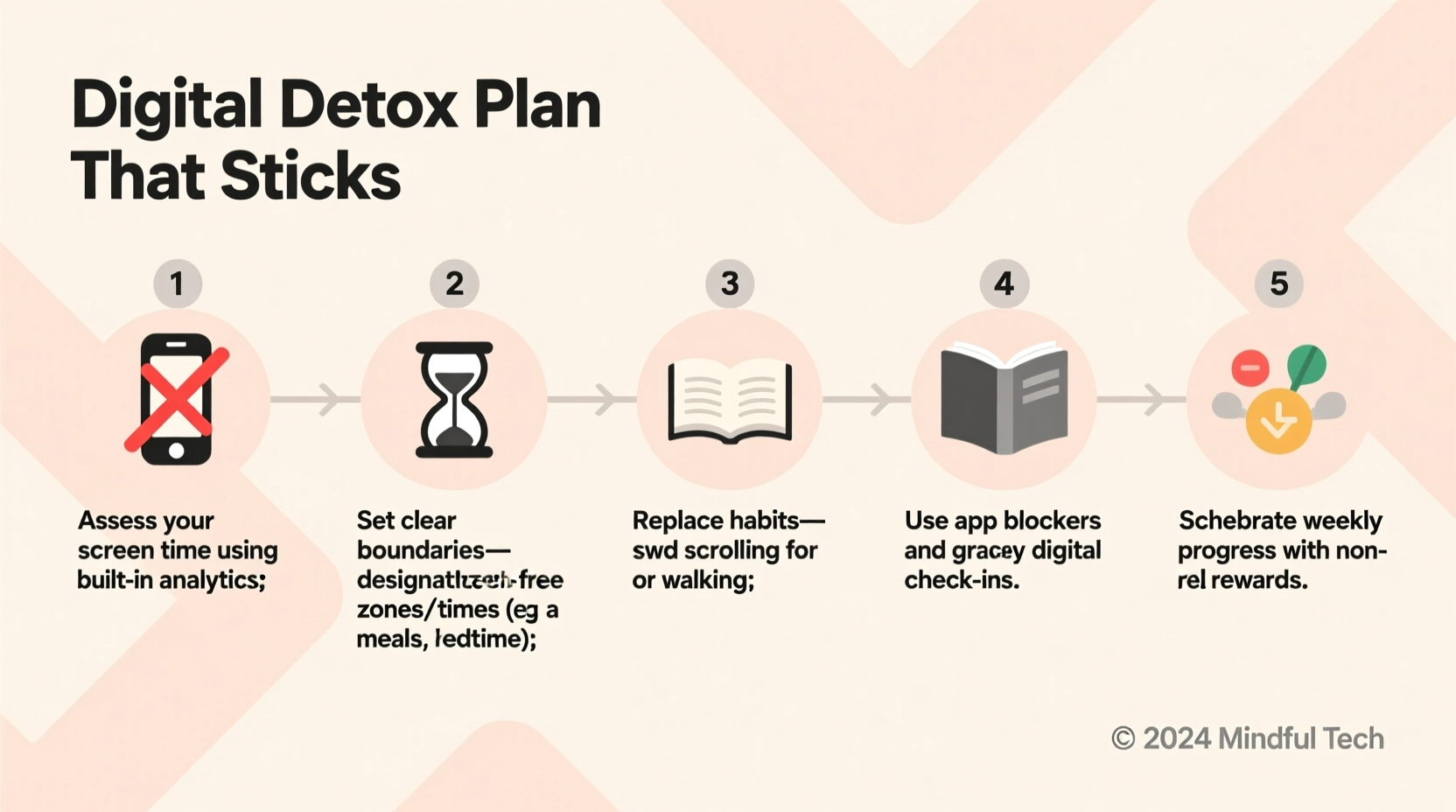
The foundation of any effective detox is awareness. Before making changes, take stock of how you currently use technology. Most people underestimate their screen time, especially when it comes to passive scrolling or habitual app-checking.
Spend three to five days tracking your digital behavior. Use built-in tools like Screen Time (iOS) or Digital Wellbeing (Android), or manually log your usage in a notebook. Record:
- Which apps consume the most time
- When you reach for your phone (e.g., upon waking, during meals, before bed)
- How often you check devices without purpose
- Emotional triggers that lead to screen use (boredom, stress, loneliness)
After gathering data, ask yourself: Which activities add value? Which ones leave you feeling drained or distracted?
2. Define Your Why and Set Clear Goals
A detox without purpose fades quickly. Ask: What do you want to gain by reducing digital consumption? More focus? Better sleep? Deeper relationships? Less anxiety?
Your “why” should be specific and emotionally meaningful. For example:
- “I want to stop checking my phone during dinner so I can be fully present with my family.”
- “I need to reduce late-night scrolling to improve my sleep quality.”
- “I’m aiming to reclaim two hours a week for creative work by cutting down on social media.”
Translate these intentions into measurable goals. Instead of “use my phone less,” aim for “limit social media to 30 minutes per day” or “no screens 60 minutes before bedtime.” Specificity increases accountability.
“The most successful digital detoxes are rooted in personal values, not guilt. When people connect their tech limits to what truly matters—health, creativity, connection—they stick.” — Dr. Lena Patel, Behavioral Psychologist and Digital Wellness Researcher
3. Design a Realistic Detox Framework
Going cold turkey from all devices is rarely sustainable. A better approach is selective reduction—targeting the most disruptive behaviors while preserving useful tech integration.
Start by categorizing your digital activities into three groups:
| Category | Description | Action |
|---|---|---|
| Necessary | Email for work, calendar apps, navigation | Keep, but set time limits |
| Enjoyable & Balanced | Reading e-books, listening to podcasts, video calls with loved ones | Maintain with mindful use |
| Draining or Compulsive | Endless social media scrolling, reactive news checking, binge-watching | Reduce or eliminate |
Based on this audit, create a tiered detox plan. For example:
- Immediate Cutbacks: Delete one distracting app or mute non-essential notifications.
- Daily Boundaries: Implement a no-phone rule during meals and after 8 PM.
- Weekly Reset: Designate one half-day per weekend as screen-light (e.g., reading, walking, hobbies).
4. Build Supportive Routines and Triggers
Habits don’t change in isolation. To make your digital detox stick, replace screen-based routines with fulfilling alternatives.
Consider the common trigger: boredom. Instead of reflexively opening Instagram, keep a book, sketchpad, or puzzle nearby. If stress drives your screen use, practice a two-minute breathing exercise or journal prompt instead.
Use environmental design to support your goals:
- Charge your phone outside the bedroom to eliminate midnight scrolling.
- Turn off sound and vibration for non-urgent apps.
- Set up app timers to auto-lock social media after 20 minutes.
- Place physical reminders—like a sticky note on your laptop saying “Why am I picking this up?”
Pair your new habits with existing routines using the “habit stacking” method. For example:
- “After I pour my morning coffee, I’ll write in my journal for 10 minutes instead of checking email.”
- “After dinner, I’ll play a board game with my partner instead of watching videos.”
Mini Case Study: How Sarah Reduced Evening Screen Time
Sarah, a 34-year-old graphic designer, noticed she was spending over three hours each night passively watching YouTube and TikTok, often until 1 AM. She felt groggy the next day and frustrated with her lack of progress on a personal art project.
She started by identifying her trigger: fatigue after work. Instead of unwinding with screens, she created a new evening ritual. At 8 PM, she dimmed the lights, lit a candle, and spent 20 minutes sketching in a notebook. After two weeks, she naturally lost interest in late-night scrolling. Within a month, she completed three illustrations and improved her sleep significantly.
Her success wasn’t due to discipline—it was due to replacing a habit with something more satisfying.
5. Monitor Progress and Adjust Strategically
A digital detox isn’t a one-time event. It’s a process of continuous refinement. Check in weekly to evaluate what’s working and what needs adjustment.
Ask yourself:
- Am I sticking to my boundaries? If not, why?
- Do I feel more focused, rested, or present?
- Are there new distractions emerging?
- What replacement activities bring me joy?
If you slip up—say, you spend an hour on Twitter during lunch—don’t abandon the plan. Reflect: What led to the lapse? Was it boredom? A stressful message? Use the insight to strengthen your strategy.
Flexibility is key. You might discover that a 7 PM cutoff is too early, but 8:30 PM works better. Or that allowing 15 minutes of news in the morning keeps you informed without overwhelm. Adjust based on real-life experience, not rigid ideals.
Digital Detox Checklist
Use this checklist to stay on track as you implement your plan:
- ✅ Tracked screen time for 3–5 days
- ✅ Identified top time-wasting apps
- ✅ Defined personal reasons for detoxing
- ✅ Set 1–3 specific, measurable goals
- ✅ Removed or limited one distracting app
- ✅ Established at least one daily screen-free zone (e.g., meals, first hour of the day)
- ✅ Created alternative activities for common triggers
- ✅ Scheduled a weekly review to assess progress
FAQ
How long does it take to form a digital detox habit?
Research suggests it takes an average of 66 days for a new behavior to become automatic, though this varies by person and context. Consistency matters more than perfection. Missing a day doesn’t reset progress—just resume the next day.
Can I still use my phone for work during a detox?
Absolutely. A digital detox isn’t about eliminating technology; it’s about intentional use. Focus on reducing recreational or compulsive screen time. Use tools like focus modes, scheduled email checks, and app blockers to maintain professionalism without burnout.
What if my job requires constant connectivity?
Even in high-demand roles, boundaries are possible. Try micro-detoxes: no screens during lunch, a notification-free commute, or a Saturday morning free from work messages. Small pauses restore mental resilience and prevent digital fatigue.
Conclusion: Make Your Digital Life Serve You
A digital detox isn’t about rejecting technology—it’s about redesigning your relationship with it. When done thoughtfully, it creates space for deeper focus, richer experiences, and greater presence in your own life. The goal isn’t a perfect record of zero screen time, but a conscious, balanced approach that aligns with your values and energy.
Start where you are. Use the insights from your tracking, clarify your motivations, and implement one small boundary today. Over time, those choices compound into a lifestyle where technology enhances your life instead of dominating it.




 浙公网安备
33010002000092号
浙公网安备
33010002000092号 浙B2-20120091-4
Comments
No comments yet. Why don't you start the discussion?