
Mornings set the tone for the rest of the day. How you start determines your energy, focus, and ability to handle challenges. A well-crafted morning routine isn't about rigid schedules or mimicking what successful people do—it's about designing a personalized sequence of actions that align with your goals, values, and biological rhythms. When done right, it can transform scattered days into focused, productive ones. This guide walks you through building a sustainable morning routine grounded in science and real-world effectiveness.
Why Your Morning Routine Matters
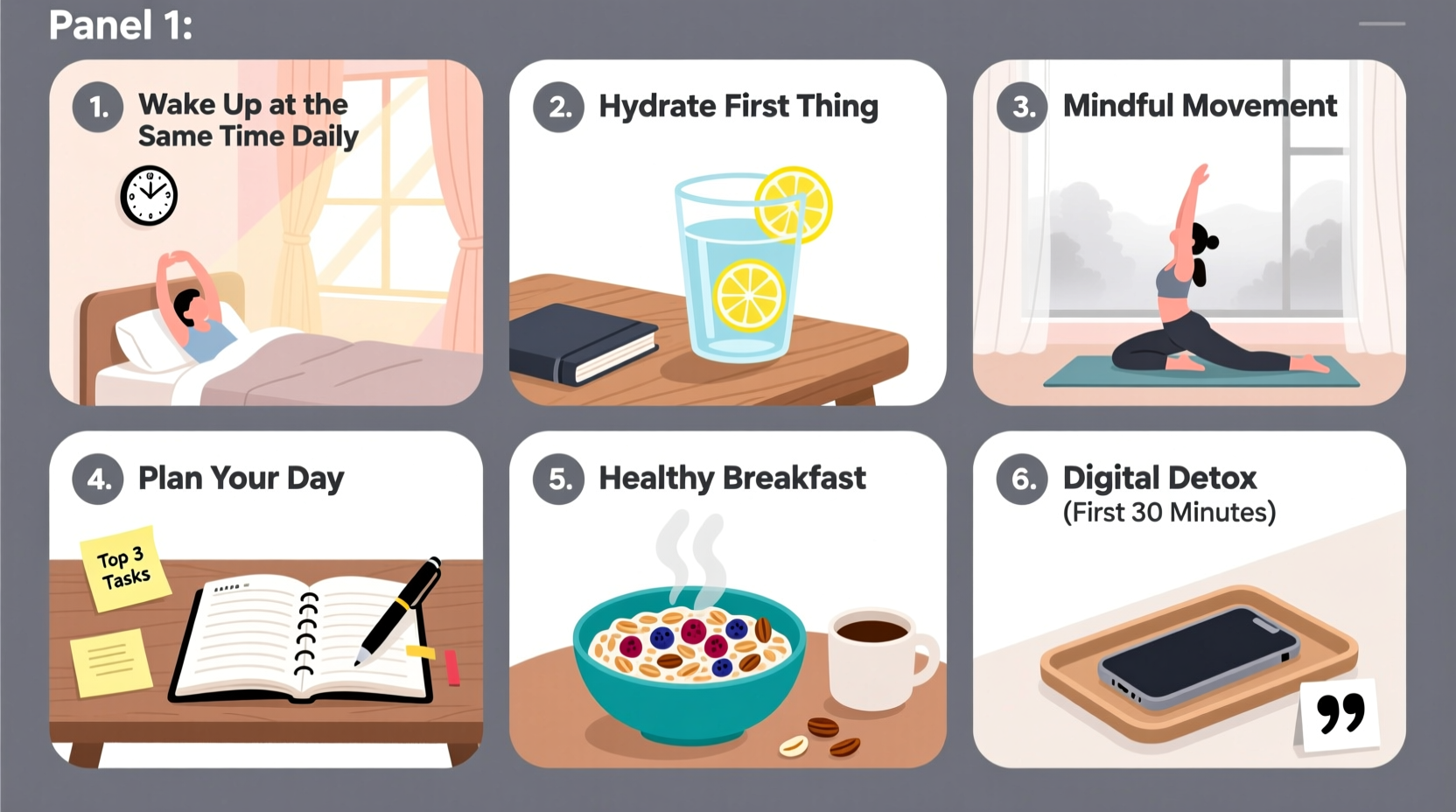
The first 60 to 90 minutes after waking are critical. During this window, your brain is most receptive to habit formation and decision-making. Without intention, these moments often get hijacked by distractions—checking phones, reacting to emails, or rushing through breakfast. That reactive start triggers stress hormones like cortisol, setting off a chain reaction of reactivity throughout the day.
In contrast, a structured morning routine gives you control. It creates space between stimulus and response, allowing you to act from clarity rather than impulse. Research from the American Psychological Association shows that individuals who follow consistent morning habits report higher levels of self-efficacy, better time management, and improved mental resilience.
“Success is the sum of small efforts, repeated day in and day out.” — Robert Collier
This principle applies especially to mornings. Small, deliberate choices compound over time: drinking water instead of coffee first thing, moving your body before scrolling, writing down intentions instead of reacting to notifications. These micro-decisions build momentum that carries forward into work, relationships, and personal growth.
Step-by-Step Guide to Building Your Ideal Morning Routine
Creating an effective morning routine isn’t about copying someone else’s 5 AM ritual. It’s about understanding your unique needs and constructing a sequence that supports them. Follow these seven steps to design a routine that actually sticks.
1. Define Your Purpose and Desired Outcomes
Start by asking: What kind of day do I want to have? Do you need more focus? Calmness? Creativity? Energy? Your answers shape your routine. For example:
- If you struggle with anxiety, prioritize mindfulness practices.
- If your work requires deep concentration, include activities that prime mental clarity.
- If physical energy is low, incorporate movement early.
Be specific. “I want to feel calm and focused by 8 AM” is better than “I want to be productive.” Clarity fuels consistency.
2. Audit Your Current Morning Pattern
Spend three days observing how you currently spend your mornings. Track:
- Wake-up time (and whether it’s consistent)
- First action upon waking (e.g., checking phone, stretching, hitting snooze)
- Hydration, nutrition, and movement habits
- Emotional state at different points
This audit reveals patterns—like reaching for your phone within seconds of waking—that sabotage productivity before the day begins.
3. Choose 3–5 Core Activities That Align With Your Goals
Less is more. Trying to meditate, journal, exercise, read, and cook a gourmet breakfast every morning leads to burnout. Instead, select a few high-impact activities. Consider including one from each category:
| Category | Potential Activity | Time Required |
|---|---|---|
| Mind | Meditation, journaling, visualization | 5–15 min |
| Body | Stretching, walking, strength training | 10–30 min |
| Focus | Review daily priorities, plan tasks | 5–10 min |
| Nourishment | Drink water, eat balanced breakfast | 10–15 min |
| Inspiration | Read, listen to a podcast, affirmations | 5–15 min |
Pick what resonates. If meditation feels forced, try gratitude journaling instead. The goal is sustainability, not perfection.
4. Sequence Activities Logically
Order matters. Start with gentle transitions from sleep, then move toward activation. A sample flow:
- Hydrate immediately (glass of water)
- Light movement (stretching or walk)
- Mindfulness practice (meditation or breathing)
- Clarify priorities (review top 3 tasks)
- Nourish body (eat a protein-rich breakfast)
This progression follows natural physiological shifts—waking the body, calming the mind, then directing attention.
5. Design Your Environment for Success
Your surroundings influence behavior more than willpower. Make your ideal routine easier by adjusting your environment:
- Place a glass of water beside your bed the night before.
- Lay out workout clothes or journaling materials in advance.
- Charge your phone outside the bedroom to prevent early scrolling.
- Use blackout curtains or a sunrise alarm clock to regulate wake-up cues.
These small changes reduce friction, making it easier to follow through even on low-motivation days.
6. Start Small and Scale Gradually
Attempting a 90-minute routine on day one sets you up for failure. Begin with just one or two actions. For example:
- Week 1: Drink water + write down one intention.
- Week 2: Add 5 minutes of stretching.
- Week 3: Include 10 minutes of journaling.
Each new habit should feel almost effortless before adding another. James Clear, author of *Atomic Habits*, emphasizes that tiny changes are more sustainable and ultimately more powerful than dramatic overhauls.
7. Review and Refine Weekly
After seven days, assess: Did the routine support your energy and focus? Were any steps too long or irrelevant? Adjust based on feedback. Maybe you discovered that journaling works better at night, or that a short walk energizes you more than yoga. Let data—not dogma—guide your design.
Real Example: How Sarah Transformed Her Mornings (and Her Career)
Sarah, a marketing manager, used to wake up at 7:15 AM, grab her phone, scroll through social media and emails, then rush through breakfast while reviewing meeting notes. By 9 AM, she felt mentally drained despite having just started her day.
She decided to experiment. For two weeks, she implemented a simple 25-minute routine:
- 6:45 AM – Wake up, drink pre-filled water bottle
- 6:50 AM – 10-minute walk around the block
- 7:00 AM – 5 minutes of box breathing (4 sec in, 4 sec hold, 4 sec out)
- 7:05 AM – Write down one priority for the day
- 7:10 AM – Breakfast with no screen
Within ten days, she noticed sharper focus during meetings, fewer afternoon crashes, and greater confidence in decision-making. Her team even commented on her improved presence in calls. After three months, she was promoted—partly due to her increased reliability and proactive communication, both rooted in her calmer, more intentional start.
Sarah didn’t add extreme habits. She replaced reactivity with intention—one small choice at a time.
Common Pitfalls and How to Avoid Them
Even with good intentions, many people abandon their routines within weeks. Here are frequent mistakes and solutions:
| Pitfall | Why It Happens | Solution |
|---|---|---|
| Overloading the routine | Trying to do too much too soon | Start with 1–2 actions; expand only when they feel automatic |
| Inconsistent wake-up times | Changing wake-up time disrupts circadian rhythm | Aim for the same wake-up time within 30 minutes, even on weekends |
| Screen dependency first thing | Habitual phone-checking triggers stress | Leave phone in another room; use a physical alarm clock |
| Skipping when tired | Low energy leads to abandonment | Have a “minimum viable routine” (e.g., water + one breath cycle) |
“The quality of your mornings directly impacts the quality of your life.” — Hal Elrod, Author of *The Miracle Morning*
Frequently Asked Questions
What if I’m not a morning person?
You don’t need to become one. The goal isn’t to force yourself into a 5 AM mold. Instead, shift your current wake-up time gradually—by 15 minutes earlier every few days—and build a routine that fits your natural rhythm. Even a 20-minute buffer before your old start time can make a difference.
How long does it take to form a morning routine?
Research varies, but a study published in the *European Journal of Social Psychology* found that habit formation takes anywhere from 18 to 254 days, with an average of 66 days for a behavior to become automatic. Consistency matters more than speed. Missing a day isn’t failure—just resume the next day without self-judgment.
Should my weekend routine be the same as weekdays?
Not necessarily. You can have a “core” routine (e.g., hydration, one mindfulness practice) that stays consistent, while allowing flexibility on weekends. The key is maintaining enough structure to prevent complete derailment, which makes Monday mornings harder.
Essential Checklist: Build Your Morning Routine in 7 Steps
- Define your desired emotional and cognitive state for the day.
- Track your current morning habits for 3 days.
- Select 3–5 high-impact activities (mind, body, focus, nourishment).
- Arrange them in a logical sequence (gentle → activating).
- Optimize your environment the night before.
- Start with just 1–2 actions; scale slowly.
- Review weekly and adjust based on results.
Conclusion: Start Small, Think Big
A powerful morning routine doesn’t require exotic rituals or superhuman discipline. It begins with awareness, followed by small, deliberate choices repeated consistently. Whether it’s drinking water before checking your phone or writing down one priority, each action builds a foundation for a more focused, resilient, and productive day.
The most successful people aren’t those who do the most in the morning—they’re the ones who protect their mornings to do what matters most. You don’t need more time. You need better beginnings.




 浙公网安备
33010002000092号
浙公网安备
33010002000092号 浙B2-20120091-4
Comments
No comments yet. Why don't you start the discussion?