
A T-shirt quilt is more than a craft project—it’s a wearable memory turned heirloom. Whether it celebrates a sports team, family reunion, or college years, a well-made quilt preserves stories in fabric. But not all quilts endure. Poor construction, incorrect stabilizing, or improper care can lead to puckering, fraying, and fading within months. To ensure your quilt stands the test of time, follow this detailed process rooted in textile expertise and real-world results.
Selecting and Preparing Your T-Shirts
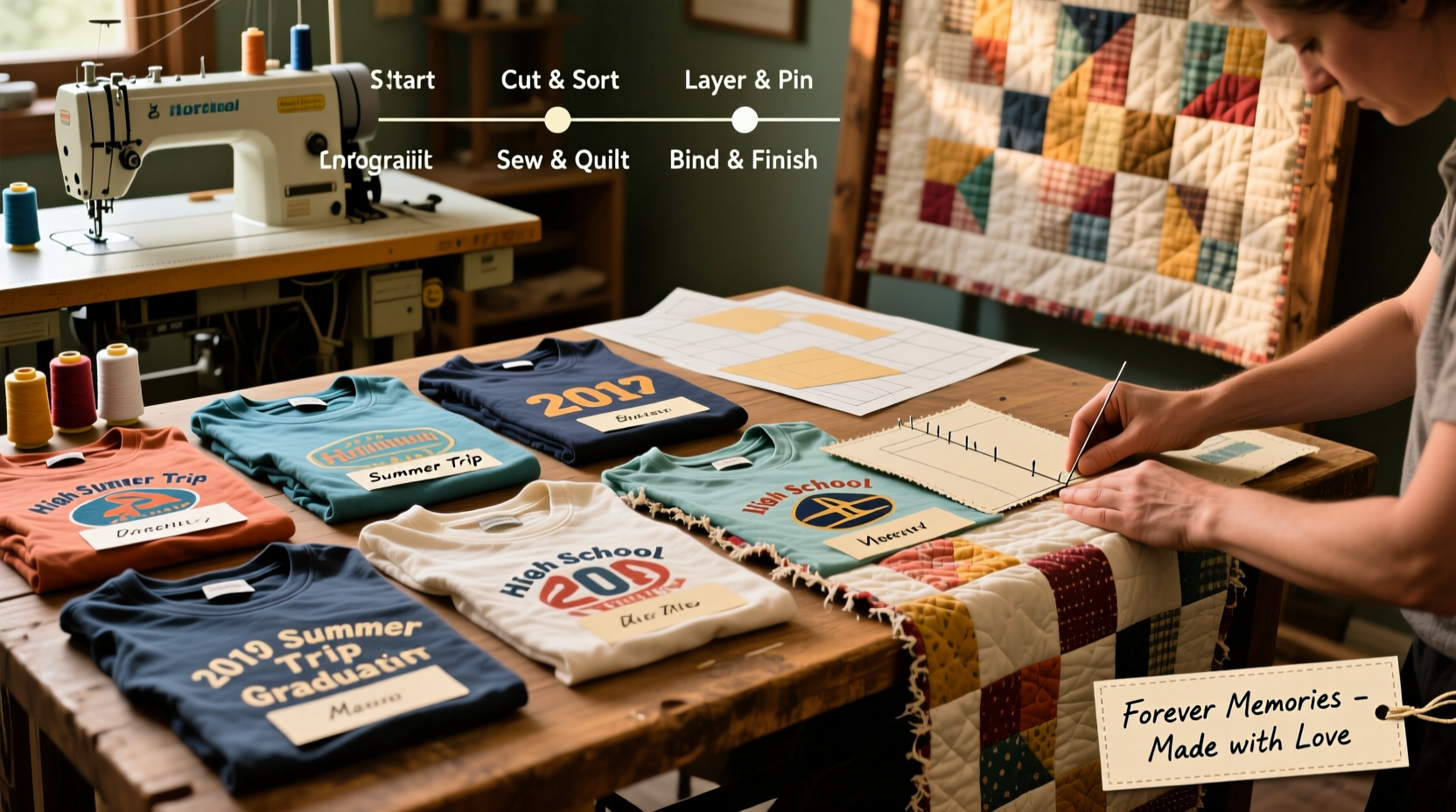
The foundation of a lasting T-shirt quilt lies in fabric selection. Not every shirt is suitable. Prioritize shirts with minimal stretching, intact graphics, and no stains or holes. Cotton-poly blends are common but behave differently under stress than 100% cotton, so consistency across shirts improves durability.
Before cutting, wash and dry each shirt using mild detergent and low heat. This pre-shrinks the fabric and removes sizing chemicals that could react unpredictably later. Lay shirts flat to dry if possible to prevent distortion.
Cut around the graphic, leaving at least 3–4 inches of fabric on all sides. Avoid cutting too close; you’ll need space for seam allowances and stabilization. Iron each panel gently on low heat with a pressing cloth to avoid melting printed designs.
Stabilizing Fabric for Longevity
T-shirt fabric is knit, not woven, making it prone to stretching and distortion when sewn. Without stabilization, seams will pucker and graphics may warp over time. The solution? Fusible interfacing.
Choose a lightweight, non-woven fusible interfacing such as Pellon SF101 Shape-Flex. Cut pieces slightly larger than each T-shirt panel. Following manufacturer instructions, iron the interfacing to the back of each shirt piece. Use steam and firm pressure, but avoid sliding the iron—lift and press to prevent shifting.
“Interfacing isn’t optional—it’s structural. It transforms stretchy knits into stable patchwork-ready fabric.” — Maria Thompson, Textile Conservator & Quilt Archivist
After applying, let panels cool completely before trimming to uniform size. Most quilters standardize blocks to 12” x 12”, but 10” or 14” also work depending on design. Use a rotary cutter and self-healing mat for precision.
Designing a Balanced Layout
Arranging your blocks thoughtfully enhances both aesthetics and structural integrity. Start by laying out all stabilized panels on a large floor or bed. Group similar themes—school years, events, teams—or arrange chronologically for narrative flow.
Consider contrast. Pair bold graphics with simpler ones to avoid visual clutter. Add sashing (strips of neutral fabric between blocks) to reduce bulk and provide breathing room. Sashing also allows for better weight distribution and reduces stress on seams.
| Layout Option | Best For | Durability Benefit |
|---|---|---|
| Grid (aligned rows) | Uniformity, modern look | Easier quilting, even tension |
| Alternating with plain blocks | Visual balance | Reduces fabric fatigue from heavy graphics |
| Diagonal arrangement | Dynamism | Higher skill needed; use only with experienced stitching |
| Sashing + cornerstones | Traditional style | Allows shrinkage without warping |
Take a photo of your final layout. This serves as a reference during sewing and future repairs.
Construction: Sewing Techniques That Last
Use high-quality, 100% cotton thread in a neutral color (like beige or gray) or match dominant shirt tones. Polyester thread may be strong, but it doesn’t flex with cotton fabric and can cause seam breakage over time.
Sew with a ¼” seam allowance. Pin or clip blocks right sides together, matching edges precisely. Backstitch at start and end to lock stitches. Press seams open or to one side using low heat—never stretch the fabric while pressing.
For added strength, consider a straight-stitch with a stitch length of 2.0–2.5 mm. Shorter stitches are brittle; longer ones may unravel. Test on scraps first.
Once all rows are complete, join them carefully. Align intersections with pins perpendicular to the seam. A walking foot on your sewing machine helps feed thick layers evenly and prevents shifting.
Batting and Backing: The Hidden Layers That Matter
The backing fabric and batting aren’t just filler—they support structure and warmth. Choose 100% cotton or cotton-blend batting for breathability and washability. Avoid polyester batting if longevity is the goal; it beads and shifts over time.
Backing should be a single piece of wide-back cotton fabric (minimum 108” wide) or seamed panels sewn with French seams to prevent fraying. Measure your quilt top, then add 8–10 inches beyond on all sides for framing and quilting ease.
Baste the layers: quilt top, batting, and backing. Use curved safety pins every 4–6 inches or spray baste with repositionable adhesive. Work from center outward to eliminate wrinkles.
Quilting and Finishing Touches
Machine-quilt along sashing lines or echo around each block. Dense quilting (lines every 2–3 inches) prevents batting migration and adds durability. Tie quilting with embroidery floss is an option for handcrafted appeal but requires knot security checks every few years.
Trim excess batting and backing flush with the quilt top. Bind edges with double-fold bias tape cut from durable cotton fabric. Miter corners for a clean finish. Hand-stitch the binding down for invisibility, or machine-stitch for speed and resilience.
“A properly bound edge is the difference between a keepsake and a keeps-falling-apart.” — James Lin, Master Quilter, National Quilting Association
Labeling for Legacy
Add a fabric label on the back listing names, dates, and occasion. Use permanent fabric ink or iron-on labels. This turns your quilt into a documented artifact for future generations.
Mini Case Study: The Johnson Family Graduation Quilt
The Johnsons collected 24 T-shirts spanning three children’s academic careers—from elementary school plays to college commencements. They initially planned to skip interfacing to save time. After consulting a local quilt guild, they applied lightweight fusible to every panel.
They used navy blue sashing to unify varied colors and chose a grid layout with chronological order. The quilt was machine-quilted in diagonal lines and bound in navy cotton. Ten years later, the quilt remains a centerpiece at family gatherings, washed twice yearly and stored folded in a breathable cotton bag. No seams have split, and graphics remain vibrant.
Preservation and Care Checklist
- ✅ Wash in cold water on gentle cycle with mild detergent
- ✅ Turn quilt inside out (if applicable) or place in mesh laundry bag
- ✅ Air dry flat or tumble dry on low—never hang, which stretches fibers
- ✅ Store in acid-free box or cotton pillowcase, away from sunlight
- ✅ Rotate storage position every six months to prevent crease damage
- ✅ Inspect seams annually for loose threads; repair immediately
Frequently Asked Questions
Can I include sweatshirts or jerseys?
Yes, but treat them differently. Fleece-backed sweatshirts add bulk and may require extra interfacing. Athletic jerseys often have synthetic mesh—pre-wash and stabilize with medium-weight interfacing to prevent delamination.
How long does it take to make a T-shirt quilt?
A 12-block quilt takes 15–20 hours for a skilled sewer. Beginners should allow 25–30 hours. Breaking the process into stages—prep, layout, sewing, quilting—makes it manageable over weekends.
Is hand-quilting better than machine?
Hand-quilting offers tradition and texture but takes significantly longer. Machine quilting provides consistent, durable stitching ideal for everyday use. For heirloom durability, machine quilting with quality thread is recommended.
Conclusion
A personalized T-shirt quilt becomes timeless not by sentiment alone, but by craftsmanship. From stabilizing delicate prints to choosing the right batting and maintaining proper care, each step contributes to longevity. This isn’t just about assembling fabric—it’s about honoring memories with materials and methods that endure.




 浙公网安备
33010002000092号
浙公网安备
33010002000092号 浙B2-20120091-4
Comments
No comments yet. Why don't you start the discussion?