
Combination skin is one of the most common skin types, yet it can be among the trickiest to manage. It presents a dual challenge: oily zones in the T-zone (forehead, nose, and chin) paired with dry or normal areas on the cheeks and jawline. This duality means a one-size-fits-all approach rarely works. Without a thoughtful strategy, you risk over-drying certain areas while under-treating others. The key lies not in compromise, but in balance—choosing products and methods that address both concerns without aggravating either. With the right knowledge and consistency, combination skin can achieve clarity, hydration, and resilience.
Understanding Combination Skin
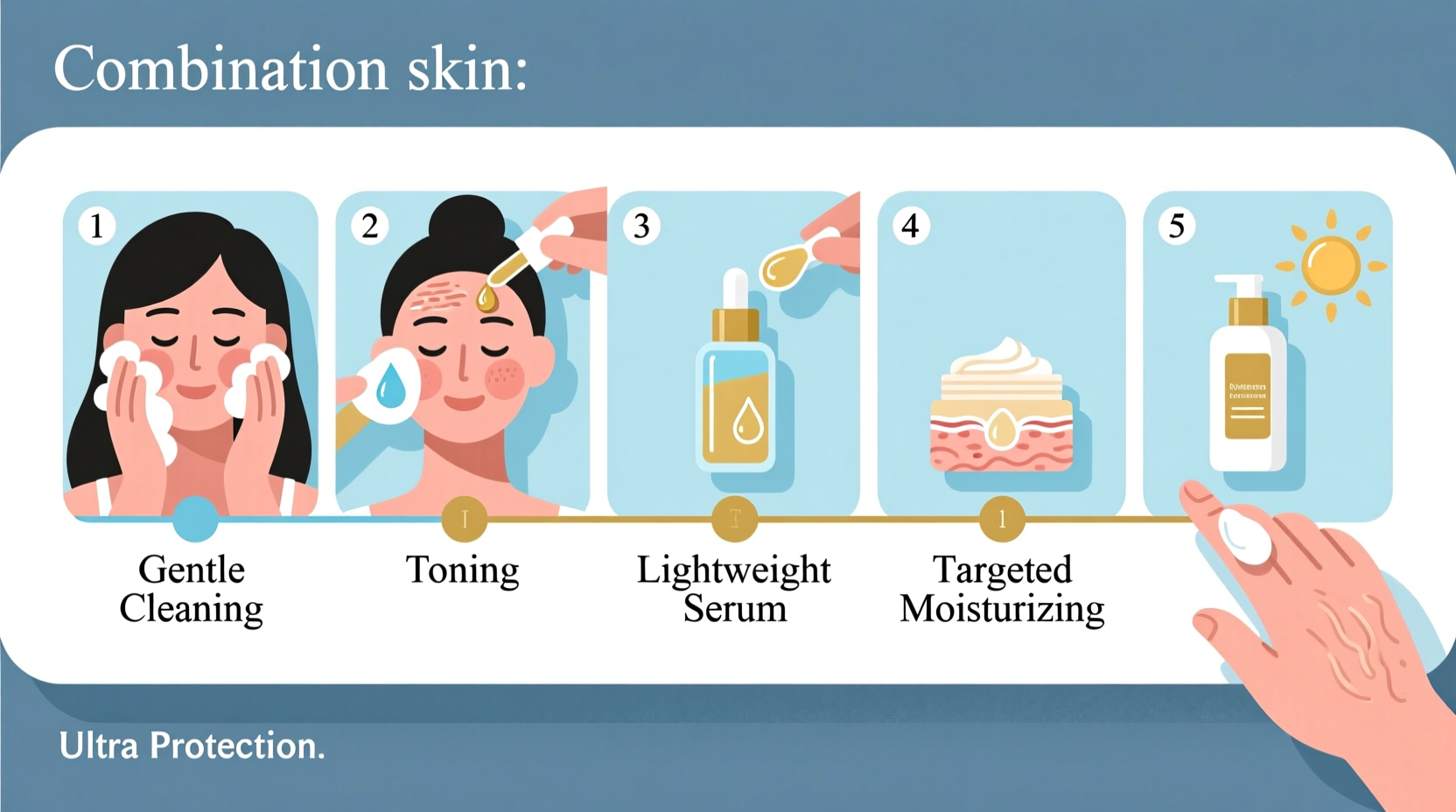
Before building a routine, it’s essential to understand what causes combination skin. Genetics play a major role, but environmental factors, hormones, diet, and product misuse can all influence its behavior. The sebaceous glands in the T-zone are more active, producing excess oil, while the outer regions have fewer oil glands and may lack moisture. This imbalance often leads to conflicting issues: shine and clogged pores up front, flakiness or tightness on the sides.
It's also common for people with combination skin to misdiagnose their condition. Some assume they have oily skin and strip it with harsh cleansers, only to worsen dry patches. Others treat only the dry areas and neglect breakouts. Recognizing your skin's unique pattern helps prevent these mistakes. Look for signs like:
- Shine across the forehead and nose by midday
- Blackheads or occasional breakouts in the T-zone
- Tightness or slight roughness on the cheeks after cleansing
- Makeup that wears off unevenly—patchy in dry zones, greasy in oily ones
A dermatologist can confirm your skin type, but self-assessment over several days—observing how your skin behaves post-cleansing and throughout the day—is often enough to identify the pattern.
Step-by-Step Skincare Routine Framework
An effective routine for combination skin follows a structured sequence: cleanse, tone, treat, moisturize, and protect. Each step must be tailored to support balance—not eliminate oil entirely, nor flood the skin with heavy creams. Here’s a practical, dermatologist-approved framework broken into morning and evening routines.
Morning Routine: Protect and Regulate
- Cleanse with a gentle foaming or gel-based wash – Use lukewarm water and a formula that removes overnight buildup without stripping moisture. Avoid sulfates and alcohol-heavy cleansers.
- Apply a hydrating toner – Choose alcohol-free toners with ingredients like hyaluronic acid, witch hazel, or niacinamide to refine pores and prep the skin.
- Use a lightweight serum – Vitamin C is ideal in the morning for brightening and antioxidant protection. Niacinamide helps regulate sebum production.
- Moisturize with an oil-free or gel-cream formula – Even oily zones need hydration. Skipping this step can trigger rebound oiliness.
- Finish with broad-spectrum SPF 30 or higher – Opt for non-comedogenic, matte-finish sunscreens to avoid clogging pores.
Evening Routine: Cleanse and Correct
- Double cleanse if wearing makeup or sunscreen – Start with an oil-based cleanser to dissolve impurities, followed by a water-based one to deep clean.
- Reapply toner – Reinforces pH balance and removes any residual debris.
- Target treatment serums – Use retinoids (2–3 times weekly) for cell turnover, or salicylic acid for acne-prone zones. Apply locally if needed.
- Hydrate with a balanced moisturizer – Slightly richer than the morning version, but still lightweight. Ingredients like ceramides and glycerin support the skin barrier.
- Weekly treatments (1–2 times) – Incorporate clay masks on the T-zone or gentle exfoliants to manage congestion.
Product Selection Guide: What Works and What Doesn’t
Choosing the right products is critical. Many formulas marketed as “for oily skin” are too aggressive, while those labeled “for dry skin” can overwhelm the T-zone. The goal is moderation and intelligent formulation.
| Product Type | Recommended Ingredients | Ingredients to Avoid |
|---|---|---|
| Cleanser | Glycerin, amino acids, mild surfactants | Sodium lauryl sulfate, high-alcohol content, menthol |
| Toner | Hyaluronic acid, niacinamide, chamomile | Denatured alcohol, fragrance, witch hazel (if undiluted) |
| Serum | Vitamin C, niacinamide, peptides | Heavy oils (coconut, mineral), silicones (dimethicone-heavy) |
| Moisturizer | Ceramides, squalane, hyaluronic acid | Petrolatum, lanolin, thick butters |
| Sunscreen | Zinc oxide, silica, matte finishes | Oxybenzone, heavy emollients, greasy bases |
The table highlights a recurring theme: look for multitasking ingredients that hydrate without clogging pores. For example, niacinamide reduces oil production while strengthening the skin barrier—a rare win-win for combination skin.
Common Mistakes and How to Avoid Them
Even well-intentioned routines can backfire when based on misconceptions. Here are frequent pitfalls and how to correct them:
- Over-washing the face: Cleansing more than twice daily strips natural oils, prompting the skin to produce even more sebum. Stick to morning and night.
- Skipping moisturizer: Dehydration signals the skin to overcompensate with oil. Always moisturize, even if your skin feels oily.
- Using the same product everywhere: Applying rich creams across the entire face can cause breakouts. Customize application by zone.
- Overusing exfoliants: More than 2–3 chemical exfoliations per week can damage the barrier. Physical scrubs are generally too harsh.
- Ignoring sunscreen: UV exposure increases sebum oxidation and worsens pigmentation. Daily SPF is non-negotiable.
“Treating combination skin isn’t about fighting oil—it’s about restoring equilibrium. The best results come from supporting the skin’s natural rhythm, not disrupting it.” — Dr. Lena Torres, Board-Certified Dermatologist
Real-Life Example: A Week of Adjustment
Consider Sarah, a 28-year-old office worker with persistent shine by noon and flaky cheeks during winter. She used a strong acne cleanser daily and applied a thick night cream, believing she needed to “dry out” her breakouts and “feed” her dryness. Her skin remained congested and irritated.
After consulting a skincare specialist, she adjusted her routine:
- Switched to a low-pH, sulfate-free cleanser
- Added a hydrating toner with hyaluronic acid
- Began using a niacinamide serum every morning
- Applied a gel-based moisturizer overall and added a pea-sized amount of cream only on her cheeks at night
- Started wearing a matte mineral sunscreen daily
Within three weeks, her T-zone was less shiny, breakouts reduced by half, and her cheeks no longer felt tight. The change wasn’t drastic—it was strategic.
Essential Checklist for Building Your Routine
Follow this checklist to ensure your regimen is comprehensive and sustainable:
- Identify your skin’s oil and dry zones accurately
- Select a gentle, non-stripping cleanser
- Include a hydrating, alcohol-free toner
- Add a daytime serum with antioxidants (e.g., vitamin C)
- Incorporate a nightly treatment (e.g., retinoid or BHA) 2–3 times weekly
- Use a lightweight, non-comedogenic moisturizer
- Apply broad-spectrum sunscreen every morning
- Exfoliate 1–2 times weekly with chemical exfoliants (BHA or PHA)
- Spot-treat dry areas with richer creams if needed
- Reassess your routine every 6–8 weeks based on seasonal changes or skin response
Frequently Asked Questions
Can I use different moisturizers on different parts of my face?
Absolutely. This technique, known as “multi-masking” or “zone-specific care,” is highly effective for combination skin. Use a gel moisturizer on oily zones and a cream on dry areas. Just blend gently at the edges to avoid visible lines.
How often should I exfoliate?
For combination skin, 1–2 times per week is sufficient. Salicylic acid (a BHA) is ideal for the T-zone as it penetrates oil to unclog pores. Lactic or mandelic acid (AHAs) can be used on drier zones for gentle resurfacing. Avoid combining multiple exfoliants on the same day.
Is it normal for my skin to get oilier when I start using moisturizer?
Initially, yes—this is often a transition phase. When dehydrated skin receives proper hydration, it recalibrates oil production. If excess shine persists beyond 3–4 weeks, reassess the product’s texture. Switch to a lighter, water-based formula.
Final Thoughts: Consistency Over Perfection
Creating a successful skincare routine for combination skin isn’t about finding a miracle product—it’s about building a consistent, adaptable system. The most effective regimens evolve with your skin’s needs, respond to seasonal shifts, and prioritize balance over quick fixes. There will be days when your T-zone glistens and others when your cheeks feel tight. That’s normal. What matters is the long-term trend: improved texture, fewer breakouts, and a resilient, healthy-looking complexion.
Start simple. Master the basics—cleansing, hydrating, protecting—before layering in actives. Pay attention to how your skin responds, not just how it looks in the mirror. Over time, you’ll develop an intuitive sense of what it needs and when.




 浙公网安备
33010002000092号
浙公网安备
33010002000092号 浙B2-20120091-4
Comments
No comments yet. Why don't you start the discussion?