
Music shapes moments. Whether you're winding down after a long day, powering through a workout, or hosting a dinner party, the right playlist can elevate the experience. Spotify offers unparalleled access to millions of tracks, but with so much choice, crafting a playlist that truly resonates can feel overwhelming. The key isn’t just adding songs—it’s intentional curation. This guide walks you through every phase: from defining your purpose to fine-tuning transitions and sharing your creation with confidence.
Define the Purpose and Mood of Your Playlist
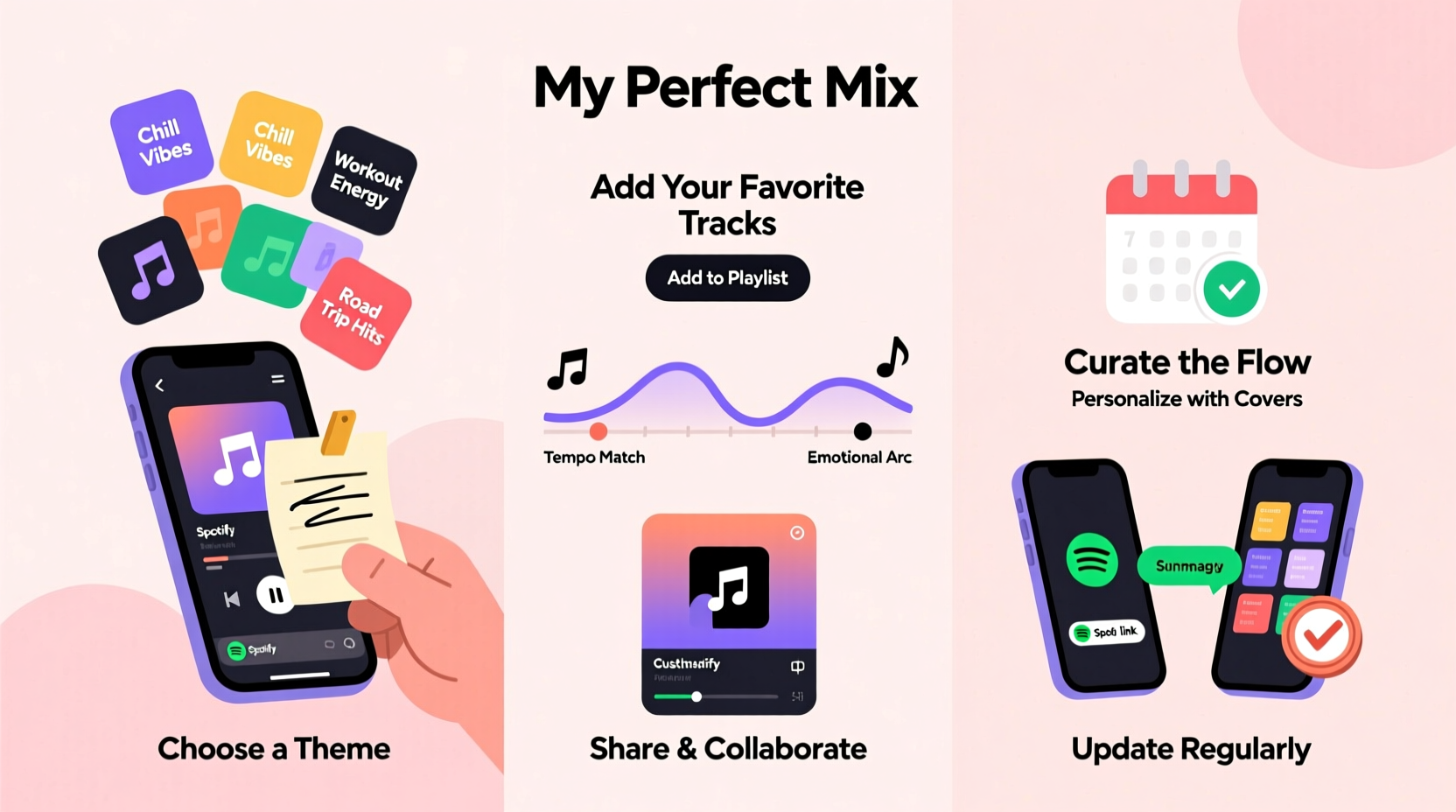
Every great playlist starts with clarity. Ask yourself: What is this playlist for? Is it background music for studying, an upbeat mix for morning runs, or a nostalgic journey through 90s R&B? Defining the intent sharpens your song selection and ensures cohesion.
Mood matters as much as genre. A “chill” playlist could include ambient electronica, acoustic folk, or lo-fi hip-hop—but only if they share a relaxed energy. Use descriptive labels like “energetic,” “melancholic,” “romantic,” or “focused” to anchor your vision.
Build Your Core Track List
Start by adding 10–15 foundational songs that perfectly match your defined mood and purpose. These are your anchors—the tracks you know without hesitation belong. Don’t overthink this stage; go with instinct.
- Open Spotify and click “New Playlist” on desktop or tap the \"+\" icon in the mobile app.
- Name your playlist and write a short description (e.g., “Sunset drives with the windows down”).
- Search for artists, albums, or songs that align with your theme.
- Add tracks by clicking the “…” next to each song and selecting “Add to playlist.”
Use Spotify’s search filters to narrow results: browse by genre, decade, or even mood keywords like “uplifting” or “dreamy.” Explore related artists from your favorite songs to discover hidden gems that fit your vibe.
Refine with Smart Discovery Tools
Spotify’s algorithms are powerful allies. After adding initial tracks, visit the playlist on desktop and click “Edit” > “Suggest” to see AI-recommended additions based on your selections. Review these carefully—some will miss the mark, but others might surprise you.
Additionally, use the “Radio” feature on any track in your playlist to generate a stream of similar songs. When you hear one that fits, add it directly to your project.
Customize for Flow and Pacing
A strong playlist doesn’t just contain great songs—it moves like a story. Pay attention to pacing: how does the energy rise and fall? A sudden jump from a soft ballad to a heavy bass drop can disrupt immersion.
Reorder tracks to create a natural arc. Begin with an inviting opener, build momentum in the middle, and ease into a satisfying conclusion. Consider tempo (BPM), key compatibility, and lyrical tone when arranging.
| Position | Role | Example |
|---|---|---|
| Track 1–3 | Set the mood gently | Soft synth intro, familiar melody |
| Tracks 4–12 | Core engagement—peak energy or focus | Driving beats, lyrical depth |
| Last 2–3 | Cool down or reflective closure | Instrumental fade, slow tempo |
“Great playlists mirror emotional journeys—they have rhythm, tension, and release.” — Maya Tran, Music Curator at Indie Current
Enhance With Personalization Features
Make your playlist uniquely yours with Spotify’s customization tools. A few small touches can transform a functional list into a memorable experience.
- Cover Art: Upload a custom image that reflects the playlist’s mood—sunsets, cityscapes, abstract art, or personal photos.
- Description: Add context. Share why you made it: “Songs that got me through grad school” or “Dinner parties with friends, summer 2024.”
- Collaborative Mode: Enable this if you want friends to add songs—perfect for group events or shared households.
- Pin Important Tracks: On mobile, pin frequently played songs to the top for quick access.
Real Example: Crafting a Morning Motivation Playlist
Sophie, a freelance designer in Portland, wanted a playlist to kickstart her workday without burnout. She started with “Here Comes the Sun” by The Beatles—warm and hopeful. She added upbeat indie pop like Vampire Weekend and energetic electronic tracks from ODESZA. After testing the flow, she noticed a jarring transition between a mellow Phoenix track and a high-BPM Flume song. She inserted a mid-tempo Bonobo instrumental as a bridge. The final version became her go-to for focused mornings, boosting both mood and productivity.
Final Checklist Before Sharing
Before publishing or sharing your playlist, run through this checklist to ensure quality and consistency.
- ✅ Title clearly reflects the theme or mood
- ✅ Description adds personal or contextual value
- ✅ Tracks are ordered for smooth transitions
- ✅ No audio inconsistencies (e.g., live versions mixed with studio unless intentional)
- ✅ Cover art visually represents the vibe
- ✅ Tested playback in order—at least once from start to finish
- ✅ Removed filler tracks that don’t add value
Frequently Asked Questions
How many songs should a good playlist have?
It depends on use case. For focused activities like workouts or study sessions, 15–25 songs (about 60–90 minutes) works well. For ambient or rotating listening, longer playlists (50+ tracks) with shuffle enabled help avoid repetition.
Can I use copyrighted music in my public playlists?
Yes—Spotify licenses music for streaming, so users can legally include copyrighted tracks in playlists. However, you cannot download or redistribute songs outside the app. Public playlists are part of Spotify’s ecosystem and fully compliant when used as intended.
Why aren’t my suggested songs showing up?
The “Suggest” feature may be limited if your playlist has fewer than five tracks or includes very niche genres. Add more variety or core songs first. Also, ensure you’re using the desktop version—mobile doesn’t support suggestion previews.
Conclusion: Make It Yours and Share the Vibe
Your perfect Spotify playlist isn’t about popularity or trends—it’s about resonance. It’s the soundtrack to your life’s quiet moments, big wins, and everything in between. With deliberate curation, thoughtful sequencing, and personal touches, you transform a simple list into a living, breathing companion.
Don’t keep it to yourself. Share it with a friend who needs that boost, post it on social media with a note about why it matters, or gift it to someone special. Music gains meaning when it connects people. Now that you’ve built something authentic, let it ripple outward.




 浙公网安备
33010002000092号
浙公网安备
33010002000092号 浙B2-20120091-4
Comments
No comments yet. Why don't you start the discussion?