
In today’s digital landscape, Google Ads remains one of the most powerful tools for reaching potential customers at the moment they’re searching for solutions. But simply running ads isn’t enough. Without a clear strategy, even high-budget campaigns can fail to generate meaningful returns. The difference between wasted spend and strong ROI lies in precision, relevance, and continuous optimization. This guide walks through the essential steps to create Google Ads that don’t just appear—but convert.
1. Define Clear Campaign Goals
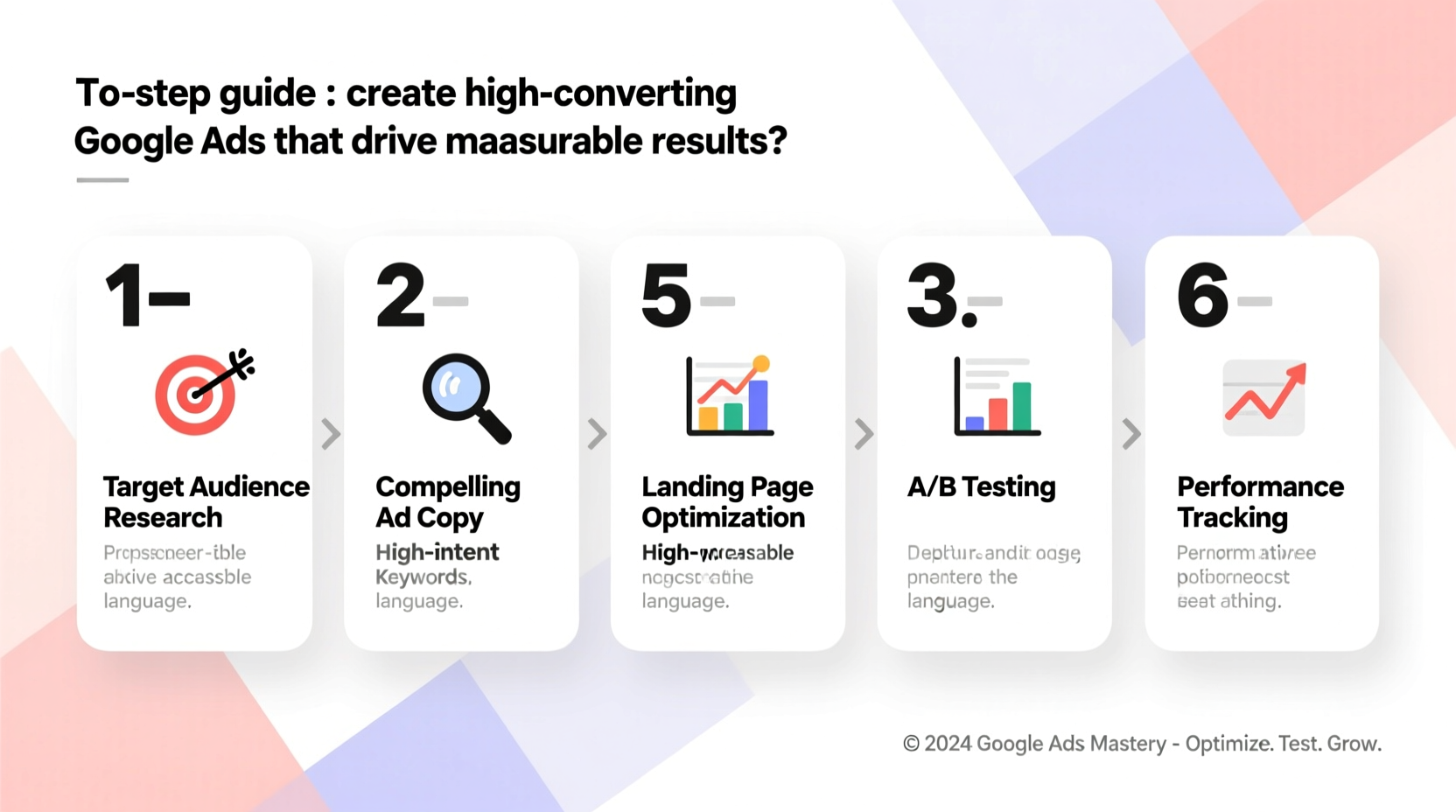
Every successful Google Ads campaign starts with a well-defined objective. Are you aiming to increase website traffic, generate leads, boost online sales, or promote brand awareness? Your goal determines every subsequent decision—from ad format to bidding strategy.
For example, if your business sells premium yoga mats, your primary goal might be direct sales. That would lead you toward Search or Shopping campaigns with conversion tracking enabled. If you're launching a new wellness podcast, your goal may be awareness, making YouTube or Display campaigns more appropriate.
2. Conduct Thorough Keyword Research
Keywords are the foundation of any Google Ads campaign. They determine when and where your ads appear. Effective keyword research goes beyond guessing what people might type—it involves understanding search intent and identifying high-opportunity terms.
Start with tools like Google Keyword Planner, SEMrush, or Ubersuggest to gather a list of relevant keywords. Then categorize them by intent:
- Informational: “how to choose a yoga mat”
- Commercial: “best non-slip yoga mat 2024”
- Transactional: “buy Manduka PRO yoga mat”
Focusing on transactional and commercial keywords typically yields higher conversion rates because users are closer to making a purchase decision.
“Targeting high-intent keywords reduces wasted impressions and increases the likelihood of conversion.” — Sarah Kim, PPC Strategist at GrowthLab Digital
Keyword Selection Checklist
- Identify 5–10 core seed keywords related to your product or service
- Use keyword tools to expand into long-tail variations
- Filter out irrelevant or overly broad terms
- Group keywords by theme for tighter ad groups
- Check search volume and competition levels
- Prioritize keywords with buyer intent
3. Structure Campaigns and Ad Groups Strategically
Google rewards relevance. A well-structured account organizes campaigns and ad groups around tightly themed topics. For instance, instead of lumping all fitness products into one campaign, separate them:
- Campaign: Yoga Equipment
- Ad Group: Premium Yoga Mats
- Ad Group: Yoga Blocks & Accessories
This structure allows you to write highly targeted ads and select specific landing pages that match user intent. It also improves your Quality Score—a metric Google uses to assess ad relevance, which directly impacts cost-per-click and ad position.
| Structure Approach | Best Practice | Avoid |
|---|---|---|
| Campaign Organization | By product line, service category, or geographic region | Mixing unrelated offerings in one campaign |
| Ad Group Focus | One theme per group (e.g., \"eco-friendly yoga mats\") | Over 20 keywords per ad group without segmentation |
| Bidding Strategy | Manual CPC for testing, Target CPA for scaling | Using automated strategies before conversion data exists |
4. Write High-Converting Ad Copy
Your ad copy is your first impression. It must capture attention, communicate value, and prompt action—all within a limited character count. Follow these principles to maximize impact:
- Lead with a benefit: Instead of “We sell yoga mats,” try “Stay Balanced with Eco-Friendly, Non-Slip Yoga Mats.”
- Include keywords naturally: Google bolds matched search terms, increasing visibility.
- Add urgency or exclusivity: “Limited Stock” or “Free Shipping This Week Only.”
- Use strong CTAs: “Shop Now,” “Get Your Free Guide,” “Book a Demo.”
For Responsive Search Ads (RSAs), provide at least 3–5 headlines and 2–3 descriptions. Google will test combinations and favor those with higher engagement. Always pin critical messaging—like your main offer or brand name—to ensure it appears consistently.
5. Optimize Landing Pages for Conversion
An effective ad means little if the landing page fails to deliver. Users expect consistency between the ad message and the page they land on. If your ad promotes “50% Off Organic Cotton Yoga Mats,” the landing page should feature that exact offer—not a generic homepage.
Key elements of a high-converting landing page:
- Clear headline matching the ad’s promise
- Relevant visuals or product demonstrations
- Strong call-to-action above the fold
- Trust signals: customer reviews, secure checkout badges, return policies
- Mobile responsiveness and fast load time
Use Google Analytics and heatmapping tools like Hotjar to identify drop-off points. Even small improvements—like simplifying form fields or adding a testimonial—can significantly boost conversion rates.
Mini Case Study: EcoFlow Fitness
EcoFlow Fitness launched a Google Ads campaign promoting their new line of biodegradable yoga mats. Initial results were underwhelming—high clicks but low sales. Upon review, they discovered their landing page featured a general product catalog, not the advertised mat.
They created a dedicated landing page with a hero image of the mat, bullet-point benefits, a video demo, and a prominent “Buy Now – 20% Off” button. Within two weeks, conversion rates increased by 68%, and cost per acquisition dropped by 35%.
6. Monitor, Measure, and Refine
Google Ads is not a “set and forget” platform. Ongoing optimization is critical. After launching, track key metrics such as:
- Click-through rate (CTR)
- Conversion rate
- Cost per conversion
- Quality Score
- Impression share
Regularly review search term reports to identify irrelevant queries triggering your ads. Add negative keywords to filter out unqualified traffic—for example, excluding “free” or “used” if you only sell new products.
Test different elements systematically: headlines, display paths, extensions, and bidding strategies. Run A/B tests with one variable changed at a time to isolate what drives improvement.
“Winning campaigns aren’t built overnight—they’re refined weekly based on real user behavior.” — Marcus Tran, Head of Paid Media at NexaDigital
FAQ
How much should I budget for Google Ads?
There’s no one-size-fits-all answer. Start with a daily budget that allows for at least 10–15 clicks per day to gather meaningful data. For small businesses, $10–$50/day is common. Scale up once you identify profitable campaigns.
Why are my ads not showing?
Common reasons include low bids, poor Quality Score, exhausted daily budget, geo-targeting mismatches, or policy violations. Check the “Status” column in your campaign dashboard and use the “Auction Insights” report to evaluate competition.
Are Google Shopping Ads worth it for small businesses?
Yes, especially for product-based businesses. Shopping Ads showcase images, prices, and titles directly in search results, leading to higher CTRs and better-qualified traffic. Ensure your product feed is accurate and optimized.
Conclusion
Creating effective Google Ads that drive results requires more than technical setup—it demands strategic thinking, audience insight, and relentless refinement. From defining goals to crafting compelling copy and optimizing landing experiences, each step builds toward a campaign that not only reaches people but persuades them to act.
The most successful advertisers don’t rely on luck. They test, measure, and adapt. Begin with one focused campaign, apply these principles, and let data guide your next move. Over time, you’ll build a scalable system that delivers consistent growth.




 浙公网安备
33010002000092号
浙公网安备
33010002000092号 浙B2-20120091-4
Comments
No comments yet. Why don't you start the discussion?