
Daniel Wellington watches are celebrated for their minimalist design and versatility. A key feature that sets them apart is the interchangeable strap system, allowing wearers to effortlessly switch between leather, nylon, mesh, and metal bands to suit any occasion. Whether you're updating your look for a formal event or refreshing a worn-out band, changing the strap is a simple process that takes just a few minutes. With no special tools required, this task is accessible to anyone who owns a Daniel Wellington timepiece.
The brand’s quick-release spring bar mechanism makes swapping straps intuitive and damage-free. Understanding how this system works—and doing it correctly—ensures both the longevity of your watch and the security of your new strap. This guide walks you through every detail, from preparing your workspace to selecting compatible replacements, so you can confidently customize your watch whenever inspiration strikes.
Why Changing Your Strap Matters
A watch strap does more than secure the timepiece to your wrist—it defines its personality. The same Daniel Wellington case can appear elegant with a black Horween leather strap, casual with a NATO band, or modern with a Milanese loop. Regularly rotating straps not only keeps your style fresh but also extends the life of each individual band by reducing continuous wear.
Leather straps, for example, absorb moisture and oils over time, which can lead to cracking or discoloration if worn daily without breaks. Nylon and fabric bands may fray or stretch. By rotating between two or three straps, you distribute wear evenly and maintain a polished appearance across your collection.
“Interchangeable straps transform a single watch into multiple expressions of personal style. It's one of the smartest ways to maximize wardrobe versatility.” — Marcus Reed, Watch Lifestyle Editor at Time & Tastefulness
What You’ll Need Before You Begin
The beauty of changing a Daniel Wellington strap lies in its simplicity. Unlike traditional watches that require small screwdrivers or pin removal tools, DW models use a spring bar system designed for tool-free changes. Still, having a few items on hand ensures a smooth and safe process.
Essential Supplies
- Your Daniel Wellington watch – Ensure it’s free of dust and fingerprints.
- New strap (compatible) – Confirm it matches the lug width (typically 18mm or 20mm depending on model).
- Clean hands or lint-free gloves – Oils from fingers can transfer to light-colored straps.
- Small tray or container – To safely hold removed parts.
Optional but Helpful
- Magnifying glass – Useful for inspecting spring bars.
- Tweezers (non-metallic tip) – Can assist in guiding stubborn spring bars.
Step-by-Step Guide to Removing the Old Strap
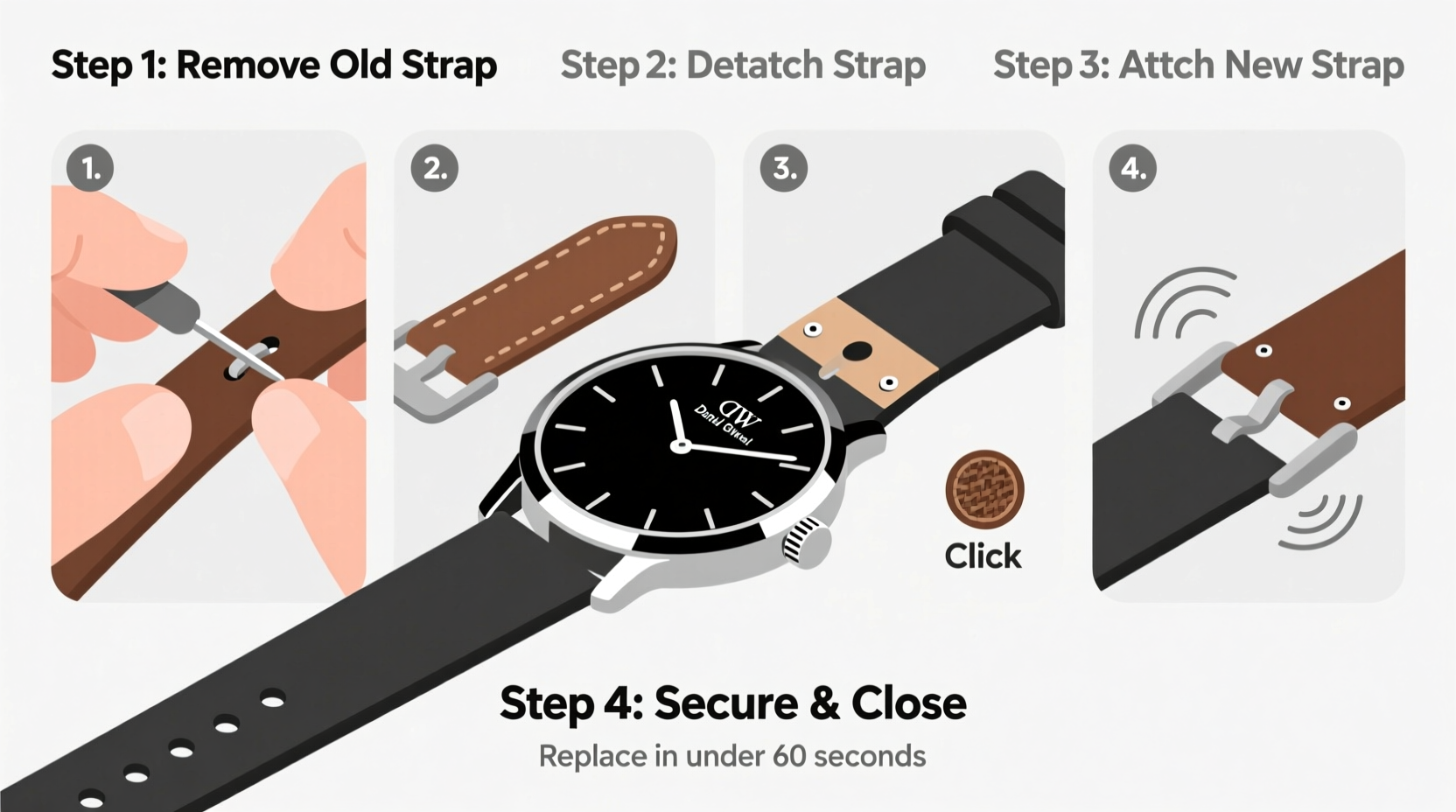
Daniel Wellington uses spring-loaded bars that fit into the lugs (the protrusions on either side of the watch case). These bars compress slightly to slide in and out, securing the strap in place. Follow these steps carefully to avoid damaging the case or losing components.
- Position the watch face-down on a soft surface to protect the crystal.
- Locate the spring bar where the strap connects to the case. You’ll see a small metal rod running through the strap’s end piece and into the lugs.
- Press inward on the strap near the lug using your thumbs or fingernails. Apply gentle pressure toward the center of the watch until the spring bar compresses and disengages from one side.
- Slide the strap off once one end of the spring bar is released. Repeat for the other side if still attached.
- Set aside the removed strap and spring bar in a safe place if you plan to reuse them later.
Selecting the Right Replacement Strap
Not all straps are created equal—even if they claim compatibility. Choosing the correct size and material ensures a snug fit and maintains the sleek aesthetic Daniel Wellington is known for.
| Lug Width | Compatible Models | Recommended Strap Types |
|---|---|---|
| 18mm | Petite, Iconic Link 28mm/32mm | Mesh, Leather, NATO |
| 20mm | Classic, Heritage, Dune 36mm/40mm | Leather, Bracelet, Milanese Loop |
| 22mm | Larger models (limited editions) | Wide leather, specialty bands |
When purchasing third-party straps, verify the lug width printed inside the original strap or check the user manual. Most Daniel Wellington watches use either 18mm or 20mm. Using an incorrect size can result in gaps, instability, or stress on the lugs.
Material Considerations
- Leather: Ideal for formal settings; ages beautifully but avoid water exposure.
- NATO/Perlon: Durable and sporty; perfect for active lifestyles.
- Stainless Steel/Mesh: Sleek and adjustable; requires occasional polishing.
- Silicone/Rubber: Water-resistant and comfortable; great for workouts.
Installing the New Strap: A Smooth Process
Once the old strap is removed, installing the new one is even simpler. The spring bars on replacement straps are pre-installed and ready to go.
- Hold the watch securely with the lugs facing upward.
- Align one end of the new strap’s spring bar with the inner hole of the corresponding lug. Gently push until it clicks into place.
- Angle the opposite end and press the second spring bar into the remaining lug. Use firm, steady pressure—do not twist.
- Test the connection by gently tugging on the strap. It should stay firmly attached without wobbling.
- Repeat for the other side if replacing both top and bottom straps (on models with separate links).
Mini Case Study: Reviving a Daily Wearer
Sophia, a graphic designer in Portland, wore her Daniel Wellington Classic Petite daily with a tan leather strap. After eight months, the stitching began to loosen, and the color faded unevenly. Instead of replacing the entire watch, she purchased a navy NATO strap and a gray Milanese loop. Over a weekend morning, she swapped the old strap using only her fingertips. She now alternates between the three bands weekly, significantly improving comfort and style variety. “It feels like getting a new watch every time,” she says. “And my original strap looks almost new after resting for a few weeks.”
Common Mistakes to Avoid
While strap replacement is straightforward, certain missteps can damage your watch or compromise safety.
- Using metal tools
- Never insert keys, paperclips, or screwdrivers to release spring bars—they can gouge the case finish.
- Forcing misaligned connections
- If the bar doesn’t slide smoothly, realign before pushing. Forcing it may bend the bar or break the lug.
- Ignoring lug width
- A 20mm strap on an 18mm case will strain the spring bar and create instability.
- Touching light-colored straps with dirty hands
- White or cream straps show oils and stains immediately. Handle with clean fingers or gloves.
Frequently Asked Questions
Can I change the strap without removing the watch from my wrist?
No, it’s not recommended. Attempting to swap straps while wearing the watch increases the risk of dropping it. Always remove the watch and place it on a stable, padded surface.
Are all Daniel Wellington straps interchangeable?
Most are, provided they match the lug width. However, some limited-edition models or older versions may have unique fittings. Always double-check compatibility before purchase.
How often should I replace my watch strap?
This depends on usage and material. Leather straps benefit from rotation every 6–12 months. Fabric and nylon bands should be replaced when fraying appears. Metal straps can last years with proper care.
Final Checklist: Strap Change Success
- ✅ Verified lug width of the new strap
- ✅ Cleaned watch case and hands before starting
- ✅ Worked on a soft, clutter-free surface
- ✅ Removed old strap using finger pressure only
- ✅ Aligned spring bar correctly before insertion
- ✅ Tested stability after installation
- ✅ Stored old strap properly for future use
Conclusion: Make Your Watch Work for Every Occasion
Changing the strap on your Daniel Wellington watch is one of the easiest upgrades you can make. With no tools and minimal effort, you unlock endless styling possibilities—from boardroom elegance to weekend adventure. The process preserves your investment, enhances comfort, and reflects your evolving taste. Now that you know exactly how to do it safely and effectively, there’s no reason to stick with the same look. Try a bold color, experiment with textures, or revive an old favorite strap from storage. Your watch is more than a timekeeper—it’s a canvas for self-expression.




 浙公网安备
33010002000092号
浙公网安备
33010002000092号 浙B2-20120091-4
Comments
No comments yet. Why don't you start the discussion?