
Every driver knows the importance of a valid car registration, but few pay attention to the small yet critical detail: the registration sticker. This circular or rectangular decal on your license plate (or windshield, depending on your state) serves as proof that your vehicle is legally registered. Missing, expired, or improperly placed stickers can lead to fines, failed inspections, or even traffic stops. The good news? Replacing or renewing your car registration sticker doesn’t have to be complicated. With the right information and a little planning, you can complete the process efficiently—often from home.
Understanding the Role of Your Registration Sticker
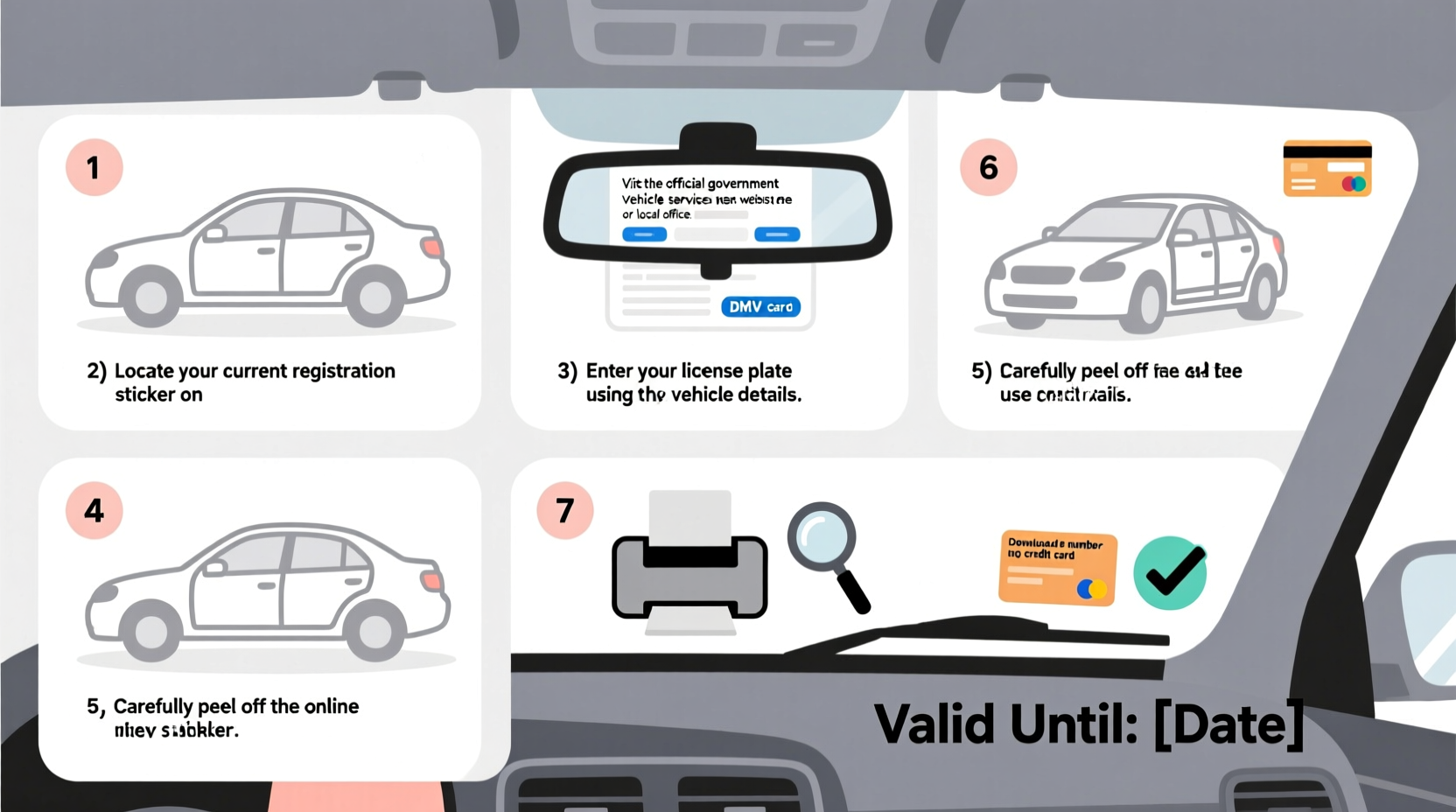
The registration sticker is more than just a piece of adhesive plastic—it’s a visible indicator of compliance with state motor vehicle laws. Most states require vehicles to display a current registration decal, typically affixed to the rear license plate or, in some cases, the windshield. These stickers include key details such as the expiration month and year, helping law enforcement and automated systems verify validity at a glance.
Registration stickers are usually issued annually, biennially, or every three years, depending on your state. They’re tied directly to your vehicle’s registration renewal, which also involves insurance verification, emissions testing (in applicable areas), and payment of associated fees.
“Over 30% of traffic stops for minor violations begin with an expired registration sticker.” — National Highway Traffic Safety Administration (NHTSA)
Step-by-Step Process to Renew and Replace Your Sticker
Renewing your registration and obtaining a new sticker follows a predictable sequence. While exact procedures vary by state, the general steps remain consistent. Follow this timeline to stay compliant and avoid last-minute stress.
- Check Your Expiration Date: Look at your current sticker or refer to your registration card. Most states send renewal notices 30–60 days before expiration via mail or email if you’ve opted in.
- Gather Required Documents: You’ll need your current registration, proof of insurance, and possibly a recent emissions test result. Keep digital or physical copies ready.
- Determine Renewal Method: Decide whether to renew online, by mail, or in person. Online is fastest for most people.
- Pay Applicable Fees: Fees vary based on vehicle type, weight, and location. Typical costs range from $25 to $150.
- Receive New Sticker and Documents: Within 7–14 business days, your new sticker and updated registration will arrive by mail.
- Replace the Old Sticker: Carefully remove the expired decal and apply the new one according to state guidelines.
Where and How to Apply the New Sticker Correctly
Improper placement can invalidate your registration—even with a valid sticker. Each state has specific rules about where the decal must be placed. For example:
- In California, the sticker goes on the lower left corner of the front windshield.
- In Texas, it's affixed to the rear license plate.
- In Florida, it's placed on the rear window, driver’s side.
Always consult your state’s Department of Motor Vehicles (DMV) website for exact positioning. Misplacement may result in a citation during routine checks or inspections.
To replace the sticker:
- Clean the surface with rubbing alcohol to remove dirt and residue.
- Peel off the backing carefully and align the sticker precisely.
- Press firmly from center outward to eliminate air bubbles.
- Dispose of the old sticker responsibly—some states require destruction to prevent misuse.
State-by-State Comparison: Renewal Options and Turnaround Times
| State | Online Renewal? | Mail Option? | In-Person Required? | Sticker Delivery Time |
|---|---|---|---|---|
| California | Yes | Yes | No | 7–10 business days |
| Texas | Yes | Yes | No | 5–7 business days |
| New York | Limited cases | Yes | Sometimes | 10–14 business days |
| Florida | Yes | Yes | No | 7–10 business days |
| Illinois | Yes | Yes | No | 10–14 business days |
This table highlights that most states support remote renewal, reducing the need for in-person visits. However, certain situations—such as address changes, new registrations, or flagged records—may require a trip to a local office.
Avoiding Common Mistakes When Replacing Your Sticker
Even experienced drivers make errors during registration renewal. Here are frequent pitfalls and how to avoid them:
- Waiting until the last minute: Delays in mail delivery or system errors can leave you driving illegally. Renew at least two weeks before expiration.
- Using outdated insurance: Ensure your current policy matches what’s on file. Mismatched info causes processing delays.
- Keeping the old sticker: Some drivers leave expired decals attached, creating confusion. Remove and destroy them.
- Ignoring renewal notices: These aren’t suggestions—they’re official communications. Respond promptly.
Real-Life Example: Sarah’s Smooth Renewal Experience
Sarah, a resident of Austin, Texas, used to dread her annual registration renewal. In the past, she’d waited until the deadline, only to find her county requiring an in-person visit due to a lapsed insurance gap. Last year, she changed her approach. She set a calendar reminder two months in advance, confirmed her insurance was active, and visited the Texas DMV website on the first day renewals opened. She paid $78 online using her credit card and received her new sticker and registration in six days. “It took less than ten minutes,” she said. “Now I do it every year the same way—no stress, no fines.”
Essential Checklist for a Hassle-Free Sticker Replacement
Use this checklist to ensure you cover all bases before, during, and after renewal:
- ✅ Check registration expiration date
- ✅ Confirm active auto insurance coverage
- ✅ Verify vehicle address and owner information
- ✅ Review for required emissions inspection (if applicable)
- ✅ Choose renewal method: online, mail, or in person
- ✅ Pay renewal fees securely
- ✅ Track mailing of new sticker and registration
- ✅ Properly install new sticker and discard the old one
- ✅ Save confirmation email or receipt
Frequently Asked Questions
What if my new registration sticker doesn’t arrive?
If your sticker hasn’t arrived within 14 business days, contact your state’s DMV immediately. Most offer a free replacement and may issue a temporary validation letter while they investigate.
Can I drive without a sticker if I just renewed?
Some states allow a grace period (typically 5–10 days) post-renewal. However, carrying a copy of your renewal receipt can help if stopped by law enforcement. Always check your state’s policy.
Do electric vehicles pay the same registration fees?
Not always. Many states charge additional fees for electric or hybrid vehicles to compensate for lost gas tax revenue. For example, California adds a $100 annual fee for EVs.
Final Thoughts and Next Steps
Replacing your car registration sticker is a routine responsibility—but one that carries real consequences if overlooked. By understanding the process, preparing early, and following best practices, you can maintain legal compliance with minimal effort. Most renewals today are designed for convenience, leveraging online portals and postal delivery to keep you on the road safely and legally.
Don’t wait for a ticket to remind you. Take action now: mark your next renewal date, update your DMV contact preferences, and streamline your documentation. A few minutes of proactive planning saves time, money, and frustration down the line.




 浙公网安备
33010002000092号
浙公网安备
33010002000092号 浙B2-20120091-4
Comments
No comments yet. Why don't you start the discussion?