
A well-functioning power steering system is essential for safe, effortless driving. When air enters the hydraulic lines—common after fluid changes, hose replacements, or pump repairs—it disrupts pressure flow, leading to stiff steering, noise, and potential pump damage. Unlike brake systems, power steering doesn’t have a formal bleeding mechanism, so removing trapped air requires a specific procedure known as “bleeding” or “burping” the system. This guide walks you through a proven method to eliminate air, restore smooth steering, and protect your vehicle’s components.
Why Air in the Power Steering System Is a Problem
Air compresses; hydraulic fluid does not. When air bubbles are present in the power steering system, they reduce the effective hydraulic pressure needed to assist steering. This results in several noticeable issues:
- Spongy or stiff steering response – The wheel feels heavier than usual, especially at low speeds.
- Whining or groaning noises – A high-pitched whine from the pump increases when turning the wheel.
- Fluid foaming – Air mixed with fluid creates foam, visible when checking the reservoir.
- Pump overheating or premature wear – Running dry or under aerated conditions shortens pump life.
Left unaddressed, air can cause permanent damage to the power steering pump and rack-and-pinion assembly. Bleeding the system restores consistent pressure and ensures optimal performance.
Tools and Materials You’ll Need
Bleeding your power steering system doesn’t require specialized tools, but having the right supplies ensures a clean, efficient process.
| Item | Purpose | Notes |
|---|---|---|
| Correct power steering fluid | Refill and top off reservoir | Check owner’s manual; common types include ATF Dexron, CHF, or manufacturer-specific fluids |
| Funnel | Precise fluid pouring | Prevents spills and contamination |
| Clean rags or towels | Wipe up leaks and check for residue | Essential for spotting early signs of trouble |
| Socket wrench or spanner | Loosen/secure bleeder screw (if equipped) | Not all vehicles have one—check service manual |
| Gloves and safety glasses | Protect against fluid exposure | Power steering fluid can irritate skin and eyes |
Step-by-Step Guide to Bleed Air from the Power Steering Pump
The following method works on most vehicles with hydraulic power steering systems, including those without a dedicated bleeder valve. Follow these steps carefully to ensure complete air removal.
- Park on a level surface and turn off the engine. Engage the parking brake and allow the engine to cool if it was recently running.
- Locate the power steering reservoir. It’s typically on the passenger or driver’s side of the engine bay, marked with a steering wheel symbol or labeled “P/S Fluid.”
- Check fluid level and condition. Remove the cap and inspect the fluid. If it’s dark, gritty, or smells burnt, consider flushing the system before bleeding.
- Top off the reservoir with fresh fluid. Use the correct type and fill to the “MAX” line on the dipstick or reservoir. Do not overfill.
- Start the engine and let it idle. Keep the wheels straight and listen for unusual noises from the pump.
- Turn the steering wheel lock-to-lock 5–10 times. Turn fully left until resistance is felt, then fully right. Repeat slowly. This circulates fluid and forces air toward the reservoir.
- Turn off the engine and recheck fluid level. Air escaping will lower the fluid. Top off as needed, ensuring it stays between MIN and MAX.
- Repeat the cycle 3–5 times. Each time, start the engine, turn lock-to-lock, shut off, and refill. Noise should diminish with each round.
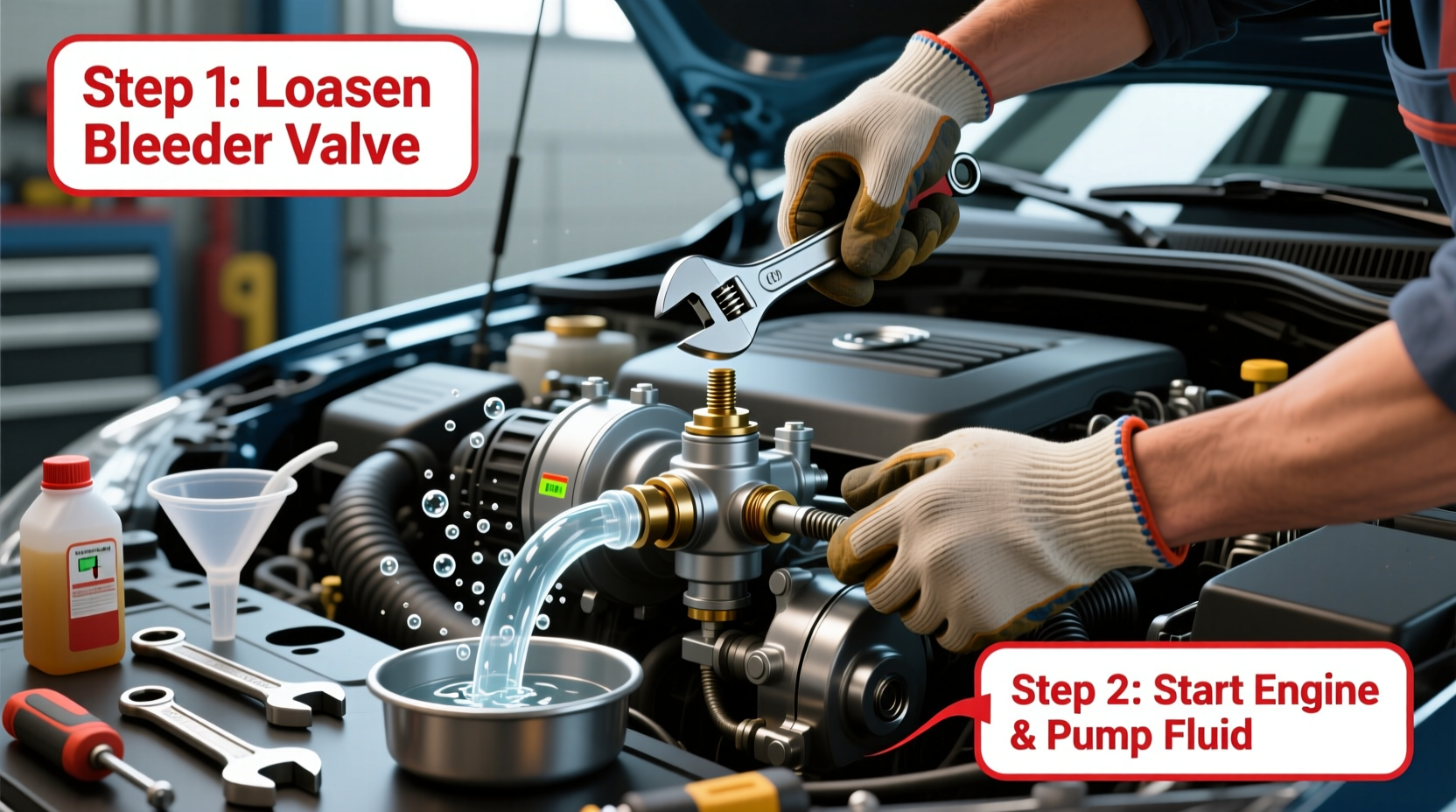
- If equipped, open the bleeder valve briefly. On some models, a small screw on the high-pressure line or steering rack allows trapped air to escape. Loosen slightly while assistant turns wheel; close once fluid flows steadily.
- Final check after a test drive. Drive the vehicle at low speed, making turns. Return, shut off, and verify fluid level and clarity.
“Proper bleeding isn’t just about noise reduction—it’s about protecting a $300+ pump from cavitation damage caused by running dry.” — Carlos Mendez, ASE-Certified Master Technician
Common Mistakes to Avoid During the Process
Even experienced DIYers make errors that prolong bleeding or cause new problems. Watch out for these pitfalls:
- Running the pump with low fluid: This causes rapid wear. Never operate the engine with fluid below the MIN line.
- Turning the wheel when the engine is off: Without hydraulic pressure, this can strain components and reintroduce air.
- Using incorrect fluid: Mismatched viscosity or chemistry leads to poor performance and seal degradation.
- Skipping multiple cycles: One pass rarely removes all air. Patience is key.
- Over-tightening the bleeder screw: Can strip threads on aluminum housings, leading to leaks.
Mini Case Study: Resolving Persistent Steering Noise After Hose Replacement
Tom, a DIY mechanic, replaced a cracked high-pressure hose on his 2010 Honda Accord. After refilling the fluid, he noticed a loud whine when turning left. Assuming the job was done, he drove the car—but the noise persisted, and steering felt inconsistent.
He revisited the system and realized he hadn’t properly bled the air. Following the lock-to-lock cycling method over five rounds, topping off fluid each time, the noise faded completely by the fourth cycle. On the fifth, the steering was smooth and silent. Tom later shared in an online forum: “I thought I saved time skipping the bleed. In reality, I wasted two extra hours diagnosing a problem I created.”
This example underscores that bleeding isn’t optional after any system opening—it’s critical for full restoration of function.
Checklist: Power Steering Bleeding Procedure
Use this checklist to ensure no step is missed:
- ✅ Park on level ground and engage parking brake
- ✅ Locate and inspect power steering reservoir
- ✅ Confirm correct fluid type and fill to MAX line
- ✅ Start engine and idle with wheels straight
- ✅ Turn steering wheel lock-to-lock 5–10 times
- ✅ Shut off engine and check fluid level
- ✅ Top off with fresh fluid as needed
- ✅ Repeat cycle 3–5 times until noise stops
- ✅ Inspect for leaks around hoses and pump
- ✅ Test drive and perform final fluid check
Frequently Asked Questions
How do I know if there’s still air in my power steering system?
Signs include persistent whining noises (especially when turning), spongy steering feel, visible foam in the reservoir, or fluctuating fluid levels after shutdown. If the problem returns after initial bleeding, repeat the process.
Can I bleed the system without starting the engine?
No. The pump is belt-driven and only operates when the engine runs. Turning the wheel manually with the engine off won’t circulate fluid effectively and may damage components.
How often should I bleed my power steering system?
Bleeding is only necessary after maintenance that introduces air—such as pump, hose, or rack replacement. Routine fluid changes don’t always require bleeding unless the system was fully drained.
Conclusion: Drive Smoothly with a Properly Bled System
A quiet, responsive steering system enhances both safety and driving comfort. Bleeding air from the power steering pump is a straightforward yet crucial task that protects expensive components and restores peak performance. By following the correct procedure, avoiding common mistakes, and exercising patience during the cycling process, you ensure long-term reliability and smooth handling.




 浙公网安备
33010002000092号
浙公网安备
33010002000092号 浙B2-20120091-4
Comments
No comments yet. Why don't you start the discussion?