
Losing important files can be stressful—especially when deadlines loom or personal memories are at stake. Fortunately, if you use Dropbox, there’s strong hope. The cloud storage platform includes robust file recovery tools that allow users to restore deleted files with minimal effort. Whether you accidentally deleted a document or need to retrieve an older version of a file, this guide walks you through the entire process with precision and clarity.
Dropbox doesn’t permanently erase files the moment you delete them. Instead, it moves them to a “Deleted files” section where they remain accessible for a set period. This safety net gives users time to recover what was lost—provided they know how to navigate the system. Below is a comprehensive breakdown of how to restore files across devices, avoid common pitfalls, and maximize your chances of full recovery.
How Dropbox Handles Deleted Files
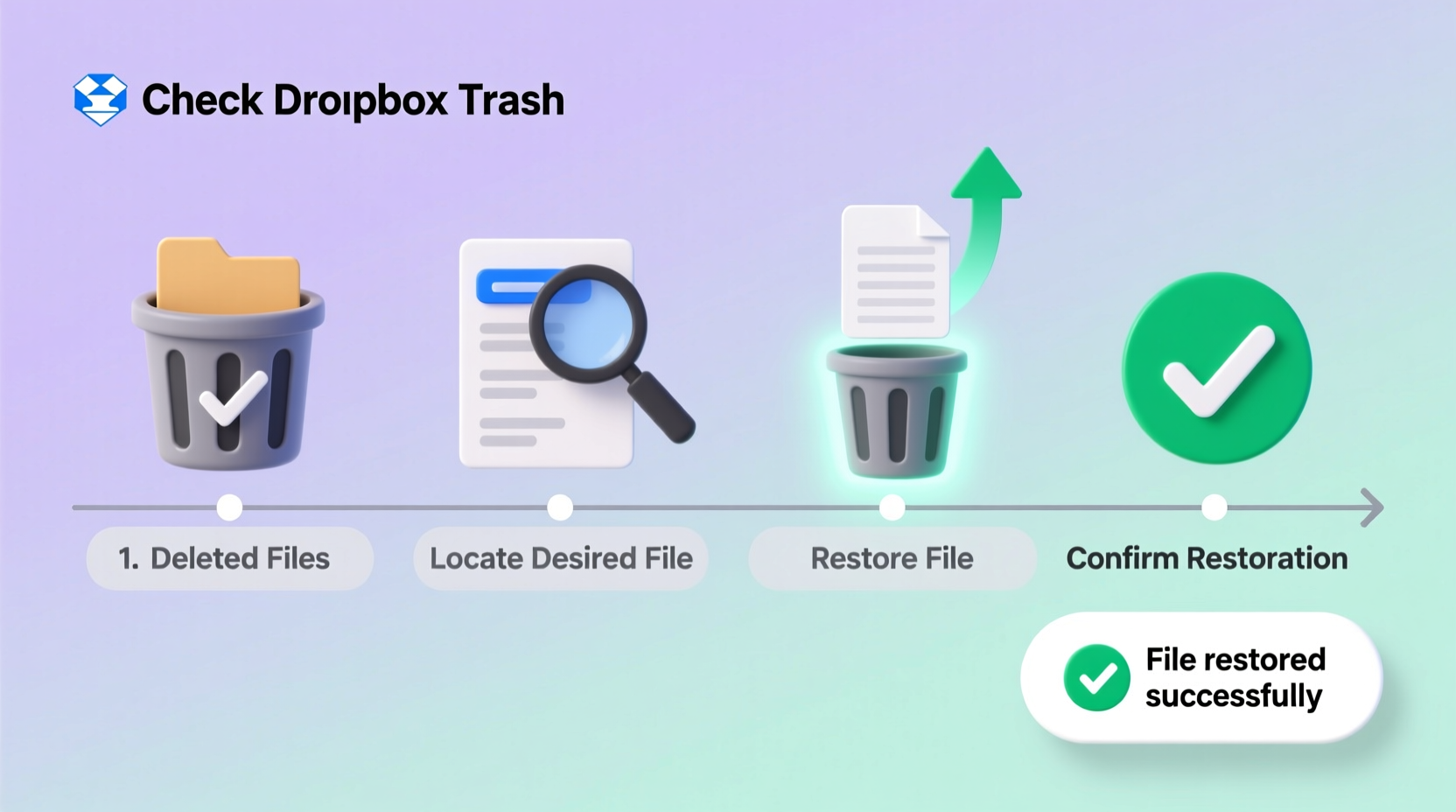
When you delete a file from your Dropbox folder—either on desktop, mobile, or via the web—it isn’t gone forever. Dropbox automatically archives deleted items in a hidden section called “Deleted files.” These files remain recoverable for a specific duration depending on your account type:
| Account Type | Recovery Window |
|---|---|
| Dropbox Basic (Free) | 30 days |
| Dropbox Plus | Up to 180 days (with extended version history) |
| Dropbox Family & Professional | Up to 180 days |
| Dropbox Business | Custom retention policies (up to 3 years) |
This grace period applies not only to individual files but also to entire folders. Even if you emptied your computer’s recycle bin or deleted a file directly from the Dropbox app, recovery is still possible as long as the deletion occurred within the retention window.
“Many users don’t realize that cloud storage offers built-in version control and recovery options. Taking advantage of these features can prevent data loss disasters.” — Sarah Lin, Data Security Analyst at CloudGuard Solutions
Step-by-Step Guide to Restore Deleted Files
Follow this structured approach to recover any deleted file from your Dropbox account. The process works consistently across platforms and requires no technical expertise.
- Log into Your Dropbox Account
Go to dropbox.com and sign in using your credentials. Use the same email and password linked to your Dropbox account. - Navigate to “Deleted files”
In the left-hand sidebar, click on Deleted files. This section contains all files and folders removed from your Dropbox since your last activity. - Locate the File You Want to Restore
Browse through the list or use the search bar at the top to find the file by name. Deleted files retain their original names and folder paths, making identification easier. - Select the File
Hover over the file or folder and check the box next to it. You can select multiple items if needed. - Click “Restore”
Once selected, click the blue Restore button at the top right. Dropbox will immediately return the file(s) to their original location in your Dropbox folder. - Verify Restoration on Your Device
Open your desktop or mobile Dropbox app. Within moments, the restored files should reappear in their original folders, synced across all linked devices.
Restoring Previous Versions of Files
Sometimes, a file hasn’t been deleted—but its contents have been overwritten or corrupted. Dropbox keeps a version history of all files, allowing you to roll back to earlier iterations. This feature is especially useful for collaborative documents or creative projects.
To restore a previous version:
- Go to dropbox.com and locate the current version of the file.
- Right-click (or Ctrl+click) the file and select Version history.
- A timeline of saved versions appears, showing timestamps and editors (if shared).
- Preview any version by clicking on it. When you find the correct one, click Restore this version.
The restored version becomes the current file, and all future syncs will reflect this change. Note that free accounts typically retain version history for 30 days, while paid plans extend this up to six months.
Mini Case Study: Recovering a Lost Thesis Draft
Jamal, a graduate student, spent three weeks writing his thesis draft in a Google Doc saved directly to his Dropbox folder. After finalizing edits, he accidentally dragged the entire folder to the trash while cleaning up his desktop. Panic set in—he hadn’t backed up the file elsewhere.
He remembered reading about Dropbox’s recovery options and logged into his account the same day. Under “Deleted files,” he found the folder listed with today’s timestamp. He selected it and clicked “Restore.” Within two minutes, the folder reappeared on his laptop, fully intact. His advisor never knew there was a hiccup.
This scenario highlights the importance of understanding Dropbox’s recovery mechanisms before disaster strikes. Because Jamal acted quickly—and knew where to look—he avoided weeks of lost work.
Essential Tips and Best Practices
To ensure smooth recovery and minimize future risks, adopt these habits:
- Act fast: The sooner you attempt recovery, the higher the success rate—especially on free accounts with shorter retention windows.
- Use selective sync wisely: If you’ve disabled certain folders from syncing to your device, make sure they’re still active in the cloud before assuming they’re gone.
- Enable two-factor authentication: Securing your account prevents unauthorized access that could lead to malicious deletions.
- Download critical files periodically: For irreplaceable data (e.g., family photos), maintain local backups outside Dropbox.
Common Mistakes to Avoid
| Mistake | Why It’s Risky | What to Do Instead |
|---|---|---|
| Assuming files are gone forever after deletion | Dropbox retains files for up to 180 days; premature panic leads to missed recovery chances. | Check “Deleted files” immediately after realizing something’s missing. |
| Waiting too long to restore | Free users lose access after 30 days; even paid users risk expiration. | Restore within a week of deletion to stay safe. |
| Deleting from “Deleted files” again | Manually removing items from this section triggers permanent erasure. | Double-check selections before clicking “Delete” in the recovery zone. |
FAQ: Frequently Asked Questions
Can I restore files on the Dropbox mobile app?
Yes, but with limitations. The mobile app doesn’t currently support direct access to “Deleted files.” For full restoration capabilities, use a web browser on your phone or switch to a desktop.
What happens if someone else deletes a shared file?
If you’re a member of a shared folder, you can still restore files deleted by others—as long as you had edit permissions. Navigate to “Deleted files” and restore just like any personal file. However, owners of the original folder may override changes.
Are restored files visible to collaborators?
Yes. Once a file is restored, it reappears in the shared folder and syncs across all members’ devices. Collaborators will see the file again unless it was explicitly removed from sharing settings.
Final Checklist: Recover Like a Pro
- Immediate Actions
- ✅ Log into dropbox.com
- ✅ Go to “Deleted files”
- ✅ Search or browse for the missing item
- ✅ Select and click “Restore”
- Preventive Measures
- ✅ Enable version history (paid plans)
- ✅ Backup critical files locally or to another service
- ✅ Review account activity monthly
- ✅ Educate team members on recovery steps
Conclusion: Take Control of Your Digital Files
Data loss doesn’t have to mean permanent loss. With Dropbox’s intuitive recovery system, restoring deleted files is not only possible—it’s effortless when you know the right steps. From students to professionals, anyone who relies on digital files benefits from mastering this simple yet powerful process.
Don’t wait until the next accident occurs. Bookmark this guide, familiarize yourself with the “Deleted files” section, and consider upgrading your plan if you handle sensitive or long-term projects. A few minutes of preparation today can save hours—or even months—of work tomorrow.




 浙公网安备
33010002000092号
浙公网安备
33010002000092号 浙B2-20120091-4
Comments
No comments yet. Why don't you start the discussion?