
The Total Gym is one of the most versatile and space-efficient home fitness systems available. Whether you're new to strength training or looking to refine your routine, proper setup is essential to unlocking its full potential. A well-assembled and correctly adjusted Total Gym ensures safer movements, better muscle engagement, and long-term consistency in your workouts. This guide walks you through each phase of setup—from unboxing to fine-tuning—so you can begin training with confidence and precision.
1. Unbox and Inventory All Components
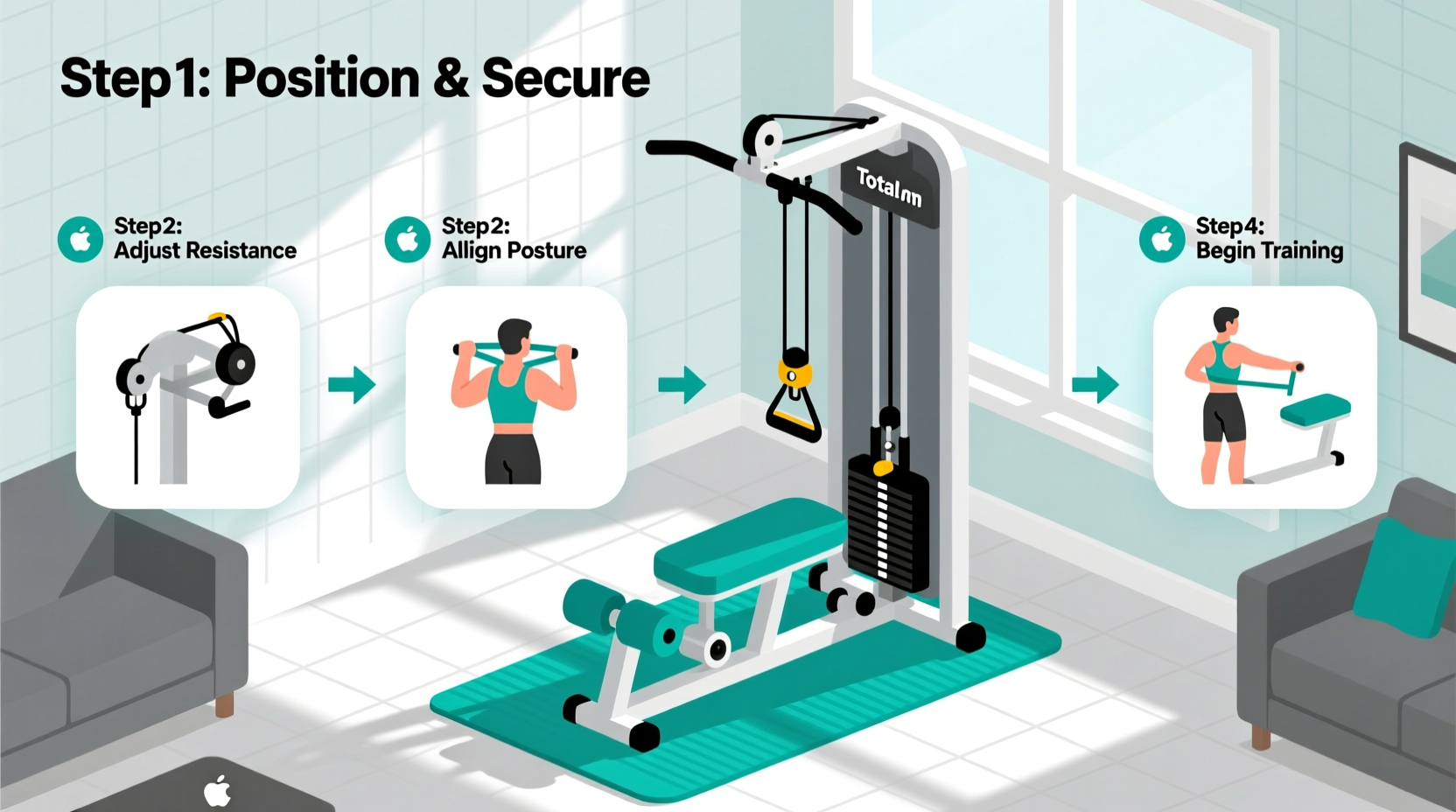
Before assembly begins, lay out all parts in a clear, open area. The Total Gym typically includes the glideboard, rails, pulley system, squat stand, cables, handles, and various attachments depending on the model (e.g., GTS, XLS, Apex). Check your user manual against the included components list to verify nothing is missing.
Common parts include:
- Glideboard with seat pad (on select models)
- Two steel rails with locking pins
- Pulley tower and cable system
- Upper and lower frame supports
- Squat stand and leg pulley attachment
- Ankle cuffs, lat bar, and press-up bars
- Adjustable incline ropes and carabiners
Ensure all hardware—bolts, washers, nuts—is present. Most kits come with tools needed for basic assembly, but having a Phillips head screwdriver and adjustable wrench nearby helps streamline the process.
2. Assemble the Frame Systematically
Follow the manufacturer’s instructions precisely, but here’s a generalized sequence that applies across most Total Gym models:
- Attach the base rails: Connect the two main rails using the crossbar. Secure with provided bolts and tighten fully.
- Install the glideboard rails: Slide the inner rails into the outer base rails. Insert locking pins at both ends to prevent separation.
- Mount the pulley tower: Position the vertical tower at the top end of the glideboard path. Attach it securely using L-brackets and bolts. Double-check alignment so the cable runs straight.
- Add the squat stand: Bolt the U-shaped squat stand to the bottom of the frame. This stabilizes the unit during lower-body exercises like squats and leg presses.
- Thread the cable system: Run the cable from the pulley at the top, down through the handle mechanism, and attach it to the anchor point at the base. Ensure no kinks or twists.
Once assembled, test the glideboard movement. It should slide smoothly along the rails without wobbling. If resistance feels uneven, recheck bolt tightness and rail alignment.
Checklist: Post-Assembly Verification
- All bolts are tightened securely
- Glideboard moves freely without catching
- Cable runs straight and doesn’t fray
- Squat stand is level and stable
- Pulley system operates smoothly under tension
3. Adjust Incline and Resistance Levels
The Total Gym uses body weight and incline angle to modulate resistance—no plates required. Proper adjustment determines how challenging each exercise will be.
To set the incline:
- Locate the yellow or red incline rope near the top of the frame.
- Pull the rope to release the glideboard locking pin.
- Slide the glideboard to your desired level (lower positions = higher resistance).
- Release the rope to lock the board in place.
Incline levels range from 6 (most upright, lightest load) to 1 (most declined, heaviest load). Beginners should start at Level 5 or 6 and gradually progress downward as strength improves.
| Incline Level | Body Weight Resistance | Best For |
|---|---|---|
| 6 | ~20% of body weight | Beginners, rehab, mobility work |
| 4–5 | ~30–45% | General strength, toning |
| 2–3 | ~60–70% | Intermediate strength training |
| 1 | Up to 85% | Advanced users, muscle building |
4. Optimize Your Workout Space and Safety
Your environment plays a crucial role in performance and injury prevention. Even the best equipment fails if used improperly or in a compromised space.
Choose a flat, non-slip surface—avoid carpeted areas unless using a protective mat. Allow at least 3 feet of clearance behind the unit (where the glideboard extends) and 2 feet on each side. Ceiling height matters too; if performing pull-downs or overhead presses, ensure at least 8 feet of clearance.
“Improper setup accounts for over 40% of home gym injuries. Stability, space, and alignment aren’t optional—they’re foundational.” — Dr. Marcus Lin, Physical Therapist & Home Fitness Consultant
Secure the rear stabilizer legs firmly. Some models allow wall anchoring for added stability during intense workouts. If you weigh over 250 lbs or plan high-intensity routines, consider this upgrade.
Mini Case Study: Sarah’s Setup Transformation
Sarah, a 42-year-old teacher, purchased a Total Gym XLS to manage back pain and improve core strength. Initially, she placed it on thick bedroom carpet, causing instability during planks and chest presses. After moving it to a garage concrete floor with an anti-slip mat and adjusting her incline to Level 5, her form improved dramatically. Within six weeks, she reported reduced lower back discomfort and increased endurance. The change wasn’t in effort—but in setup precision.
5. Fine-Tune Attachments and Begin Training
With the frame secure and incline set, attach accessories based on your workout goals:
- Lat pulldown bar: Ideal for upper back and shoulder development. Hook it to the cable via carabiner.
- Ankle cuffs: Use for leg curls, hip abductions, or standing kickbacks. Ensure Velcro straps are snug.
- Press-up bars: Clip onto the glideboard for push-up variations with reduced impact.
- Knee glider pads: Protect joints during abdominal crunches and mountain climbers.
Always inspect attachments before use. Frayed cables or cracked plastic housings must be replaced immediately.
Frequently Asked Questions
Can I assemble the Total Gym alone?
Yes, most models are designed for solo assembly. However, having a second person assist when attaching the pulley tower or aligning rails reduces strain and improves accuracy.
How often should I check the cable and pulleys?
Inspect the cable weekly for fraying or kinks. Wipe pulleys clean monthly with a dry cloth to maintain smooth operation. Replace any worn parts promptly—Total Gym offers replacement kits directly.
Is the Total Gym safe for seniors or those with joint issues?
Absolutely. Its low-impact, adjustable-resistance design makes it ideal for rehabilitation and age-related fitness. Start at higher inclines (Levels 5–6), focus on controlled movements, and consult a healthcare provider before beginning any new program.
Conclusion: Set It Right, Train With Confidence
Setting up your Total Gym isn’t just about putting parts together—it’s about creating a reliable, effective foundation for lasting fitness success. When every bolt is tight, every cable runs true, and every movement feels fluid, your workouts become more productive, enjoyable, and sustainable. You’ve invested in a powerful tool; now empower yourself with the knowledge to use it safely and efficiently.




 浙公网安备
33010002000092号
浙公网安备
33010002000092号 浙B2-20120091-4
Comments
No comments yet. Why don't you start the discussion?