
Filing for disability benefits in Colorado can feel overwhelming, especially when dealing with a medical condition that limits your ability to work. The process involves federal and state-level coordination, strict documentation, and timelines that must be followed precisely. Whether you're applying for Social Security Disability Insurance (SSDI) or Supplemental Security Income (SSI), understanding the steps and requirements increases your chances of approval. This guide walks you through each phase—from initial eligibility checks to post-application follow-up—with practical advice tailored to Colorado residents.
Understanding Disability Benefits in Colorado
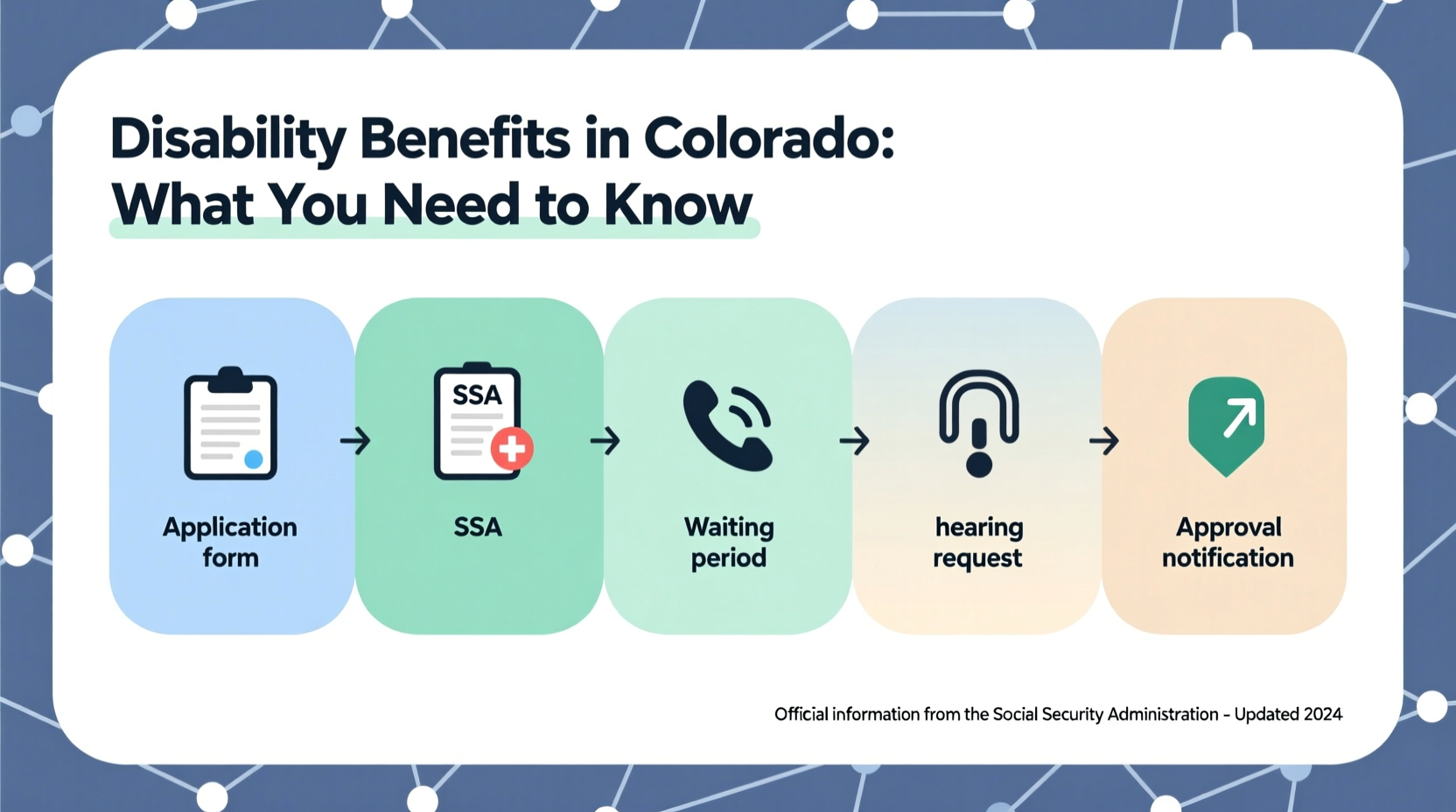
In Colorado, disability benefits are administered through the federal Social Security Administration (SSA), not the state government. However, local offices and state agencies assist with processing claims and providing support services. The two main programs are:
- SSDI (Social Security Disability Insurance): For individuals who have worked and paid into Social Security but can no longer work due to a disability.
- SSI (Supplemental Security Income): For low-income individuals with limited resources who have either never worked or haven’t earned enough work credits.
To qualify under either program, the SSA uses a strict definition of disability: your condition must prevent you from doing substantial gainful activity (SGA), is expected to last at least 12 months, or result in death. It does not cover partial or short-term disabilities.
“The key to a successful disability claim isn’t just having a serious condition—it’s proving how it stops you from working.” — James R. Thompson, Disability Advocacy Counsel, Denver Legal Aid Society
Step-by-Step Filing Process in Colorado
Filing for disability in Colorado follows a national process, but local resources can make a difference. Here's how to proceed:
- Determine Your Eligibility
Review your work history (for SSDI) or income/assets (for SSI). SSDI typically requires 40 work credits, with 20 earned in the last 10 years. SSI has no work requirement but strict financial limits. - Gather Medical Documentation
Collect records from all treating physicians, hospitals, therapists, and clinics. Include diagnoses, treatment plans, lab results, imaging reports, and notes on functional limitations. - Complete the Initial Application
You can apply online at ssa.gov, by phone (1-800-772-1213), or in person at a local Social Security office. Colorado has field offices in Denver, Colorado Springs, Fort Collins, Grand Junction, and Pueblo. - Submit Work History Details
List all jobs held in the past 15 years, including duties, hours per week, and physical demands. This helps the SSA assess whether you can return to past work or adjust to other employment. - Wait for a Decision
The average processing time in Colorado is 3–6 months. You’ll receive a letter explaining the outcome—approval, denial, or request for additional information.
Required Documents Checklist
Having complete documentation speeds up your application. Use this checklist before submitting:
- Proof of identity (birth certificate, driver’s license, or passport)
- Social Security number
- Medical records (at least 6–12 months of treatment history)
- Medication list and side effects
- Names and contact info of all healthcare providers
- W-2 forms or tax returns (to verify work history for SSDI)
- Bank statements and proof of income (for SSI applicants)
- Discharge papers (if applicable, for veterans)
What Happens After You Apply?
Once submitted, your application goes to Disability Determination Services (DDS) in Colorado, located in Lakewood. A disability examiner reviews your file and may consult a medical professional for an opinion. In some cases, they’ll request a Consultative Examination (CE)—a one-time evaluation paid by the SSA.
If more information is needed, you’ll be contacted. Respond promptly to avoid delays or denials. Most initial applications are denied—about 65% statewide—but you have the right to appeal.
| Appeal Level | Deadline | Key Details |
|---|---|---|
| Reconsideration | 60 days from denial | A fresh review by a different examiner; new evidence accepted |
| Hearing by Administrative Law Judge | 60 days after reconsideration denial | In-person or video hearing; representation recommended |
| Appeals Council Review | 60 days after hearing decision | Challenges legal errors; rarely grants full reversals |
| Federal Court | 60 days after Appeals Council decision | Last resort; requires legal counsel |
Real Example: Maria’s Successful Claim in Aurora
Maria G., a 52-year-old home health aide from Aurora, developed severe rheumatoid arthritis that left her unable to stand for more than 20 minutes or lift over 10 pounds. She applied for SSDI after her doctor took her off work. Her initial claim was denied because the SSA said she could do “light” work.
With help from a local nonprofit, Maria appealed and submitted a detailed Residual Functional Capacity (RFC) form completed by her rheumatologist. The form outlined her inability to walk, sit, or use her hands consistently. At her hearing, the judge reviewed the RFC and approved her claim. She began receiving benefits six months later, retroactive to her date of disability.
Maria’s case highlights the importance of strong medical evidence and persistence through appeals.
Common Mistakes to Avoid
Many claims fail not because of ineligibility, but due to preventable errors:
- Not continuing treatment: Stopping medical care gives the SSA reason to doubt the severity of your condition.
- Failing to appeal: Over half of denied applicants don’t appeal, missing their best chance at approval.
- Underestimating symptom impact: Simply listing a diagnosis isn’t enough—you must show how it limits daily activities and work functions.
- Missing deadlines: Appeal windows are strict. Mark them on your calendar immediately.
Frequently Asked Questions
Can I work while applying for disability in Colorado?
You can engage in limited work, but earnings must stay below the Substantial Gainful Activity (SGA) threshold—$1,550/month in 2024 for non-blind individuals. Exceeding this limit may disqualify you.
How long does it take to get approved?
The initial decision takes 3–6 months. If you appeal, the full process—including a hearing—can take 12–18 months. Approval rates increase significantly at the hearing level.
Do I need a lawyer to file?
No, but representation improves outcomes. Lawyers specializing in disability law often work on contingency—no fee unless you win. Many offer free consultations. In Colorado, organizations like Colorado Legal Services and private advocates provide affordable options.
Conclusion: Take Action Now
Filing for disability in Colorado is a complex but navigable process. Success depends on accurate documentation, timely submissions, and persistence through appeals. Don’t let an initial denial discourage you—most approvals happen after reconsideration or at a hearing. Start gathering your medical records today, apply as early as possible, and consider reaching out to a local advocacy group or attorney for support. Your financial stability and access to healthcare may depend on taking these steps now.




 浙公网安备
33010002000092号
浙公网安备
33010002000092号 浙B2-20120091-4
Comments
No comments yet. Why don't you start the discussion?