
In an era where streaming, video calls, and real-time navigation are part of daily life, a stable 4G connection isn’t just convenient—it’s essential. If you’re using More Mobile, a brand that operates on the robust Vodafone UK network, you already have access to strong 4G coverage across most of the country. But having access doesn’t always mean you’re actually connected. Many users unknowingly run on 3G or experience weak signal strength due to incorrect settings, outdated devices, or poor placement. This guide walks you through every practical step to ensure your phone is actively using 4G on More Mobile, maximizing speed and reliability.
Why 4G Matters with More Mobile
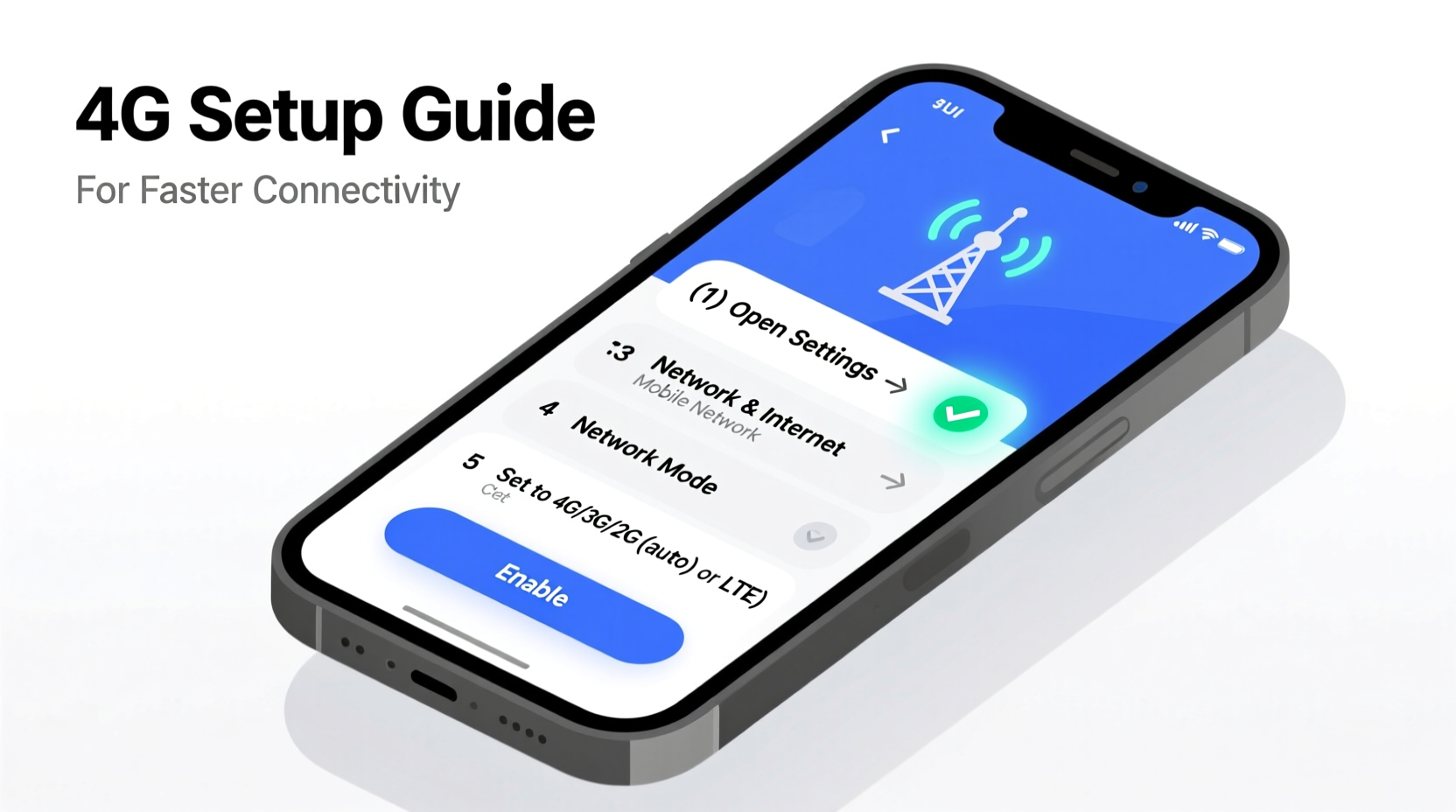
More Mobile leverages Vodafone’s nationwide 4G infrastructure, offering speeds up to 10 times faster than 3G. With true 4G, you’ll notice quicker web page loading, seamless HD video streaming, and smoother app performance. However, simply inserting a More Mobile SIM doesn’t guarantee automatic 4G activation. Your device must support 4G, be correctly configured, and located within a coverage zone. Even minor missteps in setup can downgrade your experience to slower networks.
“Over 60% of mobile users assume their phone is on 4G when it’s actually stuck on 3G due to misconfigured network settings.” — James Reed, Senior Network Engineer at UK Telecom Watch
Step-by-Step Guide to Activate 4G on Your Phone
Follow this structured process to ensure your device is optimized for 4G connectivity with More Mobile. These steps apply to both Android and iOS devices.
- Verify Your Device Supports 4G
Check your phone’s specifications online. Most smartphones released after 2015 support 4G LTE. Look for terms like “LTE,” “4G,” or “VoLTE” in the network section of the specs. - Insert Your More Mobile SIM Correctly
Ensure the SIM card is properly seated in the tray. Use the correct size (nano, micro, or standard). A poorly inserted SIM may prevent full network functionality. - Enable Mobile Data and 4G/LTE
- Android: Go to Settings > Network & Internet > Mobile Network > Preferred Network Type > Select “LTE/3G/2G” or “LTE only.”
- iOS: Go to Settings > Cellular > Cellular Data Options > Voice & Data > Choose “LTE” or “Enable 4G.”
- Check APN Settings for More Mobile
Incorrect Access Point Names (APNs) can block 4G access. Configure the following:- Name: More Mobile
- APN: internet
- Username: left blank
- Password: left blank
- Authentication type: None
- APN protocol: IPv4/IPv6
- APN roaming protocol: IPv4/IPv6
- Bearer: Unspecified
To set this manually: Android – Settings > SIM Cards & Mobile Networks > Access Point Names > Add new APN. iOS – You may need a configuration profile from More Mobile’s website.
- Restart Your Phone
After changes, restart your device to re-register on the network. This forces a fresh connection handshake with the nearest 4G tower. - Confirm 4G Signal Icon
Look for “4G,” “LTE,” or “HD” (for VoLTE) in the status bar. Avoid confusion with “E” (Edge) or “3G,” which indicate slower connections.
Optimizing Your 4G Experience: Do’s and Don’ts
Even with proper setup, environmental and technical factors can degrade performance. Use this table to avoid common pitfalls and enhance your connection stability.
| Do’s | Don’ts |
|---|---|
| Keep your phone updated with the latest OS and carrier settings | Ignore software updates—they often include network optimizations |
| Use Wi-Fi calling when indoors with weak signal but good broadband | Assume full bars mean fast speeds—congestion affects performance |
| Enable VoLTE (Voice over LTE) for clearer calls and faster call setup | Place your phone in metal cases or thick wallets that block signals |
| Periodically toggle Airplane mode to refresh network registration | Run multiple high-bandwidth apps simultaneously on limited data plans |
Real-World Example: Fixing 4G Issues in a Rural Area
Sarah, a freelance graphic designer living in rural Northumberland, switched to More Mobile for its competitive pricing and Vodafone network access. Despite being within a listed 4G zone, her phone consistently showed only 3G. After checking forums, she realized her older Samsung Galaxy A50 had reverted to “3G Only” mode after a software update. She followed the steps above: verified 4G compatibility, corrected APN settings, and changed her preferred network type. Within minutes, her phone displayed “4G,” and her average download speed jumped from 3 Mbps to 18 Mbps—enough to upload client files without delays. She now keeps a note of the APN settings in her cloud notes for future reference.
Troubleshooting Persistent 4G Problems
If you’ve followed all steps and still lack 4G, consider these advanced checks:
- Test in Another Location: Walk outside or near a window. Thick walls and basements often block signals.
- Try the SIM in Another 4G Phone: Isolate whether the issue is device-specific or account-related.
- Contact More Mobile Support: Call 333 from your More Mobile phone or use their online chat. Request a network refresh on their end.
- Check for Network Outages: Visit downdetector.co.uk and search for “More Mobile” or “Vodafone UK” to see if others report issues in your area.
- Update Carrier Settings: On iPhone, go to Settings > General > About. If an update is available, a prompt will appear. Android users should check under System Updates or contact the manufacturer.
Frequently Asked Questions
Can I get 4G without enabling data?
No. 4G is a data network standard. Even voice calls over 4G (VoLTE) require active data connectivity. However, minimal data is used during calls, so it won’t significantly impact your allowance.
Why does my phone show 4G but feel slow?
Signal strength (measured in dBm) and network congestion affect actual speeds. During peak hours, even 4G can slow down. Try moving locations or using Wi-Fi offloading. Also, ensure background apps aren’t consuming bandwidth.
Is 5G available on More Mobile?
As of 2024, More Mobile does not offer 5G. It relies on Vodafone’s 4G network exclusively. While some Vodafone customers have 5G access, MVNOs like More Mobile have not yet rolled out 5G services.
Final Checklist Before You Go
Before assuming your 4G isn’t working, run through this quick verification list:
- ✅ SIM card is activated and properly inserted
- ✅ Mobile data is turned on
- ✅ Preferred network type includes LTE or 4G
- ✅ APN is set to “internet” for More Mobile
- ✅ Phone has restarted after configuration
- ✅ “4G” or “LTE” icon appears in the status bar
- ✅ No physical obstructions (e.g., elevator, basement)
Conclusion: Take Control of Your Connectivity
Getting consistent 4G on your phone with More Mobile isn’t magic—it’s methodical. From verifying hardware compatibility to fine-tuning network settings, each step builds toward a faster, more reliable mobile experience. The difference between buffering and smooth streaming, between dropped calls and crystal-clear conversations, often comes down to a single overlooked setting. Now that you know how to unlock your phone’s full potential, don’t settle for subpar connectivity. Apply these steps today, test your speed, and enjoy the internet as it was meant to be experienced.




 浙公网安备
33010002000092号
浙公网安备
33010002000092号 浙B2-20120091-4
Comments
No comments yet. Why don't you start the discussion?