
Losing your car keys—or having them stolen—can be stressful, especially when you own an older vehicle like a 2005 model. Unlike modern cars with digital key fobs and seamless reprogramming, vehicles from this era often lack straightforward replacement options if the original key is missing. However, it’s entirely possible to get a new key made without the original, provided you follow the right steps and understand the technology involved.
Most 2005 vehicles fall into a transitional period between mechanical-only keys and early transponder-equipped systems. Some models already used chip-based keys that require programming, while others still relied on basic metal cuts. Knowing which category your car falls into is the first step toward a successful key replacement.
Understanding Your 2005 Car Key Type
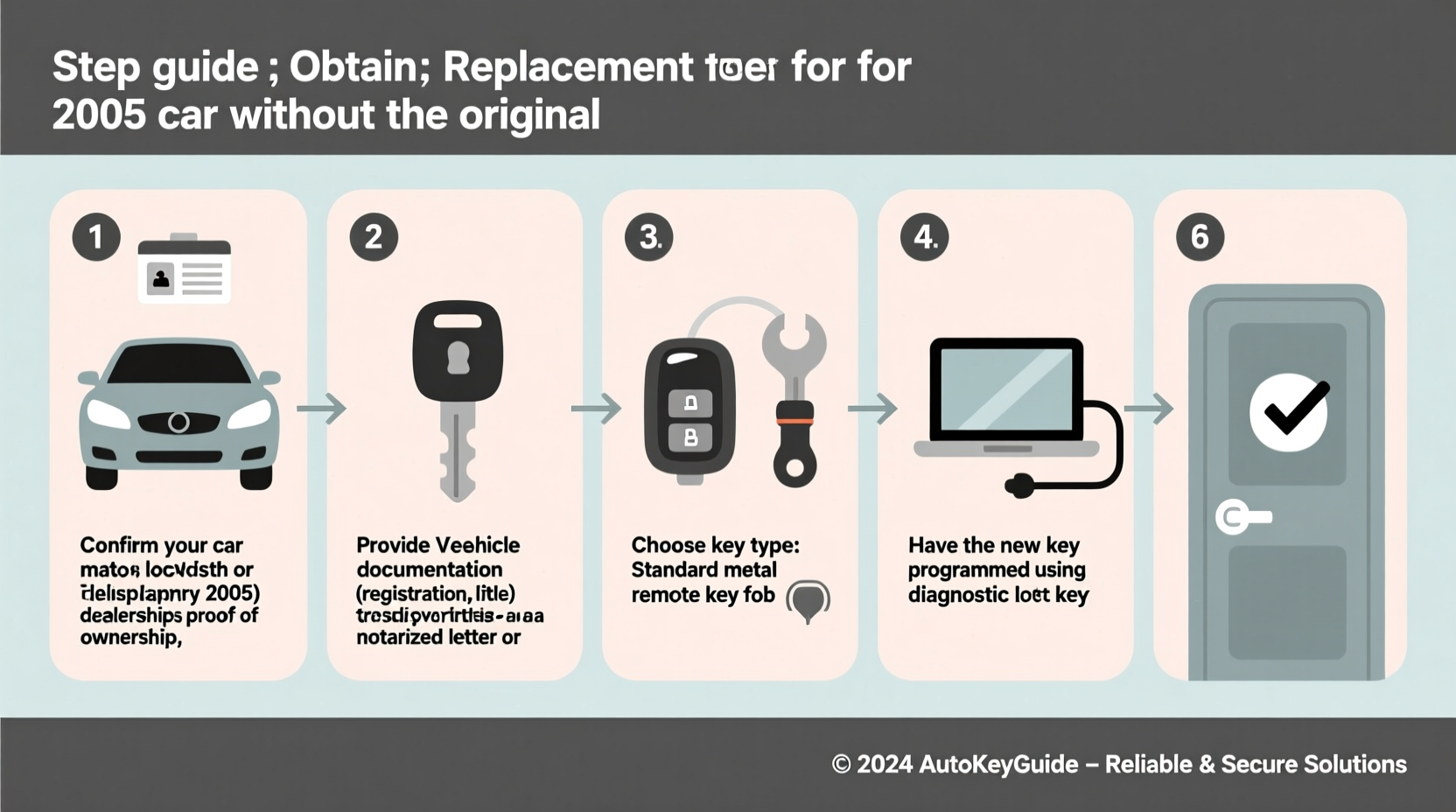
Before attempting to replace your key, identify whether your 2005 vehicle uses a standard metal key or a transponder key. This distinction affects cost, complexity, and available solutions.
- Non-transponder (mechanical-only) keys: These are simple metal keys without embedded chips. They rely solely on the physical cut to turn the ignition. Common in base trims or certain brands like older Hondas or Toyotas.
- Transponder keys: These contain a small RFID chip that communicates with the car’s immobilizer system. Without proper programming, the engine won’t start—even if the key turns in the lock. Most mid-to-high-end 2005 models (e.g., Ford, GM, Chrysler, BMW) use these.
To determine your key type, check for a plastic head on the key—if present, it likely houses a transponder chip. You can also consult your owner’s manual or search online using your vehicle make, model, and year.
Step-by-Step Guide to Replacing Your Lost Key
Follow this structured process to obtain a functional replacement key—even without the original.
- Gather essential information: Collect your Vehicle Identification Number (VIN), proof of ownership (registration, insurance, or title), and personal ID. The VIN is typically located on the driver’s side dashboard near the windshield or on registration documents.
- Contact your dealership: Call the service or parts department of your car’s manufacturer. Provide the VIN and request a key replacement quote. Dealerships have access to factory key codes and can cut and program keys correctly.
- Check for existing key codes: Some manufacturers stored key codes in their databases based on VIN. For example, Ford and GM often retained these records. Ask the dealer if they can retrieve the original key code—this makes duplication faster and cheaper.
- Hire a professional locksmith: Mobile automotive locksmiths can often duplicate and program keys on-site. Ensure they have experience with 2005-era vehicles and carry OEM-compatible equipment for programming transponder chips.
- Verify functionality: Test the new key in all locks (doors, trunk, ignition) and ensure the engine starts and runs without stalling. If it stalls, reprogramming may be needed.
Dealership vs. Locksmith: What’s Best?
Both dealerships and locksmiths can help, but each has pros and cons depending on your priorities.
| Factor | Dealership | Locksmith |
|---|---|---|
| Cost | $150–$300+ (higher due to labor & overhead) | $80–$200 (often more affordable) |
| Speed | May require appointment; same-day not guaranteed | Often same-day or emergency service available |
| Programming Accuracy | Uses factory tools; highest reliability | Varies by technician skill and equipment |
| Convenience | You go to them | They come to you (mobile service) |
| Key Code Access | Direct database access via VIN | May need physical lock decoding |
“With pre-2008 vehicles, timing is critical. The longer you wait to replace a lost key, the higher the risk of being stranded. Immediate action saves time and stress.” — Carlos Mendez, Certified Automotive Locksmith
Real Example: Recovering Access to a 2005 Honda Accord
Jamie locked her keys inside her 2005 Honda Accord at a grocery store parking lot. With no spare available and the original lost, she faced a dilemma. She called a local locksmith who arrived within 30 minutes. Using the VIN and a code lookup service, the technician determined the correct key blank (Honda H73). Since the 2005 Accord uses a non-transponder key in many trims, no programming was needed. The locksmith cut the key on-site using the door lock as a reference and gained entry through a slim jim tool. Total cost: $95. Jamie drove home with two new keys cut and ready.
This case illustrates how knowing your vehicle’s key type and acting quickly can lead to a fast, low-cost resolution—even without the original key.
Essential Checklist for Key Replacement
Use this checklist to ensure you cover every necessary step when replacing your lost key:
- ✅ Confirm your car’s key type (transponder or mechanical)
- ✅ Locate your VIN and ownership documents
- ✅ Contact the dealership to check for stored key codes
- ✅ Decide between dealership or locksmith service
- ✅ Verify that the new key starts the car and operates all locks
- ✅ Request at least two new keys to avoid future issues
- ✅ Store one key securely at home or with a trusted contact
Frequently Asked Questions
Can I get a key made just using the VIN?
Yes, in most cases. Dealerships and many locksmiths can use the VIN to look up the original key code, especially for vehicles manufactured after 1990. However, some brands (like older Mazda or Nissan models) may not have stored codes by VIN, requiring physical lock decoding instead.
Do all 2005 cars have transponder keys?
No. While many 2005 vehicles—especially from American and European manufacturers—used transponder keys, several Japanese models (such as base-trim Toyota Corollas or Honda Civics) still used non-chipped keys. Always verify your specific model before assuming programming is required.
How long does it take to get a new key made?
Time varies. At a dealership, it may take 1–2 hours if parts are in stock. A skilled locksmith can often complete the job in 30–60 minutes on-site. Delays occur if special key blanks must be ordered or if programming multiple keys is needed.
Pro Tips for Long-Term Key Management
Once you’ve resolved the immediate issue, take steps to prevent future lockouts or key loss.
Keep a spare key in a secure location away from your car, such as at work or with a family member. Consider upgrading to a waterproof magnetic key box for outdoor storage if needed. Also, write down your VIN and keep it separate from your wallet—ideally in your phone notes or a secure digital vault.
Conclusion
Losing your only car key doesn’t mean you’re permanently locked out. With the right approach, a 2005 vehicle can have a new key made efficiently and affordably—even without the original. Whether you choose a dealership or a qualified locksmith, preparation and accurate information are your best allies. By understanding your car’s key system, leveraging your VIN, and acting promptly, you regain control and avoid costly towing or replacement services.




 浙公网安备
33010002000092号
浙公网安备
33010002000092号 浙B2-20120091-4
Comments
No comments yet. Why don't you start the discussion?