
Losing your car’s title is more common than you might think. Whether it was misplaced during a move, damaged in a flood, or simply never received after paying off a loan, a missing title can delay sales, transfers, or registration renewals. The good news? Replacing it doesn’t have to be complicated. With the right preparation and knowledge of your state’s requirements, you can obtain a duplicate title efficiently—often within days. This guide walks you through every essential step, from gathering documents to submitting your application, so you can resolve the issue with confidence and minimal hassle.
Why You Might Need a Replacement Title
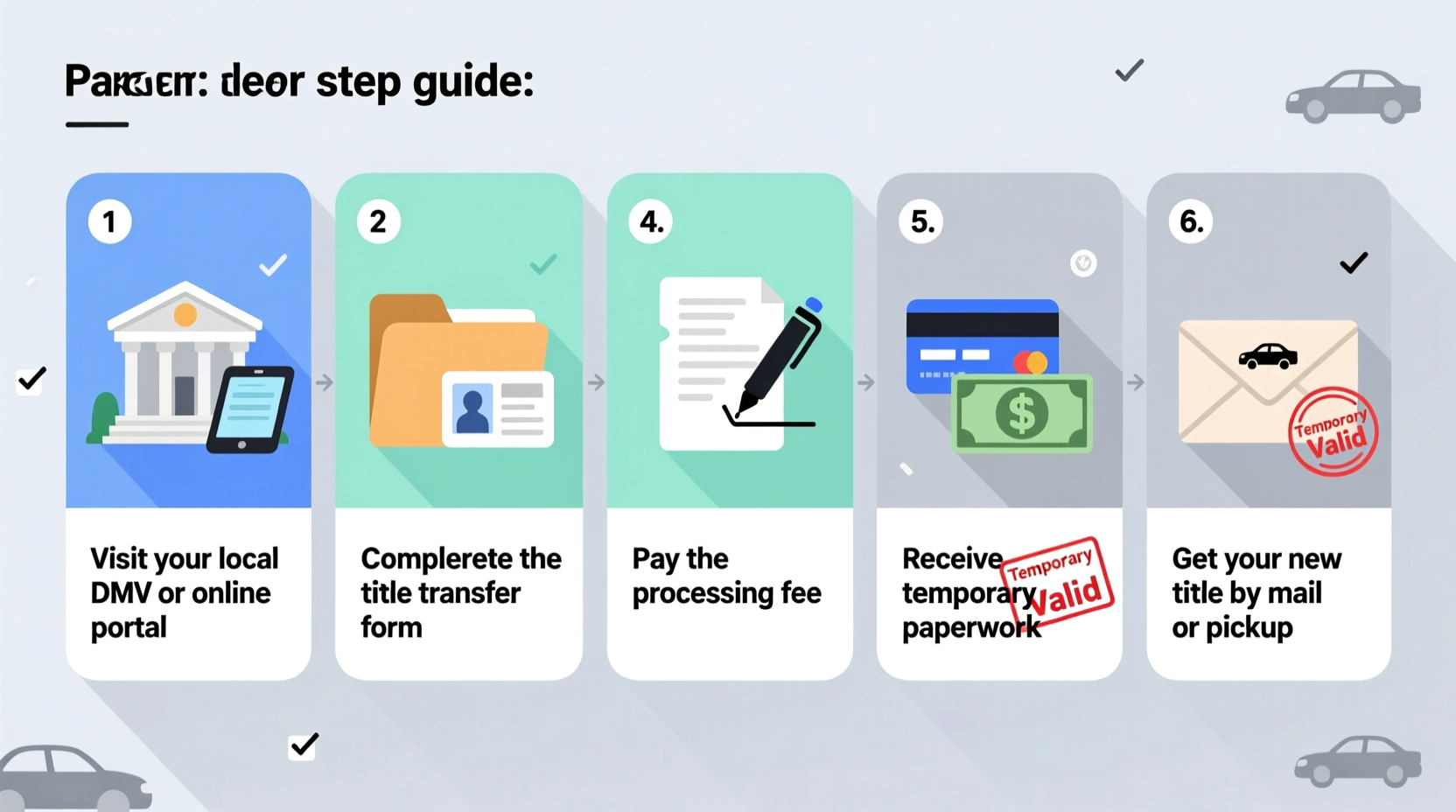
A vehicle title is the legal proof of ownership. Without it, you can’t sell, trade, or register your car in many states. Common reasons for needing a replacement include:
- The original title was lost, stolen, or destroyed
- You recently paid off a loan and the lien has been released, but the title wasn’t forwarded
- You inherited a vehicle and the previous owner’s title is missing
- The title contains errors that make it invalid
- You’re preparing to sell your car and can’t locate the title
Whatever the reason, acting promptly ensures you maintain full control over your vehicle and avoid complications down the road.
Step-by-Step Process to Obtain a Replacement Title
While specific procedures vary slightly by state, the general process follows a consistent pattern. Follow these steps to ensure a smooth experience.
- Determine Your State’s Requirements
Each state’s Department of Motor Vehicles (DMV) or equivalent agency sets its own rules. Visit your state’s official DMV website to confirm whether you can apply online, by mail, or only in person. - Gather Required Documents
Commonly needed items include:- Valid government-issued photo ID (driver’s license, state ID)
- VIN (Vehicle Identification Number), typically found on the dashboard or registration card
- Proof of insurance (in some states)
- Current vehicle registration
- Completed application form for duplicate title (Form REG 227 in California, MV-902 in New York, etc.)
- Check for Liens
If there’s an active lien on the vehicle, the lienholder must release their claim before you can receive a clean title. Request a lien release letter if applicable. - Complete the Application Form
Fill out the duplicate title request form accurately. Mistakes can cause processing delays. Some states require notarization, especially if applying by mail. - Pay the Required Fee
Replacement title fees range from $2 to $50 depending on the state. Most accept credit cards, checks, or money orders. Confirm accepted payment methods before submitting. - Submit Your Application
Choose your preferred submission method:- In-person: Fastest option; allows immediate verification and same-day processing in some cases.
- By mail: Include copies (not originals unless required) and send via certified mail for tracking.
- Online: Available in states like Texas, Florida, and Colorado—convenient and often faster.
- Wait for Processing
Turnaround time varies: 3–7 business days is typical, though some states offer expedited service for an additional fee.
State-by-State Comparison: Key Differences
To help you understand variations in the process, here’s a quick reference table highlighting policies in five major states.
| State | Online Option? | Processing Time | Fee | Notarization Required? |
|---|---|---|---|---|
| California | Yes (with account) | 7–14 days | $23 | No |
| Texas | Yes | 3–5 days | $6.75 | No |
| New York | No | 4–6 weeks | $20 | Yes (if mailing) |
| Florida | Yes | 7–10 days | $77.25 | No |
| Colorado | Yes | 3–5 days | $8.25 | No |
Always verify details directly with your local motor vehicle agency, as policies change frequently.
Common Pitfalls to Avoid
Mistakes during the replacement process can lead to rejection or extended wait times. Steer clear of these frequent errors:
- Submitting incomplete forms: Double-check all fields, including VIN, license plate number, and owner name spelling.
- Using outdated forms: Download the latest version from your state’s DMV site—do not rely on third-party templates.
- Sending original documents unnecessarily: Unless explicitly required, photocopies are sufficient.
- Ignoring lienholder requirements: If your loan isn’t fully paid, the lienholder must authorize the release.
- Missing deadlines for notarization: Some states require signatures to be notarized within a certain timeframe.
“Many people panic when they lose a title, but the replacement process is designed to be straightforward—as long as you follow the correct steps.” — Mark Reynolds, DMV Field Supervisor, Virginia Division of Motor Vehicles
Real Example: How Sarah Replaced Her Title in One Week
Sarah from Austin, Texas, planned to sell her 2015 Honda Accord but couldn’t find the title after moving apartments. She visited the Texas DMV website and discovered she could apply online through the TxDMV portal. She logged in using her driver’s license number, located her vehicle by VIN, and submitted a duplicate title request with a $6.75 fee paid via credit card. Within four days, a new title arrived by mail. She signed it over to the buyer immediately, closing the sale without delay.
Sarah’s experience shows how digital access and accurate information can turn a potentially stressful situation into a seamless transaction.
Frequently Asked Questions
Can I get a duplicate title the same day?
Yes, in many states—if you apply in person at a full-service DMV office. Bring all required documents and expect to pay a small expedited service fee in some locations.
What if my car has a lien but I’ve paid it off?
Contact your lender to confirm they’ve filed a lien release with the state. If not, request a “satisfaction of lien” document and submit it with your title application.
Can someone else apply for a replacement title on my behalf?
Generally, yes—but they’ll need a notarized power of attorney or authorization letter, along with their own photo ID. Check your state’s rules before delegating this task.
Essential Checklist for a Smooth Replacement
Use this checklist to prepare and submit your duplicate title application without delays:
- ✅ Confirm whether your state offers online, mail, or in-person applications
- ✅ Locate your vehicle’s VIN and current registration
- ✅ Verify if there are any outstanding liens
- ✅ Download the correct duplicate title application form
- ✅ Gather valid photo ID and proof of insurance (if required)
- ✅ Complete the form accurately and sign where necessary
- ✅ Pay the required fee using an accepted method
- ✅ Submit your application via your preferred channel
- ✅ Track delivery if mailing, or check online status if applied digitally
Final Steps and Moving Forward
Once you receive your replacement title, store it in a safe place—such as a fireproof home safe or locked filing cabinet. Consider keeping a digital copy encrypted on a personal drive or cloud storage with strong password protection.
If you plan to sell or transfer the vehicle soon, having a clean, valid title streamlines the process significantly. Buyers are more confident purchasing from owners who can provide immediate proof of ownership, which may even strengthen your negotiating position.
Take Action Today
Don’t let a missing title stall your plans. Whether you're selling, transferring, or just want peace of mind, replacing your car’s title is a manageable task when approached methodically. By following the steps outlined here, avoiding common mistakes, and using available resources, you can regain full ownership documentation quickly and legally. Start by visiting your state’s DMV website today—your replacement title could be just days away.




 浙公网安备
33010002000092号
浙公网安备
33010002000092号 浙B2-20120091-4
Comments
No comments yet. Why don't you start the discussion?