
Bringing a new kitten into a home with existing cats can be both exciting and stressful—for the humans and the felines alike. While kittens often seem adaptable, resident cats may perceive them as intruders, leading to tension, aggression, or prolonged anxiety. A rushed introduction can set back bonding by weeks or even months. The key to success lies not in speed but in patience, structure, and respect for feline communication.
Cats are territorial by nature. Their sense of safety depends on predictable environments and established hierarchies. Introducing a new scent, sound, and presence disrupts that balance. However, with a methodical approach, most cats can learn to tolerate—and sometimes even enjoy—the company of a new feline housemate. This guide outlines a proven, veterinarian-backed process to ensure a smooth transition and minimize conflict.
Understanding Feline Social Dynamics
Cats don’t form social groups like dogs. In the wild, adult cats are largely solitary, only interacting during mating or when mothers raise kittens. Even in multi-cat households, relationships are often based on tolerance rather than affection. Misinterpreting this behavior can lead owners to expect instant friendship, setting unrealistic expectations.
Signs of stress in cats include hiding, excessive grooming, urination outside the litter box, vocalization, and aggression. These behaviors are not “acting out” but signals of discomfort. A successful introduction prioritizes reducing stress over forcing interaction.
“Cats communicate through scent, body language, and subtle cues. Ignoring these signals during introductions is the most common reason for failed integrations.” — Dr. Lena Patel, Feline Behavior Specialist, American Association of Feline Practitioners
The 7-Stage Introduction Timeline
Rushing past any stage risks setbacks. Each phase should last as long as needed—anywhere from a few days to several weeks—depending on your cats’ reactions. Monitor body language closely: flattened ears, hissing, tail flicking, and dilated pupils indicate fear or aggression. Relaxed postures, slow blinking, and curiosity suggest progress.
- Preparation Phase (Before Arrival): Designate a separate room for the kitten with food, water, litter box, toys, and a hiding spot. This becomes their safe zone. Use baby gates or cracked doors later for visual access.
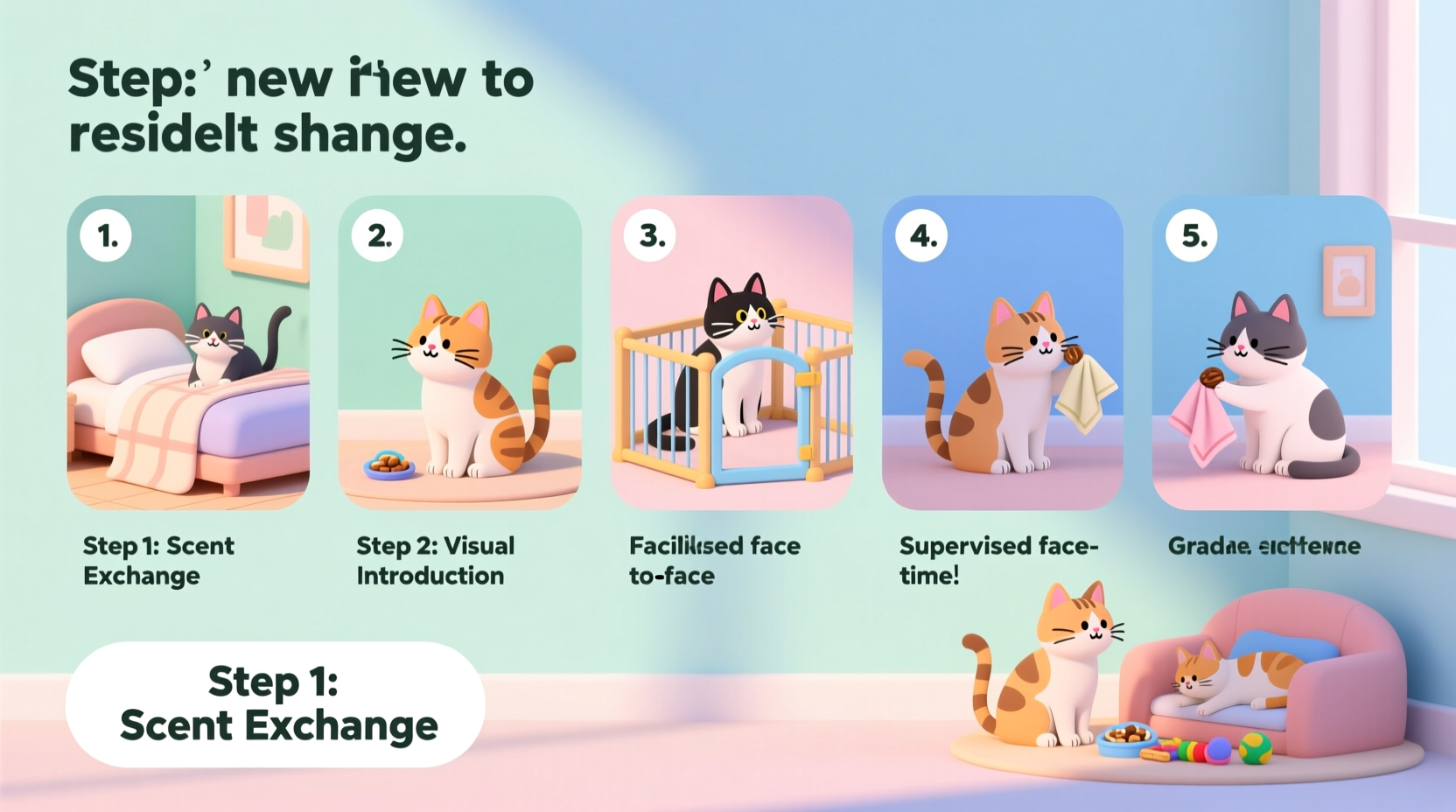
- Scent Swapping (Days 1–3): Exchange bedding between the kitten and resident cat(s). Rub each cat with a soft cloth and place it near the other’s sleeping area. This familiarizes them with each other’s scent without direct contact.
- Controlled Visual Access (Days 4–7): Allow the cats to see each other through a baby gate or cracked door. Feed them on opposite sides to create positive associations with meals. Keep sessions short and calm.
- Supervised Face-to-Face Meetings (Week 2): Begin brief, leashed or barrier-separated interactions. Use distraction techniques like toys or treats. End before tension arises. Never force interaction.
- Gradual Free Roaming (Week 3): Allow short periods of unsupervised time together only if previous stages went smoothly. Ensure escape routes and vertical spaces (cat trees, shelves) are available.
- Nighttime Integration (Week 4+): Let the kitten stay in the main living area overnight only after daytime cohabitation is peaceful. Continue monitoring sleep and litter habits.
- Full Integration (Week 6–8): Once consistent harmony is observed, consider the introduction complete. Ongoing vigilance is still important during high-stress events (e.g., vet visits, guests).
Essential Supplies Checklist
Having the right tools ready prevents last-minute scrambling and supports a structured process. Prepare these items before bringing the kitten home:
- Dedicated room with door (e.g., spare bedroom, bathroom)
- Second set of food and water bowls
- Additional litter box (one per cat plus one extra)
- Feliway or similar synthetic pheromone diffuser
- Scratching posts and vertical spaces in shared areas
- Toys for both cats (avoid competition over favorites)
- Soft cloths for scent swapping
- Baby gate or mesh barrier for controlled viewing
- Treats for positive reinforcement during supervised meetings
Do’s and Don’ts During Introduction
| Do’s | Don’ts |
|---|---|
| Maintain separate resources (litter, food, resting spots) even after integration | Force physical contact or “playdates” before cats are ready |
| Feed cats on opposite sides of a closed door to build positive associations | Allow chasing or cornering without immediate intervention |
| Use treats and praise when cats remain calm near each other | Punish hissing or swatting—it increases fear and delays trust |
| Provide vertical territory (shelves, cat trees) to reduce confrontations | Ignore signs of stress like hiding or over-grooming |
| Keep the kitten’s vaccinations and parasite treatments up to date | Assume kittens are always welcomed by adult cats—they aren’t |
Real-Life Example: Bella and Milo’s Successful Integration
Sarah adopted a 10-week-old kitten named Milo while living with Bella, a 4-year-old rescue cat with a cautious personality. On day one, Sarah set up a guest room with everything Milo needed. She swapped blankets nightly and used Feliway in both rooms. By day five, Bella sniffed Milo’s blanket without growling—a small but promising sign.
During controlled visual access, Sarah fed both cats near the cracked door. At first, Bella stayed hidden, but by day ten, she ate within sight of Milo. Supervised meetings began with Milo in a carrier; Bella approached cautiously. Sarah rewarded calm behavior with tuna treats.
Two weeks in, they had brief play sessions with wand toys separating them. By week six, Milo was allowed in the living room under supervision. Bella initially avoided him, but soon began grooming near him. After eight weeks, they were sharing naps on the same couch.
“I thought they’d never get along,” Sarah said. “But taking it slow made all the difference. Now they chase each other like siblings.”
When Things Go Off Track: Troubleshooting Common Issues
Not every introduction proceeds smoothly. Here’s how to handle frequent challenges:
- Persistent Hissing or Growling: Return to an earlier stage. Extend scent swapping and feeding near the door. Avoid progressing until hissing stops consistently.
- Chasing or Ambushing: Interrupt with a loud clap or air horn (not directed at the cat), then separate them. Increase vertical space and hiding spots to prevent ambushes.
- Litter Box Avoidance: Ensure multiple boxes are available in different locations. Clean them daily. Stress-related elimination often resolves once cats adjust.
- Over-Grooming or Hiding: These are signs of chronic stress. Consult your vet and consider anti-anxiety supplements or medication if behavioral strategies stall.
- One-Sided Aggression: If the resident cat is consistently aggressive despite slow introduction, consult a certified feline behaviorist. Underlying medical issues (e.g., pain, hyperthyroidism) should also be ruled out.
“Patience isn’t optional in cat introductions—it’s the foundation. I’ve seen cats take three months to coexist peacefully, but with consistency, most succeed.” — Dr. James Wu, Veterinary Behaviorist, Cornell Feline Health Center
Frequently Asked Questions
How long does it usually take for cats to get along?
There’s no fixed timeline. Some cats begin tolerating each other in two weeks; others take three to four months. Factors include age, temperament, past experiences, and household layout. Focus on gradual progress, not speed.
Should I let the cats fight it out?
No. Unsupervised fights can cause injury and deepen hostility. Cats rarely “work it out” on their own. Intervention and structured reintroduction are necessary to rebuild trust.
Can I speed up the process if my cats seem curious?
Curiosity doesn’t equal readiness. Even friendly interest should be managed carefully. Rushing can trigger defensive aggression. Stick to the stages—even if progress seems fast—to ensure lasting harmony.
Final Thoughts: Building Peace One Step at a Time
Introducing a new kitten to resident cats isn’t about avoiding conflict at all costs—it’s about managing change in a way that respects feline instincts. Success isn’t measured by cuddles or play, but by the absence of stress and the presence of coexistence. Every sniff, every shared glance, every meal eaten in proximity is a victory.
The effort you invest in the early weeks pays dividends for years. A well-managed introduction reduces long-term anxiety, prevents behavioral problems, and fosters a more harmonious home. It’s easy to underestimate the emotional weight of scent, space, and routine—but for cats, these are everything.
By following this step-by-step method, using the right tools, and listening to your cats’ signals, you’re not just adding a pet—you’re building a feline family.




 浙公网安备
33010002000092号
浙公网安备
33010002000092号 浙B2-20120091-4
Comments
No comments yet. Why don't you start the discussion?