
Layering necklaces is one of the most expressive ways to elevate an outfit. When done right, it adds depth, texture, and personality to your style. But anyone who has tried it knows the frustration: within minutes, delicate chains twist, knot, and tangle into an unmanageable mess. The good news? With the right approach, you can achieve stunning layered looks while keeping your jewelry intact and tangle-free. This guide walks you through every stage—from selecting pieces to daily wear and long-term care—so you can layer with confidence.
Understand the Anatomy of Necklace Tangling
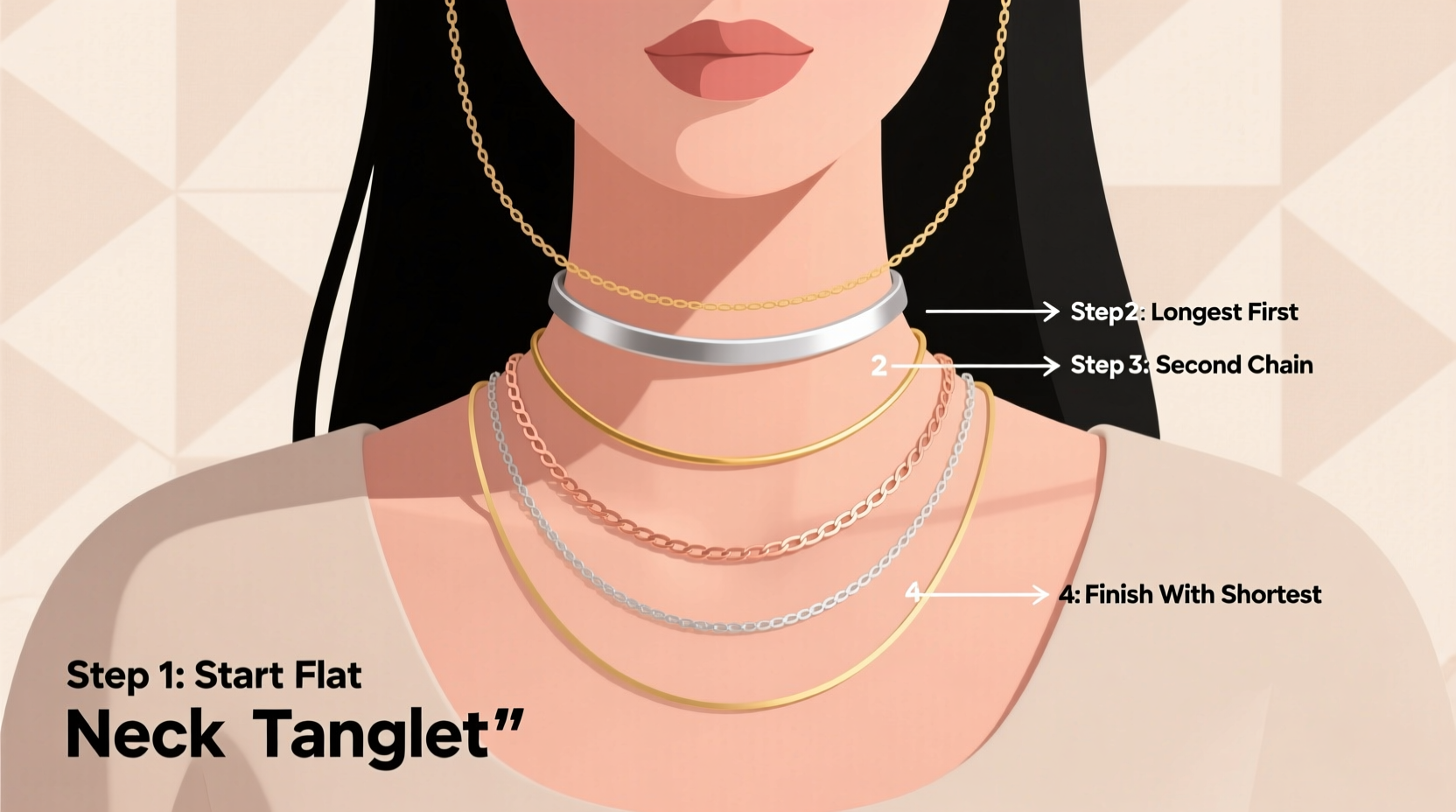
Tangling doesn’t happen randomly. It’s usually caused by movement, friction, improper storage, or incompatible chain types. Thin, flexible chains like cable or snake links are more prone to twisting than rigid styles such as box chains or rope links. When multiple necklaces move against each other during wear or sit loosely in a pile when stored, the risk multiplies.
The key to prevention lies in understanding how different metals, lengths, weights, and clasp types interact. For example, a lightweight pendant on a fine chain may easily wrap around a heavier, textured choker if they’re too close in length. Similarly, lobster clasps can snag on open jump rings if not secured properly.
Choose the Right Necklaces for Layering
Not all necklaces are built for layering. Selecting compatible pieces from the start makes a dramatic difference in both appearance and manageability.
- Vary the lengths: Aim for at least 2–3 inches between each necklace. A classic trio includes a choker (14–16\"), a mid-length (18\"), and a longer piece (20–24\").
- Mix chain thicknesses: Combine a delicate chain with a medium or bold one to reduce surface contact and prevent interlocking.
- Opt for secure closures: Lobster clasps are generally safer than spring rings, which can pop open under pressure.
- Avoid overly ornate designs: Pieces with dangling charms or open connectors increase entanglement risks.
“Successful layering isn’t just about aesthetics—it’s physics. Weight distribution and chain rigidity determine whether your stack stays put or turns into a knot factory.” — Lena Torres, Jewelry Designer & Stylist
Step-by-Step Guide to Layering Without Tangles
Follow this five-step process every time you wear layered necklaces. Consistency prevents cumulative damage and keeps your pieces looking pristine.
- Start with the longest necklace. Put it on first so it rests closest to your skin. This creates a base layer that won’t be disturbed by shorter chains.
- Fasten securely and smooth the chain. Ensure there are no twists or kinks before moving to the next piece.
- Add the middle-length necklace. Position it so it sits neatly above the first, avoiding overlap at the neckline.
- Finish with the shortest piece. Since it sits highest, it's most visible and should anchor the look.
- Adjust and inspect. Look in a mirror from multiple angles. Gently separate any points where chains touch using your fingers—not nails—to avoid scratching metal.
Smart Storage Solutions to Prevent Overnight Tangles
How you store your necklaces matters as much as how you wear them. Piling them in a drawer or tossing them into a pouch invites chaos.
| Storage Method | Best For | Why It Works |
|---|---|---|
| Hanging jewelry organizer | All chain types, especially mixed sets | Keeps chains separated and gravity-straightened |
| Travel roll with individual slots | Frequent travelers, layered collections | Compartments prevent cross-contact; rolls up compactly |
| Velvet-lined tray with dividers | Delicate gold or silver chains | Soft surface prevents scratches; sections keep order |
| DIY corkboard display | Statement pieces used often | Visual access encourages rotation and mindful pairing |
If space is limited, use a simple alternative: thread each necklace through a drinking straw before closing the clasp. The straw acts as a barrier, preventing loops from forming. Store them flat in a small box or hang them vertically.
Real Example: From Tangled Mess to Effortless Stack
Sophie, a marketing consultant in Chicago, loved layering but dreaded untangling her three favorite necklaces every morning. Her routine took nearly ten minutes, often resulting in broken chains. After switching to a hanging organizer and adjusting her layering sequence—starting with the longest instead of the shortest—she cut her prep time in half. She also replaced a problematic spring-ring clasp with a lobster clasp on her middle chain. Within two weeks, she hadn’t experienced a single tangle. “It feels like I’ve reclaimed part of my morning,” she said. “And my necklaces look better because they’re not constantly being pulled apart.”
Essential Care Routine to Maintain Chain Integrity
Even well-layered necklaces degrade over time without proper maintenance. Skin oils, lotions, sweat, and environmental exposure weaken metal and accelerate wear. A consistent care plan extends longevity and reduces vulnerability to tangling.
Daily Habits
- Remove necklaces before showering, swimming, or applying perfume.
- Wipe gently with a microfiber cloth after wear to remove residue.
- Store immediately after removal—don’t leave them draped over furniture.
Weekly Maintenance
- Inspect clasps and jump rings for looseness.
- Use a soft-bristled toothbrush and mild soap solution to clean crevices (avoid harsh chemicals).
- Rinse with lukewarm water and air-dry completely before storing.
Monthly Deep Check
- Examine chains under magnification for weak links or thinning.
- Have a jeweler re-tighten soldered joints if needed.
- Reassess your layering combinations—retire any piece showing stress.
“Most necklace failures begin with unnoticed wear. A monthly inspection can catch problems early and save you from losing a cherished piece.” — Marcus Reed, Master Jeweler at Reed & Vale Fine Jewelry
Checklist: Tangle-Free Layering Routine
Before Wearing:
- ✔ Choose necklaces with varied lengths (at least 2” apart)
- ✔ Confirm all clasps are secure and functional
- ✔ Lay them out in order of wear (longest to shortest)
While Wearing:
- ✔ Put on the longest necklace first
- ✔ Smooth each chain before adding the next
- ✔ Avoid excessive pulling or adjusting during the day
After Removing:
- ✔ Clean lightly with a dry cloth
- ✔ Inspect for snags or loose components
- ✔ Store separately using dividers or individual hooks
FAQ: Common Questions About Layering Necklaces
Can I layer necklaces made of different metals?
Yes, mixing metals is stylish and widely accepted in modern fashion. Just ensure they’re similar in weight and rigidity to minimize friction. For example, pair a rose gold choker with a yellow gold lariat, but avoid combining a heavy silver torque with a fragile white gold chain.
What if my necklaces still tangle despite precautions?
If tangling persists, consider simplifying your stack. Three is usually the maximum number that layers cleanly. You might also switch to magnetic or toggle clasps that lie flatter and create less bulk. For persistent knots, use a needle or pin to carefully tease apart loops—never pull.
Is it safe to sleep in layered necklaces?
No. Sleeping in necklaces increases breakage and tangling risks due to movement and pressure. Even short naps can cause irreversible damage. Reserve layered looks for waking hours and remove them before bed.
Final Thoughts: Style Meets Strategy
Layering necklaces beautifully is not just about fashion sense—it’s about technique, foresight, and care. By choosing the right pieces, following a logical wearing order, storing them thoughtfully, and maintaining them regularly, you protect your investment and enhance your everyday style. The goal isn’t perfection overnight, but progress through mindful habits. Each time you put on a tangle-free stack, you’re not just accessorizing—you’re practicing intentionality.




 浙公网安备
33010002000092号
浙公网安备
33010002000092号 浙B2-20120091-4
Comments
No comments yet. Why don't you start the discussion?