
In today’s digital world, your ID number is more than just a string of digits—it’s a key to accessing government services, financial accounts, healthcare, and employment. Whether you’ve misplaced your physical ID card or need to verify your identity online, knowing how to locate or obtain your ID number safely and efficiently is essential. This guide walks you through the process with clear, actionable steps while emphasizing security at every stage.
Why Your ID Number Matters
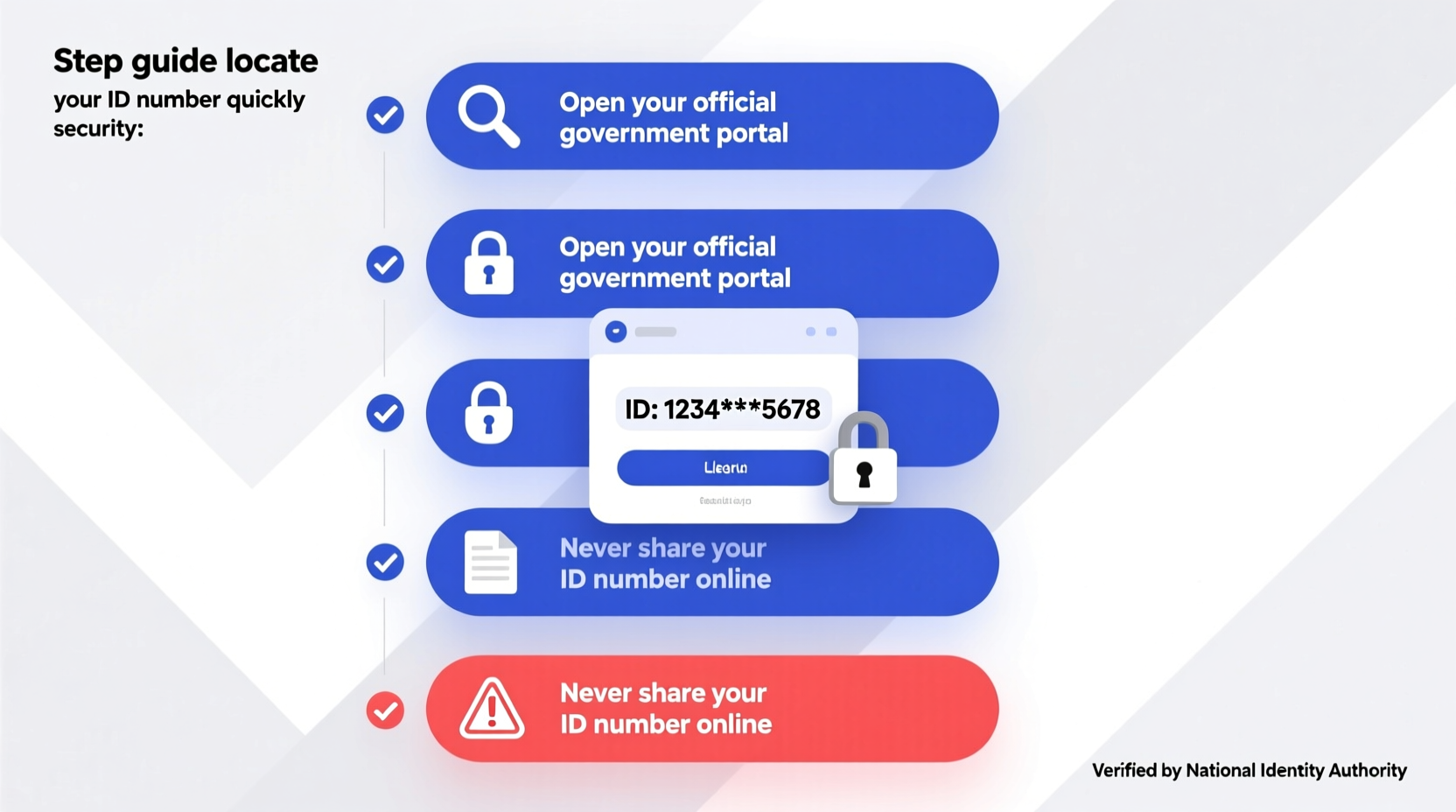
Your national or state-issued identification number—such as a Social Security Number (SSN) in the U.S., National Insurance Number (NIN) in the UK, or Aadhaar in India—is used across multiple systems to confirm your identity. It appears on tax records, bank applications, driver’s licenses, and medical files. Losing access to it can delay critical transactions, open you to identity theft, or prevent you from receiving benefits.
Unlike passwords, which can be reset, ID numbers are permanent and irreplaceable. That’s why retrieval and protection must go hand in hand.
Step-by-Step Guide to Locating Your Existing ID Number
- Gather Personal Documents: Start by collecting common documents that typically display your ID number. These include:
- Tax returns (e.g., Form W-2 or 1099 in the U.S.)
- Pay stubs
- Bank statements (if linked to identity verification)
- Driver’s license or passport
- Previous government correspondence (benefit letters, tax notices)
- Check Secure Online Accounts: Log into official portals where your ID may be stored. Examples:
- Social Security Administration (ssa.gov)
- Internal Revenue Service (irs.gov)
- National health service portals
- Employer HR platforms
- Review Physical ID Cards: If you have a national ID card, resident permit, or Social Security card, your number is often printed clearly. Store these in a locked drawer or fireproof box when not in use.
- Contact Trusted Institutions: In some cases, your employer or bank can confirm your ID number after verifying your identity through multi-factor authentication.
How to Obtain a Replacement ID Number or Card
If your ID card is lost, stolen, or never issued, you’ll need to apply for a replacement. The process varies by country but generally follows this structure:
1. Verify Eligibility
Determine whether you’re eligible for an ID number. Most citizens and legal residents qualify. Immigrants should check documentation status before applying.
2. Prepare Required Documents
Commonly accepted proofs include:
- Birth certificate
- Passport or visa
- Proof of residence (utility bill, lease agreement)
- Marriage certificate (if name has changed)
3. Submit Application via Official Channel
Apply through one of the following:
| Method | Pros | Cons |
|---|---|---|
| In-Person (Local Office) | Immediate verification, faster processing | Requires travel, appointment wait times |
| Online Portal | Convenient, accessible 24/7 | Limited to certain cases; document upload required |
| By Mail | No travel needed | Slow processing (4–8 weeks), risk of lost mail |
4. Wait for Processing & Receive Confirmation
Processing times vary. In the U.S., a replacement Social Security card typically arrives within 10–14 business days. You’ll receive a new card—not a new number—unless fraud has been reported.
“Never provide your ID number to third-party sites claiming to ‘retrieve’ it for you. Only government-authorized platforms should handle this data.” — James Lin, Cybersecurity Advisor, Department of Homeland Security
Security Best Practices When Handling Your ID Number
Obtaining your ID is only half the battle. Protecting it is equally important. Identity theft costs victims an average of $1,500 and 20 hours to resolve, according to the FTC.
Do’s and Don’ts of ID Protection
| Do | Don’t |
|---|---|
| Store copies in a password-protected digital vault | Carry your SSN card in your wallet |
| Shred documents containing your ID number | Post scans of your ID on social media |
| Use two-factor authentication on government accounts | Click links in emails asking for personal info |
| Monitor credit reports annually | Share your ID over public Wi-Fi |
Real Example: Recovering a Lost SSN After Moving Abroad
Maria, a U.S. citizen living in Portugal, needed her Social Security number to file taxes but couldn’t find her card. She had no access to physical mail from home and was wary of calling random numbers listed online.
She followed these steps:
- Created a mySocialSecurity account online using her phone number and recovery email.
- Uploaded scanned copies of her passport and previous W-2 form. <3>Verified her identity through a video call with a local U.S. embassy official.
- Requested a replacement card be mailed to a trusted relative in Florida.
Within three weeks, she received the card and confirmed her number. By using only verified channels, she avoided scams targeting expatriates.
FAQ
Can I get my ID number without visiting an office?
Yes, many countries now allow online retrieval or reissuance of ID cards through secure government portals. However, first-time applicants or those with complex cases may still need in-person verification.
Is it safe to enter my ID number on a government website?
Yes—if the site uses HTTPS encryption and is officially recognized (e.g., ends in .gov or .mil). Look for a padlock icon in the address bar and avoid typing your number unless actively logged into a secure session.
What if someone else is using my ID number?
Report identity theft immediately to the relevant authority. In the U.S., file a report at IdentityTheft.gov and place a freeze on your credit files with Equifax, Experian, and TransUnion.
Conclusion: Take Control of Your Identity Today
Your ID number is foundational to your personal and financial life. Knowing where to find it, how to replace it, and—most importantly—how to protect it empowers you to act confidently in any situation. Whether you're applying for a loan, starting a job, or traveling internationally, being prepared saves time and reduces risk.
Start by organizing your documents, securing your online accounts, and memorizing key steps for retrieval. Stay vigilant, stay informed, and never underestimate the value of a well-protected identity.




 浙公网安备
33010002000092号
浙公网安备
33010002000092号 浙B2-20120091-4
Comments
No comments yet. Why don't you start the discussion?