
There’s something undeniably luxurious about biting into a warm, buttery croissant—its golden crust shattering just right, layers peeling apart with each bite. While traditional croissants require laminating dough from scratch—a process that can take two days or more—home bakers can achieve impressively flaky results using store-bought puff pastry. This method delivers satisfyingly crisp, airy mini croissants in a fraction of the time, without sacrificing flavor or texture. Whether you're preparing for brunch, gifting, or simply treating yourself, this guide walks you through every step with precision and practical tips.
Why Use Puff Pastry for Mini Croissants?
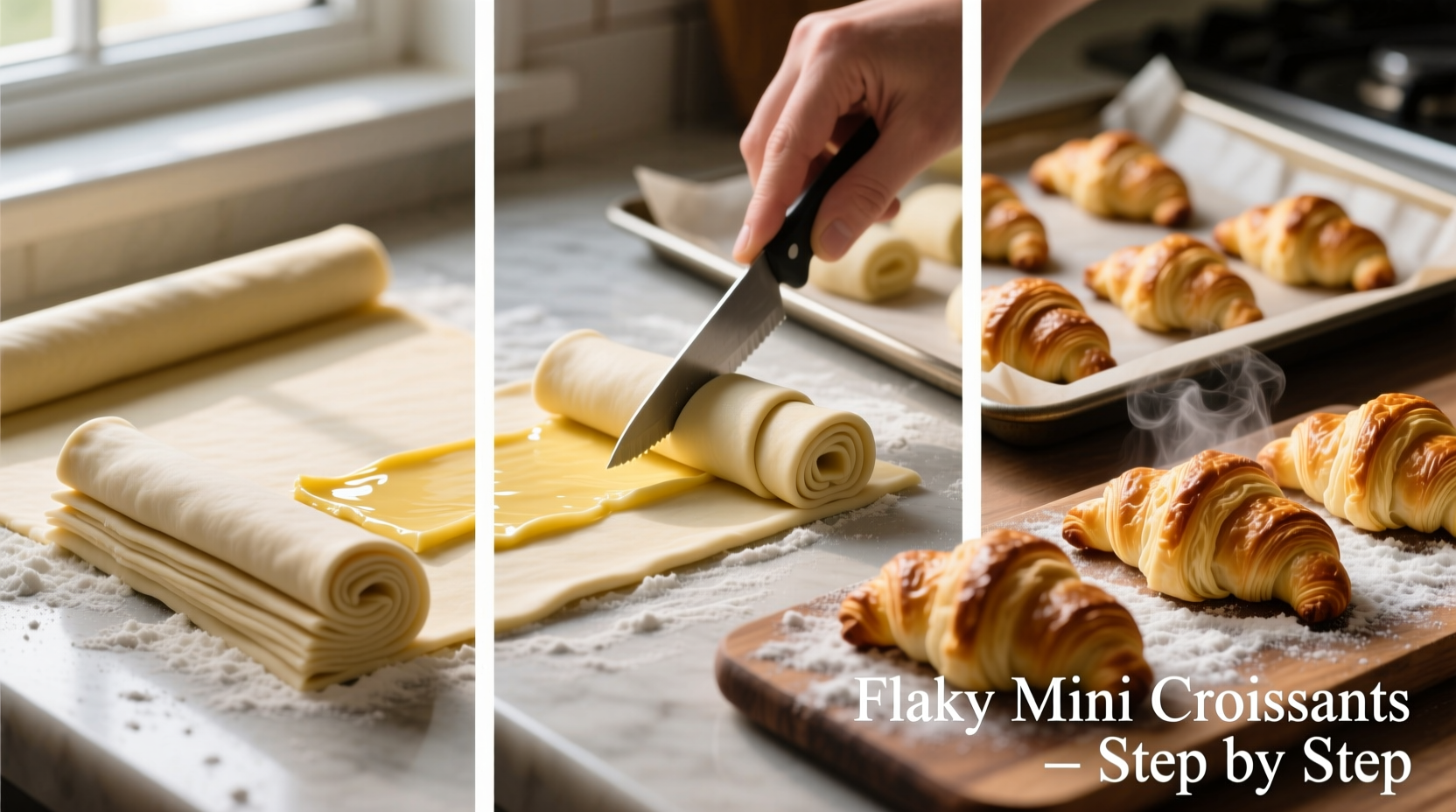
Puff pastry is a layered dough made by folding butter into flour multiple times, creating hundreds of thin layers that expand when baked. This same principle drives the flakiness of croissants. Though classic croissants use yeast-leavened laminated dough, puff pastry offers a shortcut that still yields remarkable results—especially when shaped and finished correctly.
The key difference lies in leavening: puff pastry relies solely on steam for rise, while traditional croissants also use yeast for a slightly softer, more bread-like interior. However, for mini versions served fresh and warm, puff pastry provides an ideal balance of convenience and quality. It’s widely available frozen, requires minimal prep, and adapts beautifully to fillings and glazes.
“Using high-quality puff pastry doesn’t mean compromising—it means working smarter. You can still achieve elegance and texture that impresses.” — Chef Lila Nguyen, Pastry Instructor at Brioche Culinary Academy
Ingredients and Equipment Checklist
Before beginning, gather everything you’ll need. Using the right tools ensures smooth handling and consistent shaping.
Ingredients
- 1 sheet (about 8 oz) of all-butter frozen puff pastry, thawed according to package instructions
- 1 large egg (for egg wash)
- 1 tablespoon water
- Optional: 1–2 tablespoons granulated sugar (for sweet version)
- Optional: 1/4 teaspoon cinnamon (for sweet variation)
- Optional: 1/4 cup grated Gruyère or Parmesan (for savory version)
- Optional: 2 tablespoons chopped ham or sun-dried tomatoes
Equipment
- Rolling pin
- Sharp knife or pizza cutter
- Baking sheet
- Parchment paper or silicone baking mat
- Pastry brush
- Mixing bowl (small)
- Ruler or measuring tape (optional, for uniformity)
Step-by-Step Process: From Pastry to Oven
Follow these steps carefully for evenly shaped, evenly baked mini croissants.
- Prepare the pastry sheet: Lightly flour your work surface. Unfold the thawed puff pastry sheet and roll it gently into a rectangle approximately 10 x 12 inches. This helps standardize thickness and makes cutting easier.
- Cut into triangles: Using a sharp knife or pizza cutter, slice the rectangle diagonally from one corner to the opposite, creating two large triangles. Then, cut each long side into 4–5 equal segments (depending on desired size), and slice toward the center to form small triangles. Aim for bases around 2–2.5 inches wide and heights of 5–6 inches.
- Add optional fillings: For savory croissants, place a small pinch of cheese or ham near the wide end of each triangle. For sweet versions, sprinkle cinnamon sugar lightly over the surface before rolling.
- Shape the croissants: Starting at the base, gently roll each triangle toward the tip. Keep the roll snug but not tight—over-squeezing compresses the layers. Curve the ends slightly inward to form a crescent shape.
- Chill before baking: Place shaped croissants on a parchment-lined tray and refrigerate for 15–20 minutes. Chilling firms up the butter, which prevents spreading and enhances layer separation during baking.
- Preheat oven: Set oven to 400°F (200°C). A hot start is essential for proper lift.
- Apply egg wash: In a small bowl, whisk the egg with water. Using a pastry brush, gently coat each croissant with the mixture. This creates a glossy, golden finish.
- Bake: Arrange croissants on a baking sheet with space between them (at least 1 inch). Bake for 15–18 minutes, rotating the pan halfway, until deeply golden and puffed.
- Cool slightly: Let rest for 5 minutes before serving. The internal steam continues cooking the layers, and they firm up slightly as they cool.
Do’s and Don’ts: Avoid Common Pitfalls
| Do’s | Don’ts |
|---|---|
| Use all-butter puff pastry for best flavor and rise | Don’t skip chilling after shaping—this leads to spread |
| Brush egg wash evenly, including edges | Don’t overcrowd the baking sheet |
| Preheat oven thoroughly | Don’t open the oven door during the first 12 minutes |
| Store leftovers in an airtight container; reheat in oven | Don’t microwave—they lose crispness instantly |
| Freeze uncooked croissants for later use | Don’t refreeze thawed puff pastry |
A Real Kitchen Scenario: Weekend Brunch Success
Sarah, a busy marketing manager and home baker from Portland, wanted to serve something special for her weekend guests but didn’t have hours to spare. She tried this puff pastry method after reading about it online. Using pre-thawed all-butter pastry, she cut and rolled mini croissants filled with Gruyère and a hint of Dijon mustard. After chilling and baking, the results were golden, crisp, and layered—her friends assumed she’d bought them from a French bakery. “I made them while brewing coffee,” she said. “They looked impressive, tasted amazing, and took less than 30 minutes from start to table.”
This example shows how accessible elegant baking can be when technique meets smart shortcuts.
Frequently Asked Questions
Can I make these ahead of time?
Yes. Shape the croissants, place them on a tray, cover with plastic wrap, and freeze for up to 3 weeks. Bake straight from frozen—add 2–4 minutes to baking time. This is ideal for last-minute entertaining.
Why didn’t my croissants puff up?
Likely causes include: oven not hot enough, pastry too warm before baking, or using low-quality (non-butter) puff pastry. Ensure your oven is fully preheated and that the pastry stays cold until it hits the heat.
Can I add chocolate or almond filling?
Absolutely. For chocolate, place a thin baton of dark chocolate at the base before rolling. For almond, spread 1/2 teaspoon of almond cream on the pastry before rolling. Finish with sliced almonds and a dusting of powdered sugar after baking.
Final Tips for Consistent Results
- Work quickly: Minimize handling to keep butter cold.
- Uniform sizing: Cut even triangles so all croissants bake at the same rate.
- Bake on middle rack: Ensures even heat distribution.
- Test one first: Bake a single croissant to check oven temperature and timing before committing the whole batch.
Conclusion: Elevate Your Home Baking with Confidence
Flaky mini croissants don’t require professional training or all-day effort. With quality puff pastry and attention to detail, you can create bakery-worthy treats in under an hour. The technique is forgiving, adaptable to both sweet and savory preferences, and perfect for sharing. Once you master the roll-and-chill rhythm, you’ll find yourself reaching for puff pastry not just for croissants, but for tarts, pinwheels, and more creative applications.




 浙公网安备
33010002000092号
浙公网安备
33010002000092号 浙B2-20120091-4
Comments
No comments yet. Why don't you start the discussion?