
Starting a bullet journal can feel overwhelming. Between the intricate spreads on social media and the pressure to create something artistic, many beginners abandon the practice before reaping its benefits. But at its core, bullet journaling is about clarity, intention, and personal organization—not perfection. This guide breaks down the process into manageable steps, helping you build effective, sustainable layouts tailored to your lifestyle. Whether you're tracking habits, managing tasks, or exploring mindfulness, a well-designed bullet journal becomes a powerful tool for self-awareness and growth.
Understanding the Purpose of Bullet Journal Layouts
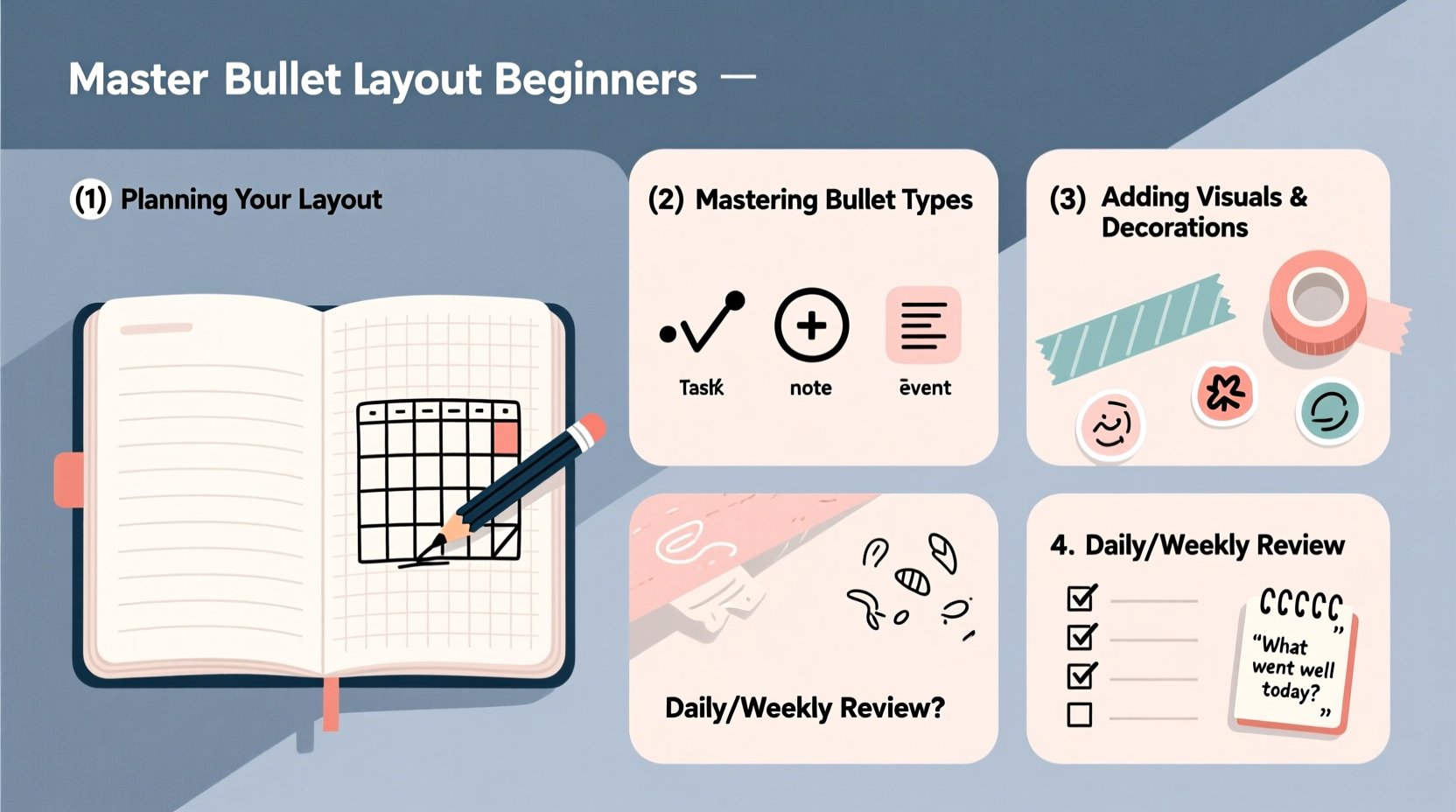
A layout in bullet journaling refers to the structure and design of a page or spread. Unlike traditional planners with fixed formats, bullet journals allow complete customization. This freedom is both a strength and a challenge. Without clear intent, layouts can become overly decorative or impractical. The key is alignment: each layout should serve a specific purpose in your daily or weekly routine.
Common purposes include:
- Task Management: Daily logs, weekly spreads, and priority lists.
- Habit Tracking: Monitoring behaviors like water intake, exercise, or screen time.
- Goal Setting: Monthly intentions, project milestones, or long-term vision boards.
- Mindfulness & Reflection: Gratitude logs, mood trackers, or journal prompts.
- Information Storage: Contacts, book lists, meal plans, or budget summaries.
Before sketching any layout, ask: “What problem am I trying to solve?” If you’re constantly forgetting appointments, a time-blocking weekly spread may help. If motivation lags, a habit tracker could provide visual reinforcement. Purpose-driven design prevents wasted pages and ensures your journal remains useful over time.
Essential Supplies and Setup Tips
You don’t need expensive tools to begin. However, choosing the right materials improves usability and encourages consistency. Consider these foundational elements:
| Item | Recommended Options | Why It Matters |
|---|---|---|
| Notebook | Leuchtturm1917, Moleskine, or dotted grid journal | Dotted paper allows flexible layout creation without distracting lines. |
| Pens | Fine-liner pens (e.g., Staedtler, Sakura Pigma Micron) | Prevents bleed-through and offers precision for small text and borders. |
| Ruler | Clear 12-inch ruler with cm/mm markings | Ensures straight lines and consistent spacing. |
| Highlighters | Water-based, non-bleeding (e.g., Tombow, Ohuhu pastel markers) | Adds visual hierarchy without damaging paper. |
| Pencil & Eraser | Soft lead pencil (HB or 2B) and vinyl eraser | Allows light drafting before inking final lines. |
Beginners often make the mistake of investing heavily upfront. Instead, start with what you have. A composition notebook and ballpoint pen are perfectly adequate. As your needs evolve, upgrade selectively based on experience.
“Your bullet journal should reflect your life, not someone else’s aesthetic.” — Ryder Carroll, creator of the Bullet Journal Method
Step-by-Step Guide to Creating Your First Functional Layout
Follow this five-phase process to develop a layout that works for you—not just looks good.
- Define the Objective
Choose one area of your life to improve. For example: “I want to drink more water” or “I need to track deadlines.” Focus on a single goal to avoid clutter. - Select the Time Frame
Decide whether the layout covers a day, week, month, or longer. Habit trackers often span a month; daily logs cover 24 hours; future logs plan across six months. - Draft Lightly in Pencil
Sketch margins, headers, and sections using a pencil. Use a ruler for alignment. Try different configurations—vertical columns, grids, or circular designs—before committing. - Ink and Finalize
Once satisfied, go over pencil lines with pen. Add titles, labels, and icons. Keep lettering legible but simple. Fancy calligraphy isn’t required. - Test and Iterate
Use the layout for its intended period. At the end, evaluate: Was it easy to maintain? Did it help achieve the goal? Adjust spacing, frequency, or format as needed.
This iterative approach turns trial and error into progress. Many effective layouts emerge from multiple revisions—not instant perfection.
Real Example: Building a Weekly Meal Planner
Sarah, a working parent, struggled with last-minute dinner decisions. She decided to create a weekly meal planner layout. Her first attempt was a complex grid with breakfast, lunch, and dinner for seven days—occupying two full spreads. After one week, she abandoned it. Too time-consuming.
She revised: focused only on dinners, used a vertical layout with days in columns, and added a small grocery checklist at the bottom. This version took five minutes to fill each Sunday and reduced decision fatigue during the week. Over time, she added stickers for recurring meals (e.g., “Taco Tuesday”) and noted prep times. The simplified, functional design stuck.
Popular Layout Types and When to Use Them
Not every layout suits every person or season of life. Match the format to your current priorities.
1. Future Log
A high-level overview of upcoming months. Ideal for recording birthdays, vacations, or major deadlines. Divide a two-page spread into six boxes (one per month). Add events as they arise. Review monthly to transfer relevant items to monthly logs.
2. Monthly Spread
Includes a calendar view and task list. Some add habit trackers or goals here. Best for planning appointments and setting monthly intentions. Keep it minimal—only essential dates and priorities.
3. Weekly Spread
The workhorse of most bullet journals. Can be time-blocked, task-focused, or freeform. A balanced version includes: a task list, appointment section, habit tracker (3–5 items), and a small notes box. Customize based on workload—busier weeks may need more space.
4. Daily Log
A running list of tasks, events, and notes for a single day. Most effective when kept lean. Use rapid logging (short phrases with bullets, dots, dashes) to capture information quickly. Migrate unfinished items to the next day or appropriate collection.
5. Collections
Themed pages like “Books to Read,” “Password List,” or “Home Maintenance Schedule.” These act as reference hubs. Title clearly and update as needed. Store behind index for quick access.
6. Habit Tracker
Grid or chart format where each row is a habit, each column a day. Fill in cells as completed. Choose no more than 5–7 habits to track simultaneously. Visual patterns reveal consistency and setbacks.
“The bullet journal is a mindfulness practice disguised as organization.” — Ryder Carroll
Checklist: Launching Your First Bullet Journal Successfully
Before diving in, run through this practical checklist to set yourself up for success:
- ✅ Choose a dotted or grid notebook with numbered pages
- ✅ Create an Index at the front (leave 2–4 pages blank initially)
- ✅ Set up a Future Log for the next 6–12 months
- ✅ Design your first Monthly Spread with calendar and goals
- ✅ Plan a simple Weekly Layout (task list + appointments)
- ✅ Start a Daily Log on the next available page
- ✅ Define 1–2 Collections you’ll use immediately (e.g., Books, Goals)
- ✅ Use consistent symbols (• = task, × = done, > = migrated, ⚬ = event)
- ✅ Review weekly: migrate tasks, reflect, adjust layouts
- ✅ Accept imperfection—focus on function over form
Completing this foundation takes under an hour. From there, maintain momentum with short daily entries and weekly reviews.
Common Mistakes and How to Avoid Them
Even experienced journalers fall into traps. Recognizing these early saves time and frustration.
Overdesigning
Spending 30 minutes decorating a weekly spread defeats the purpose of efficiency. Limit design time to 5–10 minutes. Save creative energy for meaningful collections, not routine pages.
Using Too Many Layouts
Tracking 15 habits, five goals, and four projects at once leads to burnout. Start with 2–3 core layouts. Add new ones only when a genuine need arises.
Neglecting Migration
One of the most powerful features of bullet journaling is migration—reviewing unfinished tasks and deciding whether to reschedule, delegate, or eliminate them. Skipping this step turns your journal into a graveyard of abandoned to-dos.
Comparing to Others
Social media showcases highlight reels. Remember: what works for a full-time artist may not suit a nurse working 12-hour shifts. Your journal is personal. Let it evolve naturally.
FAQ: Common Questions About Bullet Journal Layouts
How do I decide which layouts to include?
Start with what you currently struggle to manage—appointments, tasks, habits, or ideas. Add only one new layout at a time. If it helps after two weeks, keep it. If not, revise or remove it.
Can I use digital tools instead?
Yes, apps like Notion or GoodNotes offer digital bullet journaling. However, the tactile experience of writing by hand enhances memory and focus for many users. Try both and see what supports your workflow best.
What if I run out of space in a layout?
Turn the page and continue. Label it clearly (e.g., “Habit Tracker – Page 2”) and reference it in your Index. You can also resize future versions based on usage patterns.
Conclusion: Build a Journal That Works for You
Mastering bullet journal layouts isn’t about copying trends or achieving artistic mastery. It’s about creating a personalized system that brings clarity to your days and intention to your actions. Begin with a single page. Define its purpose. Test it. Refine it. Repeat.
Over time, your journal will become more than a planner—it will reflect your growth, priorities, and rhythm. The most beautiful spreads aren’t the ones filled with brush lettering and washi tape, but the ones that helped you show up consistently for your goals.




 浙公网安备
33010002000092号
浙公网安备
33010002000092号 浙B2-20120091-4
Comments
No comments yet. Why don't you start the discussion?