
Baking sourdough bread at home may seem like a craft reserved for seasoned bakers with decades of experience. The bubbling starter, the long fermentation, the crackling crust—it all feels mysterious. But the truth is, anyone can learn to bake exceptional sourdough bread, even if they’ve never turned on an oven before.
Sourdough is one of the oldest forms of leavened bread, relying not on commercial yeast but on wild yeast and lactic acid bacteria cultivated in a fermented mixture called a starter. This natural process gives sourdough its distinctive tang, chewy crumb, and remarkable shelf life. More importantly, it’s forgiving, educational, and deeply satisfying when done right.
This guide breaks down the entire sourdough journey into clear, manageable steps. You’ll learn how to create a starter from scratch, understand fermentation timing, shape your dough confidently, and bake a loaf that rivals any artisan bakery—all without prior baking knowledge.
Creating Your Sourdough Starter: The Heart of the Bread
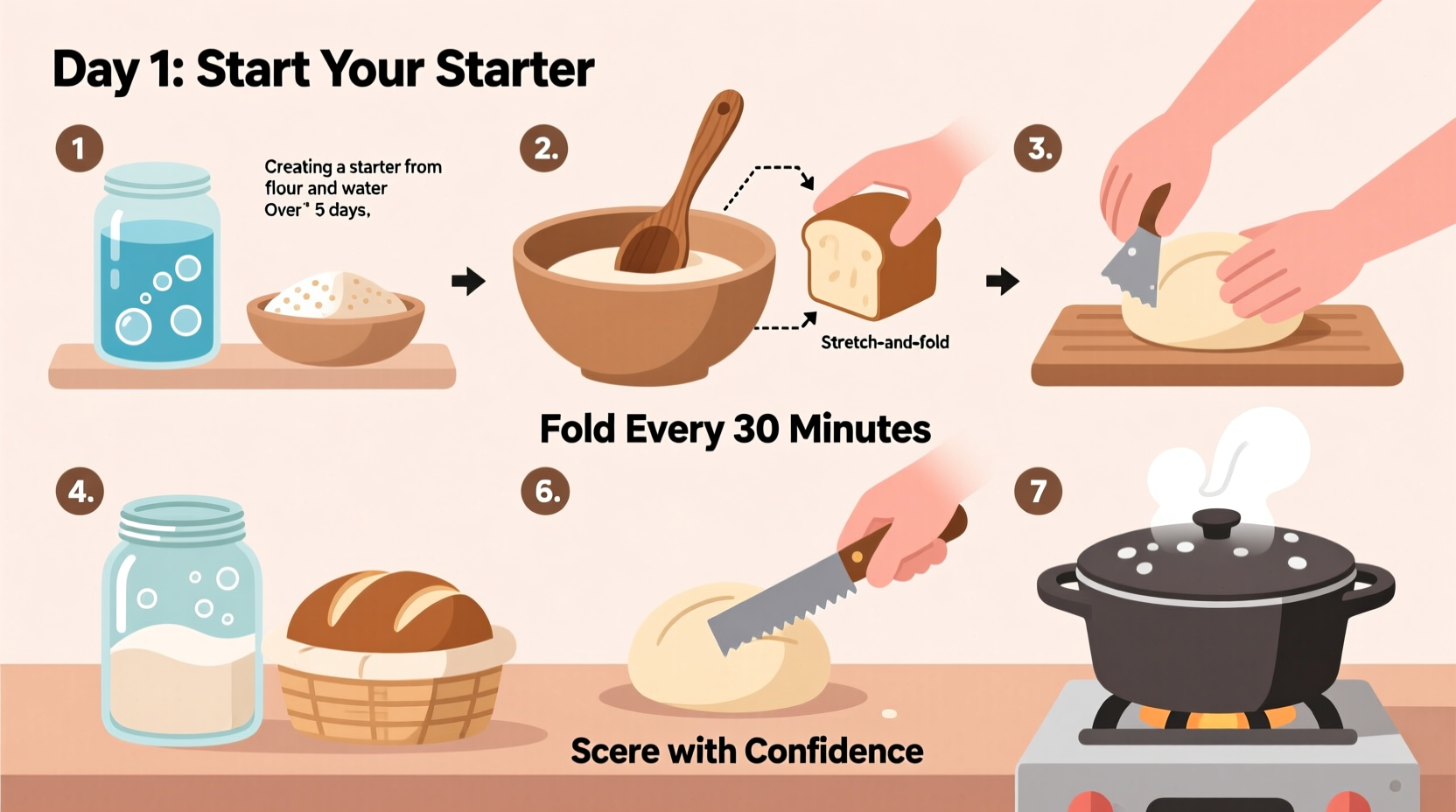
The foundation of every great sourdough loaf is a healthy, active starter. This living culture is a mix of flour and water that captures wild yeast and beneficial bacteria from the environment. It takes about 5–7 days to establish, but requires only a few minutes of attention each day.
- Day 1: Mix 60g of filtered water (chlorine-free) with 60g of whole grain flour (rye or whole wheat works best) in a clean glass jar. Stir well, cover loosely with a lid or cloth, and leave at room temperature (70–75°F / 21–24°C).
- Days 2–3: Discard half the mixture (about 60g). Feed it with another 60g water and 60g flour. Stir, cover, and repeat daily. Bubbles may appear, and there might be a slightly sour or fruity smell—this is normal.
- Days 4–5: Continue discarding and feeding. At this stage, you should see consistent bubbling within 4–8 hours after feeding, and the starter should rise noticeably. If not, extend feedings for another day or two.
- Day 6 or 7: Perform a float test. Drop a small spoonful of starter into a glass of water. If it floats, it’s ready. If it sinks, feed it again and wait another 12 hours.
Once your starter reliably doubles in size within 6–8 hours after feeding and passes the float test, it’s ready to use. Store it at room temperature if baking weekly, or refrigerate with weekly feedings if baking less often.
Understanding Fermentation: Time, Temperature, and Texture
Fermentation is where flavor develops and structure forms. Unlike commercial yeast, sourdough relies on slow, natural fermentation. Understanding how time and temperature affect your dough is crucial.
Colder environments slow fermentation; warmer ones accelerate it. A dough that ferments too quickly may lack complexity, while one that ferments too slowly risks overproofing. Aim for a kitchen temperature between 70–75°F (21–24°C) for predictable results.
During bulk fermentation—the first rise after mixing—the dough develops strength, gas, and flavor. Watch for visual cues: the surface should look bubbly, the volume increased by about 50%, and the texture jiggly like jelly when nudged gently.
| Temperature | Bulk Fermentation Time | Starter Activity Level |
|---|---|---|
| 68–70°F (20–21°C) | 5–6 hours | Moderate rise, steady bubbles |
| 72–75°F (22–24°C) | 3.5–4.5 hours | Active rise, visible expansion |
| 76–80°F (24–27°C) | 2.5–3.5 hours | Rapid rise, needs close monitoring |
“Sourdough isn’t about rigid timelines—it’s about learning to read your dough. Trust your eyes and hands more than the clock.” — Ken Forkish, author of *Flour Water Salt Yeast*
Step-by-Step Baking Process: From Mix to Oven
Now that your starter is active, follow this proven sequence to bake your first successful loaf.
- Feed your starter 8–12 hours before baking. Use equal parts flour and water (e.g., 50g starter, 50g water, 50g flour). Let it peak—double in size and become bubbly.
- Mix the dough. Combine 500g bread flour, 350g water (70% hydration), and 10g salt in a bowl. Add 100g of active starter. Mix until no dry flour remains. Rest 30 minutes (autolyse).
- Add salt and perform coil folds. After autolyse, dissolve salt in 20g water and incorporate. Over the next 2 hours, perform 4 sets of coil folds—every 30 minutes. This builds gluten gently without kneading.
- Bulk ferment. Cover and let rise at room temperature for 3.5–5 hours, depending on warmth. Look for volume increase, bubbles, and jiggle.
- Pre-shape and bench rest. Turn dough onto a floured surface. Shape into a round (boule) and rest uncovered for 20–30 minutes. This tightens the surface.
- Final shape. Flatten slightly, fold edges toward center, then roll into a taut round or oval. Place seam-side up in a floured proofing basket (banneton).
- Final proof. Cover and proof at room temperature for 1–2 hours, or refrigerate overnight (preferred for better flavor and easier handling).
- Bake. Preheat oven to 450°F (230°C) with a Dutch oven inside for 45 minutes. Carefully transfer dough to the hot pot, score the top with a razor, cover, and bake 20 minutes. Uncover and bake 20–25 more minutes until deep golden brown.
- Cool completely. Wait at least 2 hours before slicing. Cutting too soon releases steam and ruins texture.
Common Challenges and How to Solve Them
Even experienced bakers face issues. Here’s how to troubleshoot the most common beginner problems:
- Dense or gummy crumb: Usually caused by underproofing or cutting too early. Ensure full fermentation and cool the loaf completely before slicing.
- Loaf spreads out flat: Indicates weak gluten development or overproofing. Improve coil folds and reduce final proof time.
- Starter not rising: Try feeding with whole rye flour, keep it warmer (near a radiator or oven light), and ensure water is chlorine-free.
- Bread tastes too sour: Long cold fermentation increases acidity. Shorten fridge time to 8–10 hours instead of 12+.
- Crust too thick or burnt: Lower oven temperature by 25°F or remove lid earlier during baking.
“My first five loaves were bricks. But each one taught me something. By loaf ten, I had a springy, open crumb and a crust that sang when it cooled.” — Maria T., home baker from Portland, OR
Essential Tools and Checklist for Success
You don’t need fancy equipment, but a few key tools make the process smoother and more consistent.
Basic Sourdough Toolkit
- Medium-sized glass or ceramic jar (for starter)
- Kitchen scale (essential for accuracy)
- Large mixing bowl
- Proofing basket (banneton) or medium bowl with linen liner
- Dutch oven (or heavy oven-safe pot with lid)
- Lame or sharp razor blade (for scoring)
- Dough scraper (plastic or metal)
Beginner’s Sourdough Checklist
- ✅ Create and mature a sourdough starter (5–7 days)
- ✅ Feed starter 8–12 hours before baking
- ✅ Weigh all ingredients accurately
- ✅ Perform autolyse and coil folds
- ✅ Monitor bulk fermentation using visual cues
- ✅ Shape tightly and use proper proofing vessel
- ✅ Preheat Dutch oven thoroughly
- ✅ Score before baking
- ✅ Cool bread completely before slicing
Frequently Asked Questions
Can I use all-purpose flour instead of bread flour?
Yes, but bread flour has higher protein content, which strengthens gluten and improves oven spring. All-purpose flour works, especially for beginners, but may yield a slightly denser crumb.
Why do I have to discard part of my starter?
Discarding prevents excessive buildup of acidity and maintains a balanced pH for healthy yeast activity. While it seems wasteful, the discarded portion can be used in pancakes, crackers, or muffins.
Can I bake sourdough without a Dutch oven?
You can, but it’s challenging. The Dutch oven traps steam, critical for crust development and oven spring. Alternatives include placing a pan of water in the oven or using a covered ceramic casserole dish.
Mastering the Rhythm: Making Sourdough a Sustainable Habit
Sourdough becomes easier with repetition. The first loaf may not be perfect—and that’s expected. What matters is building familiarity with the rhythm of feeding, fermenting, and baking.
After a few cycles, you’ll begin to anticipate how your starter behaves in your kitchen’s climate. You’ll recognize the subtle signs of readiness in your dough. You’ll develop intuition.
Many new bakers quit after one failed attempt. But sourdough rewards patience. Each loaf teaches you more about time, temperature, and technique. Over weeks, your confidence grows. Soon, you’re adjusting hydration, experimenting with whole grains, and even giving starter to friends.
The beauty of sourdough lies not just in the bread, but in the ritual. Feeding your starter becomes a daily touchpoint with nature and tradition. Shaping dough becomes meditation. The aroma of baking bread transforms your home.
Conclusion: Your First Loaf Is Just the Beginning
Mastering sourdough doesn’t require talent—it requires curiosity and consistency. You now have everything needed to bake your first loaf: a clear process, practical tips, troubleshooting guidance, and the understanding that imperfection is part of the journey.
Start small. Follow the steps precisely at first. Celebrate every bubble, every rise, every golden crust. Even a dense or misshapen loaf is a victory when made with your own hands.




 浙公网安备
33010002000092号
浙公网安备
33010002000092号 浙B2-20120091-4
Comments
No comments yet. Why don't you start the discussion?