
Selecting the right Cuban link bracelet isn’t just about style—it’s about fit. An 18mm-wide piece commands attention, but if it doesn’t sit comfortably on your wrist, its impact diminishes. Too tight, and it restricts circulation; too loose, and it slides around unpredictably. The key lies in precise measurement and understanding how width affects comfort. This guide walks you through every detail of measuring your wrist for an 18mm Cuban link bracelet that fits perfectly: snug, secure, and stylish.
Why Wrist Measurement Matters for Wide Bracelets
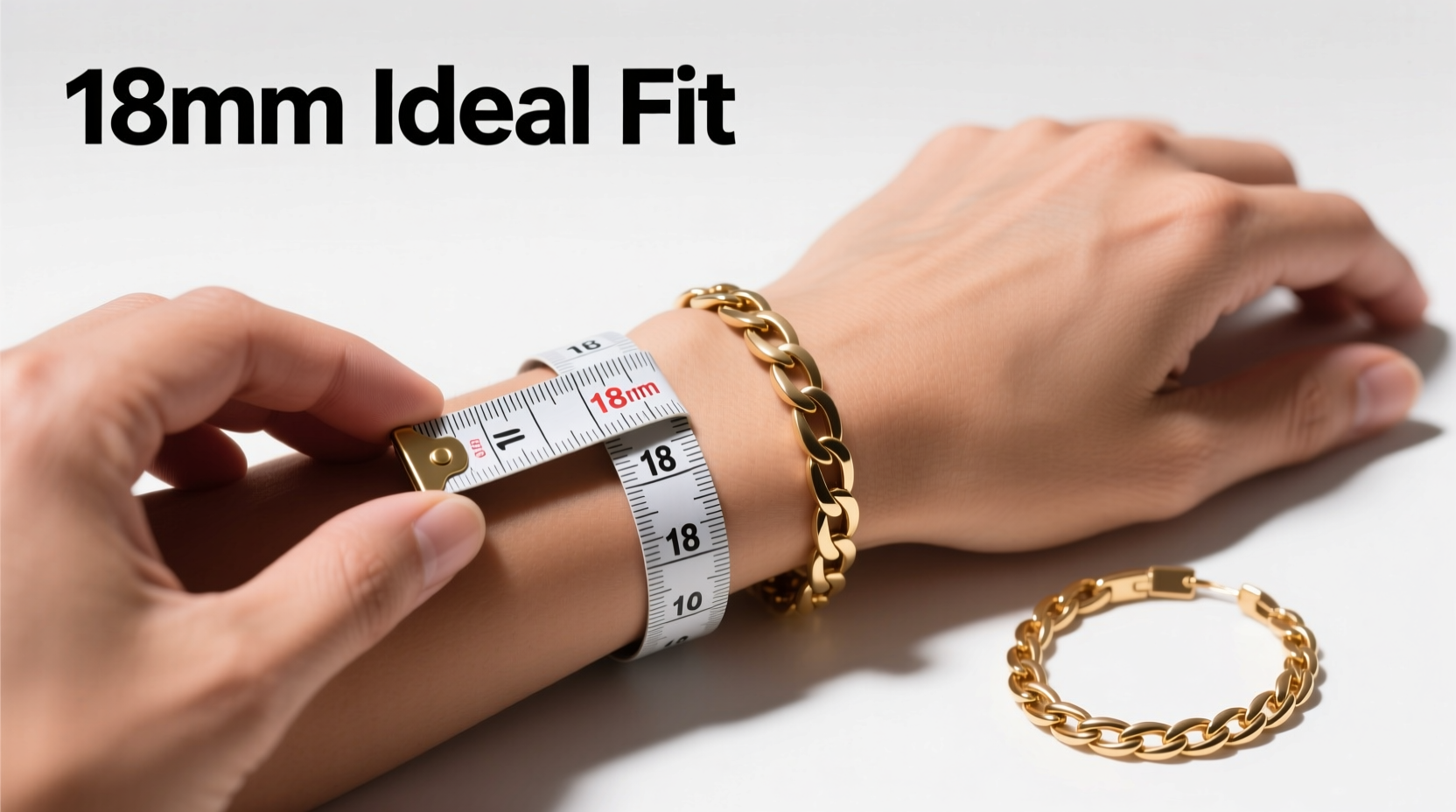
Unlike thinner chains, an 18mm Cuban link bracelet covers a significant portion of the wrist. Its thickness adds visual weight and physical presence, which means even a slight miscalculation in sizing can lead to discomfort. A bracelet this wide rests differently than a slim chain—it doesn’t drape as easily and requires more clearance around the bone structure.
The goal is a fit that allows the bracelet to rest flat against the wrist without pinching or requiring force to slide over the hand. Since most Cuban link bracelets are rigid or semi-rigid due to their construction, they cannot stretch. Once sized, adjustments are difficult and often require professional help.
“Width dramatically changes how a bracelet interacts with the wrist anatomy. An 18mm chain needs extra consideration—what works for a 6mm chain won’t translate.” — Marcus Lin, Jewelry Designer & Fit Consultant
Step-by-Step Guide to Measuring Your Wrist Accurately
To get the correct size, follow these steps carefully. Use tools you likely already have at home, and take measurements at the right time of day for accuracy.
- Gather your tools: You’ll need a flexible measuring tape (like a tailor’s tape), a pen, paper, and optionally, a string and ruler if you don’t have a tape measure.
- Measure at the right time: Wrist size fluctuates slightly throughout the day. Measure in the evening when your body is warm and tissues are slightly expanded—this prevents choosing a size that’s too tight during daily wear.
- Locate the correct spot: Wrap the tape around the narrowest part of your wrist, just below the wrist bone. This is where most bracelets naturally sit. Keep the tape snug but not tight—slip one finger underneath to ensure there’s a small gap for comfort.
- Record the circumference: Note the measurement in inches or millimeters. For example, a typical male wrist ranges from 7 to 8 inches (178–203 mm).
- Add room for comfort and width: Because an 18mm bracelet is wide, add 1/4 to 1/2 inch (6–12 mm) to your actual wrist size. This accounts for the bulk of the chain and ensures it doesn’t feel constricting.
- Check hand width: Open your hand fully and measure across the widest part (usually across the knuckles). The bracelet must be large enough to slide over your hand. If your hand measures 8.5 inches, your bracelet should be at least that long internally.
Understanding Sizing Charts and How Width Changes Fit
Jewelry brands often provide size charts, but they rarely account for width. A size labeled “Medium” might work for a 10mm chain but feel oppressive at 18mm. Use the table below as a reference when interpreting standard sizes.
| Wrist Circumference | Recommended Bracelet Length (Standard Chain) | Adjusted Length for 18mm Cuban Link | Hand Width Minimum |
|---|---|---|---|
| 7.0 inches (178 mm) | 7.5 inches | 8.0 inches | 8.0 inches |
| 7.5 inches (190 mm) | 8.0 inches | 8.5 inches | 8.5 inches |
| 8.0 inches (203 mm) | 8.5 inches | 9.0 inches | 9.0 inches |
| 8.5 inches (216 mm) | 9.0 inches | 9.5 inches | 9.5 inches |
Note that the adjusted length includes added comfort space due to the chain’s width. Also, consider clasp type: lobster clasps add minimal bulk, while fold-over or magnetic clasps may reduce internal diameter slightly.
Real-World Example: Choosing the Right Size for a First-Time Buyer
James, a 32-year-old professional, ordered his first 18mm Cuban link bracelet online. His wrist measured 7.7 inches. He selected an 8-inch bracelet based on a generic chart. When it arrived, it felt tight and left a faint red mark after two hours of wear. Worse, removing it required twisting and pulling.
After re-measuring and factoring in width adjustment, he realized he needed an 8.5-inch length. He contacted customer support, exchanged the piece, and received the larger size. The difference was immediate: the new fit rested smoothly, slid over his hand with ease, and stayed comfortable all day. James learned that wrist size alone wasn’t enough—he had to account for volume displacement caused by the chain’s width.
Essential Checklist Before Purchasing
Before finalizing your order, go through this checklist to avoid common fitting mistakes:
- ✅ Measured wrist circumference in the evening
- ✅ Added 1/4 to 1/2 inch for comfort (especially for 18mm width)
- ✅ Measured hand width across knuckles
- ✅ Confirmed internal diameter of bracelet exceeds hand width
- ✅ Verified return or exchange policy in case of incorrect fit
- ✅ Checked clasp style and its effect on usable length
- ✅ Compared brand-specific sizing chart with personal measurements
Frequently Asked Questions
Can I resize a Cuban link bracelet after purchase?
Yes, but it’s complex. Resizing an 18mm Cuban link requires breaking and re-linking thick, interlocked chains. It should only be done by a skilled jeweler experienced with heavy chains. Expect to pay $30–$80 depending on labor and materials. Some links may need replacement, affecting symmetry.
Should I size up if I’m between sizes?
For an 18mm bracelet, yes—always lean toward the larger size. A slightly looser fit is safer than one that’s too tight. You can always add a sizing link later, but removing material permanently shortens the chain.
Do different metals affect fit comfort?
Indirectly. Heavier metals like solid stainless steel or gold will feel more substantial on the wrist than lightweight alloys. While the measurement remains the same, the perceived pressure increases with weight. Consider this if you’re sensitive to heavy accessories.
Final Thoughts: Precision Leads to Confidence
An 18mm Cuban link bracelet is more than jewelry—it’s a statement. When it fits well, it enhances your presence without distraction. But achieving that ideal fit demands attention to detail beyond basic circumference. Accounting for width, hand size, time of day, and material weight transforms guesswork into precision.
Take the time to measure correctly. Recheck your numbers. Simulate the fit before committing. Whether you're treating yourself or gifting someone special, a properly sized bracelet becomes a trusted companion, worn daily and appreciated for years.




 浙公网安备
33010002000092号
浙公网安备
33010002000092号 浙B2-20120091-4
Comments
No comments yet. Why don't you start the discussion?