
In the United States, a government-issued identification card (ID) is essential for daily life—whether you're opening a bank account, boarding a domestic flight, applying for jobs, or accessing public services. While driver’s licenses are common, not everyone drives. For those individuals, a state-issued non-driver identification card serves as a crucial form of official identification. The process varies slightly from state to state, but the overall structure remains consistent. This comprehensive guide walks you through every stage of obtaining an ID card in any U.S. state, with practical advice, required documentation, and expert insights to ensure your application is successful.
Understanding Non-Driver Identification Cards
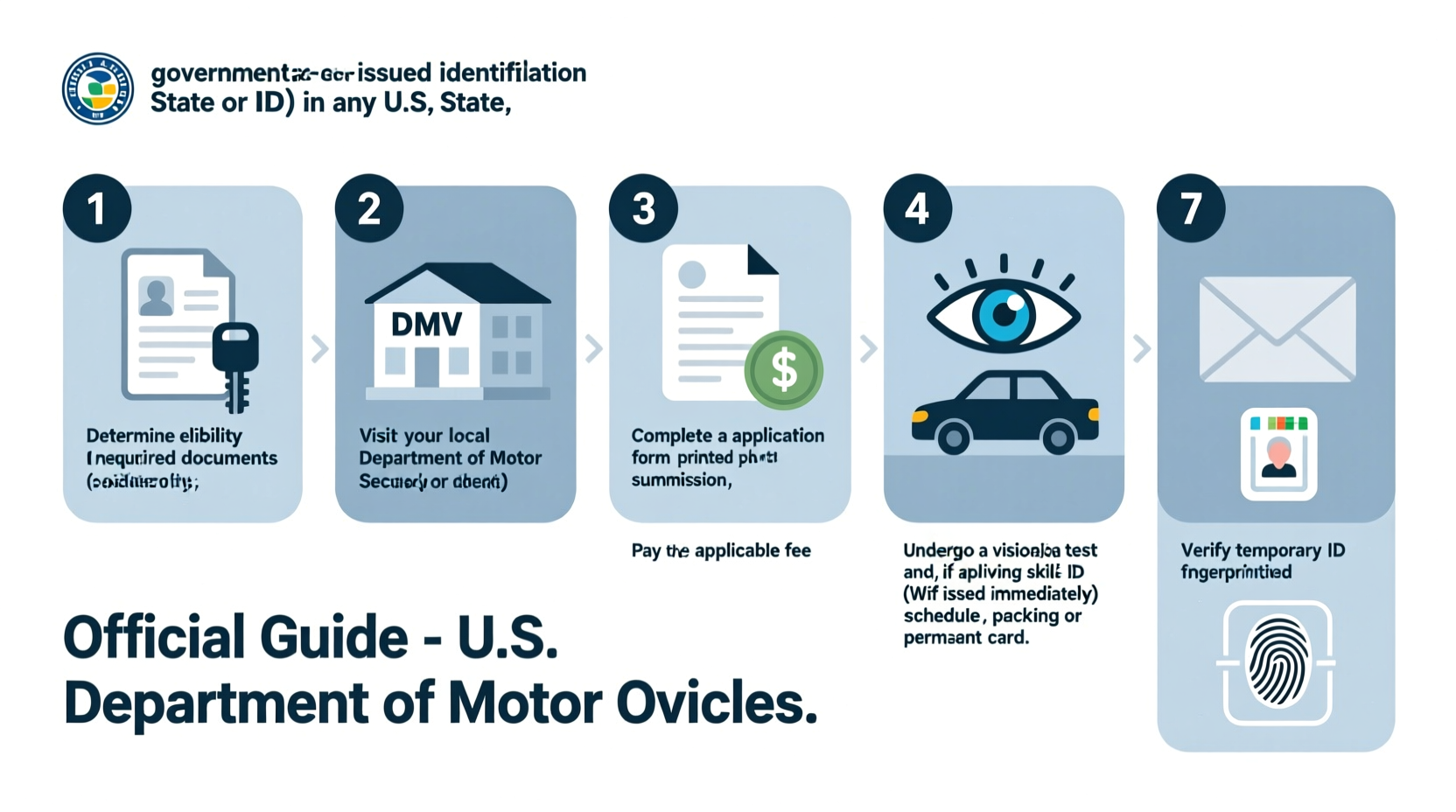
A non-driver ID is issued by your state’s Department of Motor Vehicles (DMV) or equivalent agency. It looks nearly identical to a driver’s license but lacks driving privileges. All 50 states and Washington, D.C., offer this service to residents who need valid photo identification. These cards are typically accepted wherever government-issued IDs are required, including federal facilities, age-restricted purchases, and voter registration.
Eligibility generally requires proof of identity, residency, and legal presence in the United States. Minors may also obtain an ID with parental consent and appropriate documentation. Most states issue IDs that are compliant with the REAL ID Act, which became mandatory for domestic air travel and entry into federal buildings as of May 7, 2025. If you plan to fly or access secure federal areas, ensure your ID is marked with a star in the upper right corner.
Step-by-Step Process to Apply for an ID Card
- Determine Your State’s Issuing Agency: Most states use the DMV, but some have separate divisions like the Bureau of Motor Vehicles (BMV) or Department of Licensing (DOL). Locate the correct agency online.
- Gather Required Documents: You’ll need proof of identity, Social Security number, and two proofs of residency. Acceptable documents vary by state but commonly include birth certificates, passports, utility bills, and lease agreements.
- Complete the Application Form: Many states allow online pre-application or provide downloadable forms. Fill it out accurately to avoid delays.
- Schedule an Appointment: Increasingly, states require appointments to reduce wait times. Walk-ins may be accepted but are not guaranteed.
- Visit the Office in Person: Bring all original documents (no photocopies) and pay the required fee. A photo will be taken on-site.
- Receive Your ID: Some states mail the card within 7–14 days; others issue a temporary paper ID while the permanent card is printed.
Required Documentation by Category
Each state follows federal guidelines under the REAL ID Act, meaning the types of acceptable documents are broadly similar. However, specifics such as how recent a utility bill must be or whether a school ID counts can differ.
| Document Type | Acceptable Examples | Notes |
|---|---|---|
| Proof of Identity | U.S. Birth Certificate, U.S. Passport, Permanent Resident Card | Must be original or certified copy; expired passports still valid for identity verification |
| Proof of SSN | Social Security card, W-2 form, SSA-1099 | If no SSN, a letter of ineligibility from the SSA may be required |
| Proof of Residency | Utility bill, bank statement, rental agreement, property deed | Must show your current address; typically must be dated within the last 60 days |
| Legal Presence (if applicable) | Employment Authorization Document, foreign passport with visa | Non-citizens must prove lawful status in the U.S. |
Mini Case Study: Maria’s First ID in Georgia
Maria, a 19-year-old college student in Atlanta, had never needed an ID until she applied for a part-time job at a local pharmacy. Born in Texas but recently moved to Georgia, she assumed her Texas birth certificate would suffice. She visited her local DDS (Georgia’s Department of Driver Services) without an appointment and was turned away because she lacked two proofs of Georgia residency.
After reviewing the DDS website, Maria gathered a signed lease agreement and a recent electric bill in her name. She completed the online application, scheduled an appointment, and brought her Social Security card, birth certificate, and passport photo. Within ten minutes of arriving, her photo was taken, fees were paid ($32), and she received a temporary ID. Her permanent REAL ID arrived by mail two weeks later.
This experience highlights the importance of preparation. Had Maria checked requirements beforehand, she could have avoided the unnecessary trip.
Expert Insight on Avoiding Common Mistakes
“Over 30% of ID applications are delayed due to incorrect or incomplete documentation. Always bring originals, ensure your name matches across all documents, and verify your state’s specific rules.” — James Reed, State ID Compliance Officer, National Association of DMV Administrators
Checklist: Preparing for Your ID Appointment
- ✅ Confirm eligibility and required documents on your state’s DMV website
- ✅ Obtain a certified copy of your birth certificate or passport if needed
- ✅ Gather two proofs of current residential address
- ✅ Retrieve your Social Security card or alternative SSN proof
- ✅ Complete the application form online or print it ahead of time
- ✅ Schedule an appointment during off-peak hours (e.g., mid-week mornings)
- ✅ Bring payment for fees (typically $15–$50, varies by state)
- ✅ Wear plain clothing and avoid hats or glasses for the photo
Frequently Asked Questions
Can I apply for an ID online?
No, first-time applicants must appear in person to verify identity and have a photo taken. Some states allow renewal online or by mail for existing cardholders.
How long does it take to receive my ID?
Processing times range from 7 to 21 business days, depending on the state. A few states, like Michigan and New York, offer expedited service for an additional fee.
What if I don’t have a fixed address?
Many states accept alternative proofs of residency, such as a shelter stay confirmation, correspondence from a social service agency, or a signed affidavit from a relative. Homeless individuals are still eligible for an ID—check your state’s policy for homeless applicant provisions.
Final Tips for a Smooth Experience
While obtaining an ID seems straightforward, small oversights can lead to rejection or rescheduling. Always double-check that your documents are unexpired, legible, and match your current legal name. If you’ve changed your name due to marriage, divorce, or court order, bring the official legal document supporting the change.
For minors under 18, most states require at least one parent or guardian to appear in person with their own valid ID and proof of guardianship. Some states, like California, allow school IDs or report cards as secondary residency proofs for students living away from home.
Conclusion
Obtaining a government-issued identification card is a necessary step toward full participation in American civic and economic life. Whether you're a teenager, senior citizen, non-driver, or new resident, having valid ID opens doors to services, security, and independence. By understanding your state’s requirements, preparing the right documents, and following a clear process, you can complete the application efficiently and avoid common pitfalls.




 浙公网安备
33010002000092号
浙公网安备
33010002000092号 浙B2-20120091-4
Comments
No comments yet. Why don't you start the discussion?