
A cluttered nightstand may seem like a minor issue, but it can have a surprising impact on your ability to fall asleep and wake up feeling refreshed. When your sleeping environment is disorganized, your mind struggles to shift into rest mode. Items piled high—half-empty water glasses, tangled cords, forgotten books, expired medications—create visual noise that subconsciously signals chaos, not calm. By taking deliberate steps to declutter and reorganize your nightstand, you create a sanctuary that supports relaxation, consistency, and deeper rest.
This guide walks you through a practical, research-backed method to transform your nightstand from chaotic to serene. The process doesn’t require expensive organizers or hours of effort—just intention, a few simple tools, and a commitment to creating a space that serves your well-being.
Why Your Nightstand Matters for Sleep Quality
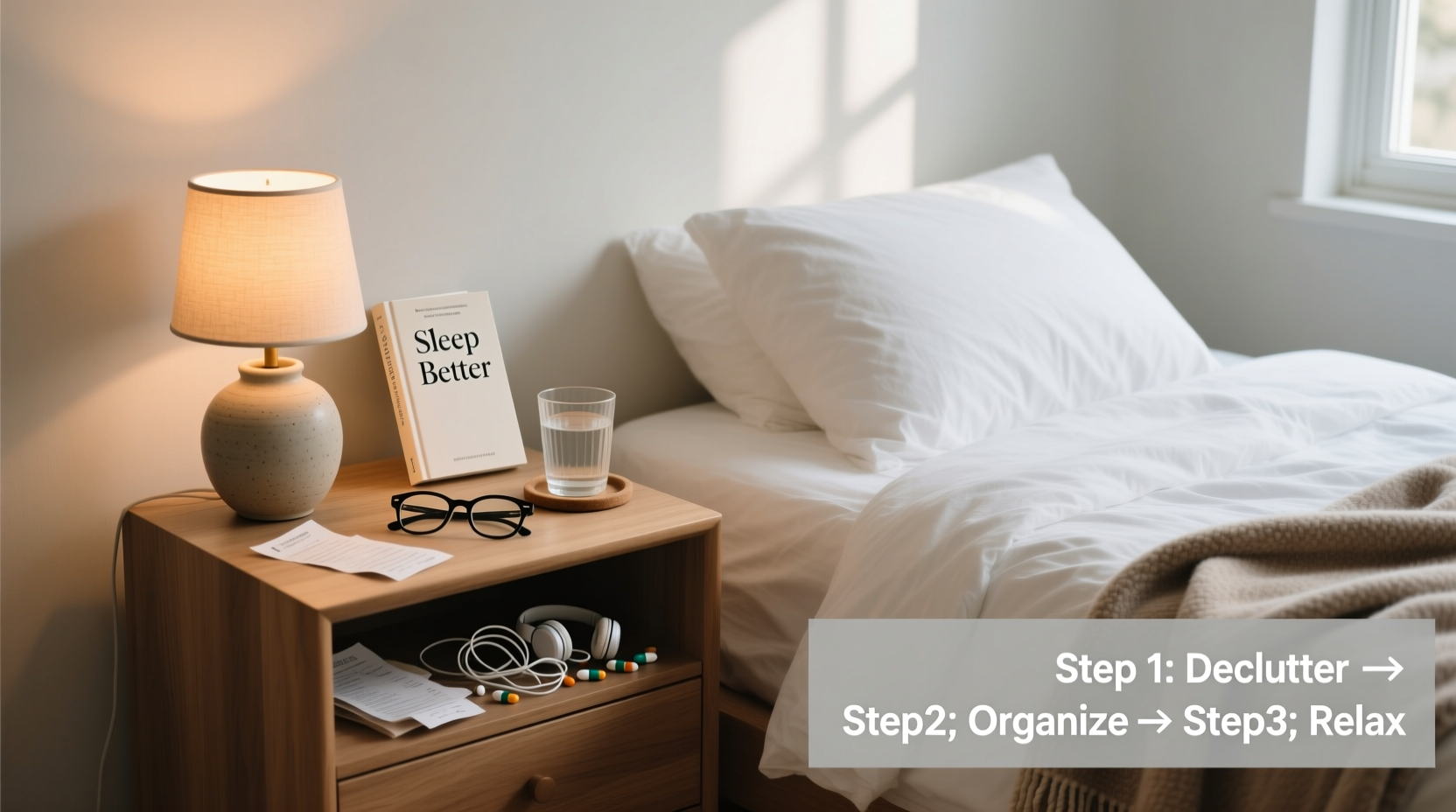
The area immediately around your bed plays a crucial role in your circadian rhythm and mental transition from activity to rest. According to the National Sleep Foundation, an organized sleep environment contributes significantly to faster sleep onset and reduced nighttime awakenings. A clutter-free nightstand reduces cognitive load, allowing your brain to quiet down more easily.
Think about what you see when you lie down: Is it a stack of unread magazines? A phone blinking with notifications? Or is it a clean surface with only essential, calming items? The latter sends a signal of order and peace, helping your nervous system prepare for sleep. In contrast, clutter triggers low-level stress responses, even if you're not consciously aware of them.
“Your bedroom should function as a retreat, not a storage unit. The nightstand, in particular, should support—not sabotage—your wind-down routine.” — Dr. Lena Torres, Sleep Psychologist and Author of *Restful Spaces*
Step-by-Step Guide to Organizing Your Nightstand
Follow this seven-step process to completely reset your nightstand. Each stage builds on the last, ensuring lasting results rather than temporary tidiness.
- Clear Everything Off
Remove every item from your nightstand. Place them on your bed or nearby chair. This gives you a blank slate and forces you to evaluate each object individually. - Categorize the Items
Sort everything into piles: essentials, occasional-use items, trash, and things that belong elsewhere. Be ruthless. Ask: “Do I use this daily? Does it support my sleep or health?” - Sanitize the Surface
Wipe down the entire nightstand with a damp cloth and mild cleaner. Dust, fingerprints, and residue accumulate quickly, especially near your face during sleep. Cleaning reinforces the idea of renewal. - Define Zones Based on Function
Divide your nightstand into three zones:- Top Surface: Reserved for 3–4 daily essentials (lamp, book, water glass).
- Middle Drawer (if applicable): Store small, personal items like reading glasses, sleep aids, or journal.
- Bottom Shelf or Back Corner: For charging devices—out of immediate reach but accessible.
- Select Only Necessary Items
Limits are key. Choose no more than five functional items total. Prioritize those that actively contribute to relaxation or safety (e.g., reading light, medication you take nightly). - Use Simple Organizers
Trays, coasters, and small boxes keep items contained without adding visual clutter. A ceramic dish for rings, a linen-covered notebook, or a minimalist cup for pens all add structure while maintaining aesthetic calm. - Establish a Daily Reset Habit
Spend 60 seconds before bed returning items to their designated spots. Consistency prevents backsliding into old habits.
What Belongs on a Nightstand—and What Doesn’t
Not all items are created equal when it comes to bedtime functionality. Some promote rest; others disrupt it. Use the table below to evaluate common nightstand contents.
| Item | Keep? | Reason |
|---|---|---|
| Reading lamp (warm light) | ✅ Yes | Provides soft illumination without blue light exposure |
| Smartphone | ⚠️ Only if used as alarm (in Do Not Disturb mode) | Notifications disrupt melatonin production; best kept across the room |
| Water glass | ✅ Yes | Prevents midnight dehydration, but use a spill-proof coaster |
| Work documents / laptop | ❌ No | Associates bed with stress and alertness, not rest |
| Sleep journal or gratitude notebook | ✅ Yes | Encourages reflection and emotional release before sleep |
| Medications (prescribed, nightly) | ✅ Yes | Essential for health—but store in labeled container, not loose bottles |
| Makeup or skincare products | ❌ No | Better stored in bathroom; risk of spills and contamination |
| Chargers and cables | ⚠️ Only if cord is neatly routed and device charges away from pillow | Fire hazard and visual clutter if left exposed |
Real-Life Example: How Sarah Transformed Her Sleep Space
Sarah, a 34-year-old project manager, struggled with insomnia for months. She attributed it to stress, but after consulting a sleep coach, she examined her bedroom setup. Her nightstand held a tablet, three books, a half-drunk smoothie, hair ties, hand cream, and her phone—all within arm’s reach.
Following the seven-step method, she cleared the surface, discarded expired items, and relocated non-essentials. She kept only a warm-toned lamp, a single novel, a glass of water, and her phone—in airplane mode and placed face-down at the far edge.
Within a week, Sarah reported falling asleep 20 minutes faster and waking less frequently. “It sounds silly, but seeing that clean surface made me feel like I had permission to relax,” she said. “I wasn’t surrounded by reminders of everything I hadn’t finished.”
Checklist: Nightstand Reset in One Evening
Complete this checklist to organize your nightstand in under 30 minutes:
- ☐ Remove all items from the nightstand
- ☐ Discard trash (expired meds, empty bottles, dust)
- ☐ Wipe down surfaces with a gentle cleaner
- ☐ Identify 3–5 essential items to keep
- ☐ Return misplaced items to their proper rooms
- ☐ Use trays or containers to group small objects
- ☐ Position charger out of direct reach (e.g., floor outlet)
- ☐ Test lighting: switch to warm-white bulbs (under 2700K)
- ☐ Set a nightly 1-minute reset reminder on your phone
Advanced Tips for Long-Term Maintenance
Organization isn’t a one-time fix—it’s a habit. To ensure your nightstand stays functional and peaceful, integrate these strategies:
- Monthly Audit: Once a month, repeat the clearing and categorizing step. Habits slip; regular check-ins prevent buildup.
- One-In, One-Out Rule: For every new item added (e.g., a new book), remove an old one. This enforces minimalism.
- Charge Devices Elsewhere: Consider using a charging station in another room. Eliminating phones from the nightstand removes temptation to scroll.
- Use Opaque Containers: Clear bins show contents, which adds visual noise. Choose closed or fabric-covered boxes for a cleaner look.
- Align with Bedroom Decor: Choose organizers that match your room’s color scheme and materials (wood, ceramic, linen). Cohesion enhances calm.
“The most effective sleep environments are intentional. Every object should earn its place by serving a clear purpose.” — Dr. Raj Mehta, Environmental Neurologist at the Center for Sleep & Cognition
Frequently Asked Questions
Can I keep a plant on my nightstand?
Yes, but choose wisely. Small, low-light plants like a snake plant or peace lily can improve air quality and add tranquility. Avoid large pots or those requiring frequent watering, which increase humidity and mess. Ensure the pot has a saucer to prevent spills.
How high should my nightstand be?
Ideally, the top surface should align with the height of your mattress when you’re lying down. This makes reaching for items comfortable without straining. Most standard nightstands are 24–28 inches tall, matching average bed heights.
Is it okay to have a lamp on both sides in a shared bed?
Absolutely. Symmetry promotes balance and reduces competition for space. Opt for matching lamps with adjustable arms or touch dimmers so each person can control their own light without disturbing the other.
Conclusion: Create a Nightstand That Supports Rest, Not Resistance
Your nightstand is more than furniture—it’s part of your nightly ritual. When thoughtfully organized, it becomes a quiet ally in your pursuit of better sleep. The steps outlined here are simple but powerful: clear the clutter, curate essentials, and maintain consistency. You don’t need a renovation or expensive upgrades. You just need to start.
Take tonight to reset your nightstand. In doing so, you’re not just tidying a surface—you’re designing a bedtime experience that honors your need for peace, recovery, and deep, uninterrupted rest. The difference may surprise you.




 浙公网安备
33010002000092号
浙公网安备
33010002000092号 浙B2-20120091-4
Comments
No comments yet. Why don't you start the discussion?