
A minimalist wardrobe isn’t about deprivation—it’s about intentionality. When you limit your clothing to fewer than 30 pieces, you eliminate clutter, streamline daily choices, and focus on quality over quantity. This approach reduces stress, saves time, and supports sustainable living. The goal is not to wear less, but to wear better. With thoughtful planning and disciplined editing, it’s entirely possible to build a functional, stylish wardrobe within this constraint. This guide walks you through each phase of the process, from auditing your current clothes to maintaining your new minimalist system.
Why 30 Items? The Philosophy Behind the Number
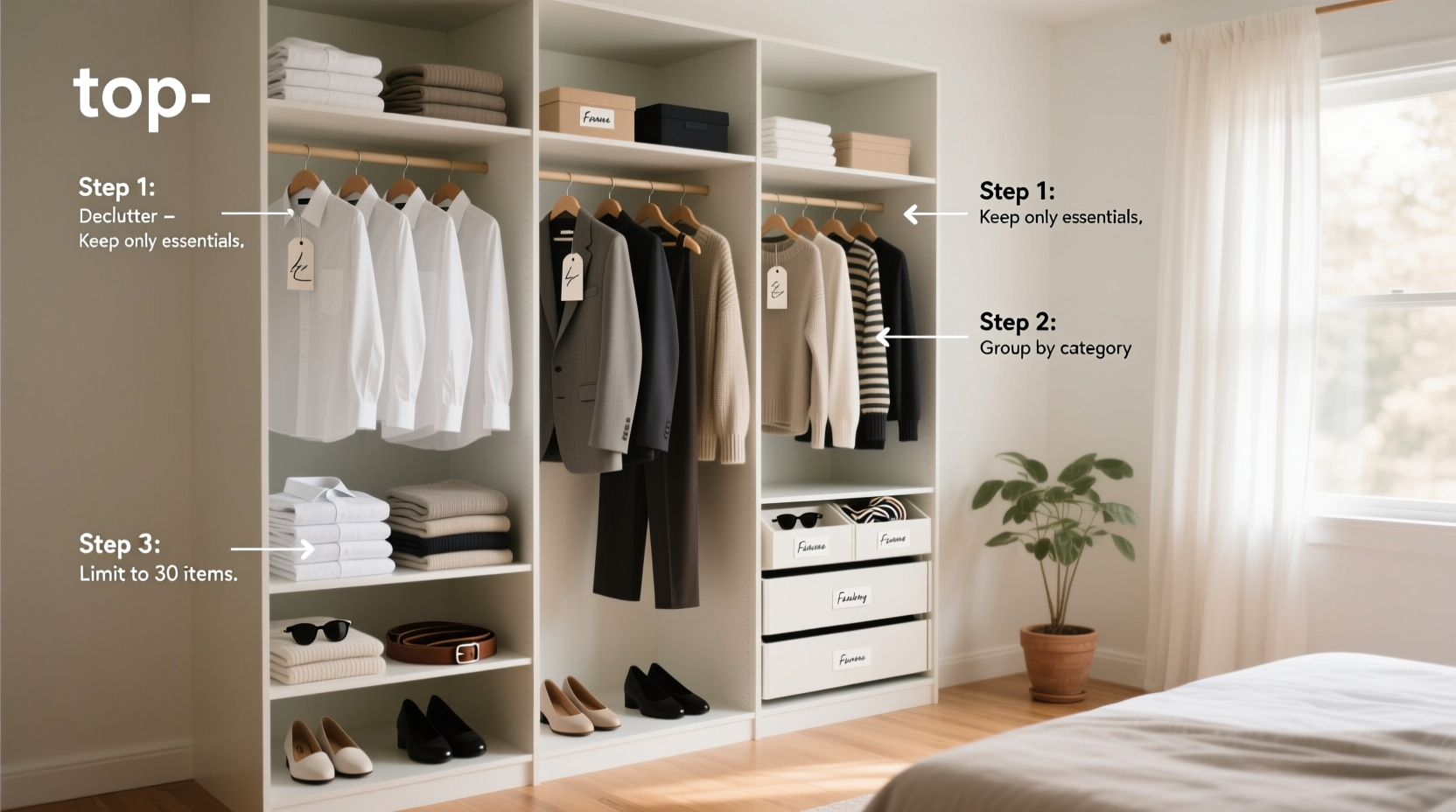
The 30-item threshold strikes a balance between practicality and minimalism. It’s enough to cover seasonal needs, workwear, casual outfits, and occasional events—but few enough to force deliberate selection. Originating from the concept of a “capsule wardrobe,” popularized by London boutique owner Susie Faux in the 1970s and later adopted by designers like Donna Karan, the idea centers on creating multiple outfits from a small number of interchangeable pieces.
Wearing fewer clothes fosters mindfulness. You begin to notice what you actually wear versus what you merely own. Studies suggest that most people wear only 20% of their wardrobe regularly. By reducing to 30 items, you ensure everything earns its place. As Marie Kondo wrote in *The Life-Changing Magic of Tidying Up*, “Keep only those things that speak to your heart.” In the context of clothing, this means keeping only what fits, flatters, and functions in your current lifestyle.
“Minimalism in fashion is not about having nothing. It’s about making room for what truly matters.” — Courtney Carver, Author of *Soulful Simplicity*
Step-by-Step: Building Your Minimalist Wardrobe
Step 1: Define Your Lifestyle Needs
Before touching your closet, assess your daily routine. Are you working remotely, commuting to an office, or frequently attending social events? Do you live in a cold climate or a warm one? Your wardrobe should reflect real-life demands, not aspirational versions of yourself.
Create a simple breakdown:
- Workwear: 5–8 items (e.g., blouses, trousers, dresses)
- Casual wear: 6–10 items (e.g., jeans, tees, sweaters)
- Outerwear: 2–3 items (e.g., coat, jacket, cardigan)
- Shoes: 4–5 pairs (e.g., boots, flats, sneakers)
- Special occasion: 1–2 items (e.g., dress, blazer)
- Underwear & sleepwear: Optional exclusion—many count only visible garments
This structure ensures coverage across contexts without excess. Remember: accessories like scarves, belts, and jewelry are typically excluded from the count unless they’re essential to an outfit.
Step 2: Empty and Audit Your Closet
Remove every piece of clothing from your closet and lay them out where you can see them all. Sort into four piles:
- Wear Regularly – Fits well, feels good, worn in the past 3 months
- Occasionally Worn – Reserved for specific events or seasons
- Unsure – Emotional attachments, potential future use
- Never Worn – Ill-fitting, outdated, uncomfortable
Be honest. If you haven’t worn something in a year, it’s unlikely you will. Ask: Does this align with my current body, style, and lifestyle? If not, thank it and let it go.
Step 3: Apply the 30-Item Framework
Begin selecting your core 30. Start with essentials: a pair of dark jeans, neutral tops, a versatile dress, a tailored blazer. Prioritize versatility—each item should pair with at least three others. Stick to a cohesive color palette (e.g., neutrals with one or two accent colors) to maximize mix-and-match potential.
As you select, physically remove extras. Place them in a donation bin immediately to avoid second-guessing. Keep only what makes getting dressed easier.
Step 4: Store Off-Season Items (Optional)
If you live in a region with distinct seasons, consider rotating your wardrobe. For example, store winter coats and sweaters during summer. These are not counted in your active 30 but kept in labeled, breathable containers. Rotate twice a year, reassessing each time.
Step 5: Maintain the System
Maintenance is key. Adopt a “one in, one out” rule: if you buy something new, remove an old item. Schedule quarterly reviews to ensure your wardrobe still serves you. Replace worn-out staples promptly—don’t let quality degrade just to stay under 30.
Essential Checklist for Success
Use this checklist to stay on track throughout the process:
- ☐ Assess current lifestyle and dressing needs
- ☐ Empty entire closet and sort by usage frequency
- ☐ Remove all unworn, ill-fitting, or outdated items
- ☐ Choose a cohesive color palette (e.g., black, white, gray, navy, beige)
- ☐ Select 30 high-quality, versatile pieces
- ☐ Ensure each top pairs with at least two bottoms
- ☐ Limit shoes to 4–5 functional pairs
- ☐ Store off-season items separately (if applicable)
- ☐ Implement “one in, one out” purchase rule
- ☐ Review and refresh wardrobe every 3–6 months
Do’s and Don’ts of a Minimalist Wardrobe
| Do | Don’t |
|---|---|
| Choose natural, durable fabrics like cotton, wool, and linen | Buy synthetic blends that pill or lose shape quickly |
| Invest in timeless silhouettes over fast-fashion trends | Keep trendy pieces that go out of style in months |
| Prioritize fit—tailor when necessary | Hold onto items that don’t fit, hoping to “lose weight” |
| Use storage solutions that keep clothes visible and accessible | Stack folded clothes so deeply that you forget what’s underneath |
| Clean and repair items promptly to extend lifespan | Ignore loose buttons or small tears until they become unfixable |
A Real-Life Example: From Overwhelmed to Organized
Sarah, a 34-year-old graphic designer from Portland, had over 120 clothing items crammed into her closet. She often spent 20 minutes each morning choosing an outfit, only to end up wearing the same black turtleneck and jeans. After reading about capsule wardrobes, she decided to try the 30-item challenge.
She began by removing everything and sorting into piles. Nearly half went straight to donation. She kept only what she’d worn in the past six months. Then, she built her 30-piece collection around her work-from-home routine and weekend hikes: a navy blazer, two merino sweaters, one pair of chinos, two cotton button-downs, and versatile layers. Shoes included ankle boots, white sneakers, and sandals.
Within a week, Sarah noticed a shift. Mornings became effortless. She felt more confident because every item looked intentional. After three months, she hadn’t missed a single discarded piece. “It’s not that I have less,” she said. “It’s that I finally have what I need.”
Frequently Asked Questions
Can I include underwear and socks in the 30 items?
No, most minimalist challenges exclude underwear, socks, sleepwear, and workout clothes. The 30-item limit typically applies to visible, outer-layer garments such as tops, bottoms, dresses, jackets, and shoes. Including basics would make the system impractical for daily life.
What if I need formal wear for weddings or interviews?
You can include one formal outfit in your 30 items if you attend such events occasionally. If not, consider renting or borrowing for rare occasions. Minimalism allows for flexibility—your wardrobe should serve reality, not rigid rules.
Isn’t 30 items too restrictive?
At first, it may feel limiting, but the constraint forces creativity and clarity. Most people discover they wore only a fraction of their former wardrobe anyway. The goal is not restriction for its own sake, but liberation from excess. Once you experience the ease of a curated closet, 30 items often feel more than sufficient.
Expert Insight: Why Less Really Is More
The psychological benefits of a minimalist wardrobe are well-documented. Dr. Becky Spelman, a psychologist specializing in decision fatigue, notes that “every trivial choice depletes mental energy.” By reducing clothing decisions, we preserve cognitive resources for more meaningful tasks.
“The average person makes over 35,000 decisions a day. Simplifying your wardrobe cuts out dozens of low-value choices, freeing up focus for work, relationships, and personal growth.” — Dr. Becky Spelman, Cognitive Psychologist
Fashion expert Matilda Kahl, known for her “Power Uniform” TED Talk, wears the same professional outfit five days a week: a cream silk blouse, black pants, and heels. Her reasoning? Eliminating morning decisions increases productivity and confidence. “I don’t love my clothes,” she says. “I love what they allow me to do.”
Final Thoughts: Start Small, Think Long-Term
Transitioning to a minimalist closet doesn’t require perfection overnight. Begin with a trial period—30 days with 30 items. Use it as an experiment, not a test. You’ll likely find that simplicity brings unexpected freedom.
The clothes you wear should support your life, not complicate it. A minimalist wardrobe removes noise, sharpens identity, and aligns your external appearance with internal values. It’s not about following a trend; it’s about designing a life with purpose.
Every garment you keep should pass three tests: Does it fit? Does it suit my lifestyle? Does it bring me confidence? If yes, it belongs. If not, release it with gratitude and make space for what does.




 浙公网安备
33010002000092号
浙公网安备
33010002000092号 浙B2-20120091-4
Comments
No comments yet. Why don't you start the discussion?