
In the past decade, streaming services have transformed how we consume entertainment. With over 200 platforms now available globally—from Netflix and Hulu to niche services like Mubi or Shudder—many households carry multiple subscriptions at once. The convenience comes at a cost: financial strain and decision fatigue. On average, U.S. consumers pay for four streaming services monthly, spending around $87 per month—more than traditional cable in many cases. Worse, nearly 30% of these subscriptions go unused. This guide walks you through a systematic process to audit, organize, optimize, and maintain your streaming habits so you keep only what you truly value.
1. Take a Full Inventory of Your Subscriptions
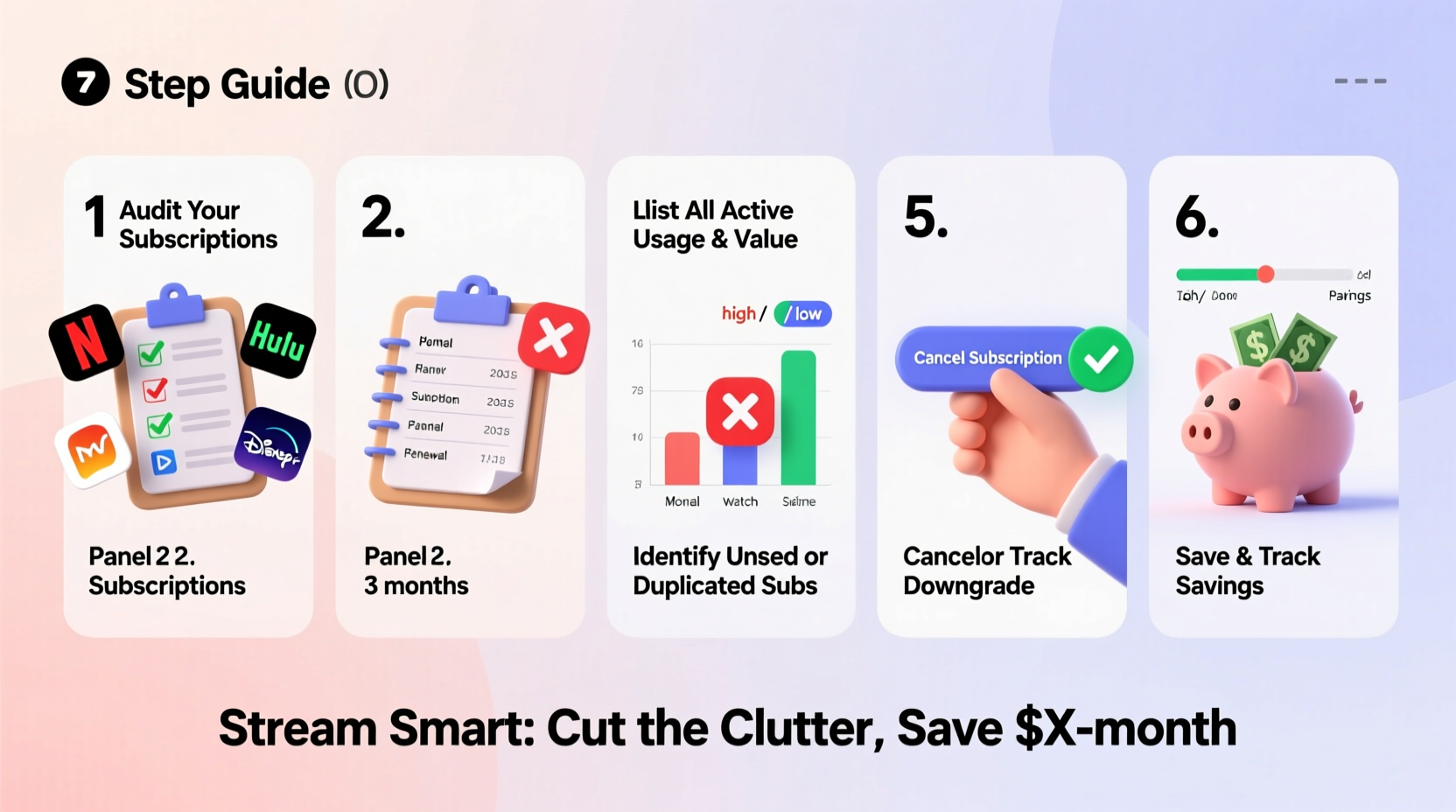
The first step is awareness. Most people underestimate how many subscriptions they're paying for because charges are automatic and often buried in bank statements. Start by gathering all recent credit card and bank records from the last three months. Look for recurring payments labeled “Netflix,” “Disney+,” “HBO Max,” or any unfamiliar names like “AMC+” or “BritBox.” Don’t forget mobile app store subscriptions (Apple ID or Google Play), which can include free trials that auto-converted into paid plans.
Create a master list that includes:
- Service name
- Monthly or annual cost
- Billing date
- Payment method
- Primary user in the household
- Last used date
2. Evaluate Usage and Value
Not all subscriptions are created equal. A service might be expensive but deeply valued; another could be cheap but entirely neglected. To assess each platform fairly, apply a simple scoring system based on usage, content relevance, and household satisfaction.
| Streaming Service | Monthly Cost | Used Last Month? | Favorite Shows/Movies | Household Rating (1–5) | Action |
|---|---|---|---|---|---|
| Netflix | $15.49 | Yes – 8 times | Stranger Things, The Crown | 4.7 | Keep |
| Hulu | $7.99 (with ads) | No | Only watched one episode | 2.1 | Pause or cancel |
| Max (HBO) | $9.99 | Yes – 3 times | Succession, House of the Dragon | 4.0 | Keep |
| Paramount+ | $5.99 | Rarely | Star Trek series | 2.8 | Share with family member |
Assign a “value score” using this formula: (Usage Frequency × Content Relevance × Household Satisfaction) ÷ Cost. This helps quantify whether a service delivers enough benefit relative to its price. For example, if you love HBO Max but only watch it twice a month, consider downgrading to the ad-supported tier or rotating it seasonally.
“Consumers waste an average of $348 annually on unused digital subscriptions. Awareness and periodic audits can reclaim most of that.” — Sarah Lin, Consumer Finance Analyst at BrightEdge Research
3. Implement a Rotation Strategy for Niche Platforms
You don’t need every service active all year. Many platforms serve specific interests—sports, documentaries, anime, international cinema—that spike in relevance during certain times. Adopt a rotation model similar to library borrowing: subscribe when needed, pause when not.
For instance:
- ESPN+/Peacock: Activate during football season (September–February).
- Discovery+: Use during home renovation projects or cooking phases.
- Shudder: Subscribe in October for Halloween horror marathons.
- Disney+: Turn on during school holidays when kids are home.
This approach reduces annual costs without sacrificing access. One family saved $216 in one year by rotating five $6/month services instead of keeping them all active.
Mini Case Study: The Thompson Family’s Streaming Reset
The Thompsons, a family of four in Austin, Texas, were spending $112 monthly on seven streaming services. After reviewing their viewing logs, they found that only three platforms—Netflix, YouTube Premium, and Disney+—were consistently used. Two others hadn’t been opened in over two months. They canceled Hulu and Paramount+, paused Discovery+ until summer camping season, and shared their Apple TV+ login with grandparents who reimbursed half the fee. Within a week, their monthly bill dropped to $68—a 39% reduction—with no loss in enjoyment.
4. Consolidate Logins and Share Responsibly
Sharing accounts within households is common, but disorganized access leads to confusion and duplicate payments. Designate one person as the “streaming manager” responsible for tracking logins, passwords, and billing. Use a secure password manager (like Bitwarden or 1Password) to store credentials and share access via encrypted vaults.
If sharing outside your household (e.g., with siblings or parents), follow these rules:
- Limits concurrent streams to avoid conflicts.
- Split the cost fairly—ideally through automated transfers.
- Agree on a notice period before canceling (e.g., “I’ll give you 7 days’ warning”).
- Avoid sharing on premium tiers unless everyone contributes.
Some services explicitly allow account sharing: Netflix permits up to two additional households via its “Extra Member” feature for $7.99/month. Others, like Max, restrict sharing but tolerate limited use among trusted users.
Do’s and Don’ts of Account Sharing
| Do | Don't |
|---|---|
| Use built-in profile features to personalize experiences | Sell or rent out your login publicly |
| Set clear expectations with co-payers | Share passwords over unsecured channels (text/email) |
| Rotate primary access during high-demand seasons | Exceed allowed device limits repeatedly |
| Upgrade only if all users benefit | Assume unlimited sharing is risk-free |
5. Build a Sustainable Maintenance System
One-time cleanup isn’t enough. Streaming habits evolve, new platforms emerge, and promotions expire. Establish a quarterly review ritual to maintain control.
Quarterly Streaming Audit Checklist
- Review bank statements for new or renewed charges
- Survey household members on favorite shows watched
- Check if any service increased prices or reduced content
- Determine if seasonal services should be reactivated
- Test free trials only with calendar-based exit plans
- Update password manager and remove inactive users
- Explore bundled deals (e.g., Disney+ bundle with Hulu and ESPN+)
During these reviews, also explore cost-saving opportunities:
- Bundling: The Disney Bundle (Disney+, Hulu, ESPN+) offers up to 30% savings compared to individual purchases.
- Ad-Supported Tiers: Switch from premium to ad-supported plans on Max, Peacock, or Paramount+ to cut costs by 40–50%.
- Annual Plans: Some services offer discounts for yearly prepayment—just ensure you’ll use them.
- Promotional Trials: Legitimate 3–6 month free offers via credit cards or telecom partnerships (e.g., T-Mobile customers get several free subscriptions).
Finally, integrate your decisions into daily life. Create a shared document or whiteboard chart showing current subscriptions, costs, and next review date. Visibility prevents mindless renewals.
Frequently Asked Questions
Can I get charged even after canceling a free trial?
Yes. If you don’t cancel before the trial ends, most platforms automatically charge your card. Always set a reminder to evaluate the service within the first week of the trial.
Is it safe to use third-party apps that track subscriptions?
Reputable apps like Rocket Money, Truebill, or PocketGuard use bank-level encryption and read-only access. However, avoid granting full transaction permissions. Monitor access regularly and revoke unused connections.
What if I want to come back to a service later?
Most platforms retain your watch history and preferences for 1–2 years after cancellation. You can reactivate anytime, though some original content may rotate out during your absence.
Final Thoughts: Regain Control of Your Digital Entertainment
Streaming should enhance your life—not drain your wallet or add stress. By taking inventory, evaluating real usage, rotating services strategically, sharing wisely, and maintaining regular check-ins, you transform passive spending into intentional consumption. The average household saves between $200 and $500 annually by applying these steps. More importantly, you gain clarity, reduce clutter, and refocus on content that truly matters to you and your family.




 浙公网安备
33010002000092号
浙公网安备
33010002000092号 浙B2-20120091-4
Comments
No comments yet. Why don't you start the discussion?